- PCOS affects roughly one in ten women of reproductive age. It is a hormonal and metabolic condition, not simply a problem of "cysts".
- Regular movement and healthy eating are recommended for every woman with PCOS, whether or not her weight changes. Yoga is a reasonable way to move, but the research on yoga itself is still thin.
- The course practice is short and daily: a fixed pelvic warm-up, then a few minutes that change with the cycle, always ending in rest.
What PCOS is
PCOS is estimated to affect about 10 to 13% of women of reproductive age, and most of them have never been diagnosed.1 A diagnosis is made when at least two of three features are present, after other causes have been ruled out: irregular or absent periods (a sign that ovulation is not happening regularly), signs of higher androgens such as excess hair growth, acne or thinning scalp hair, and a typical ovarian appearance on ultrasound.1,2
The ovaries do not need to look "polycystic" for the diagnosis, and many women with PCOS have no cysts at all. The small round shapes seen on a scan, the "string of pearls", are mostly immature follicles that stopped developing, not true cysts. That is one reason an international expert group has recommended a new name, Polyendocrine Metabolic Ovarian Syndrome (PMOS), which puts hormones and metabolism at the center.4
That metabolic side matters. PCOS is linked with insulin resistance and a higher long-term risk of type 2 diabetes, and the guideline also recommends checking for anxiety and depression, which are more common with the condition.1,2 PCOS can make getting pregnant harder, but it does not mean a woman cannot conceive, and there are effective treatments.1
What helps
There is no cure, but symptoms and long-term risks can be managed. The current international guideline recommends healthy eating and physical activity for all women with PCOS. It does not favor any single diet: a balanced eating pattern that suits the woman is enough. For activity it follows general adult advice, about 150 to 300 minutes of moderate movement a week plus some strength work, and more if weight loss is a goal.2 Medication, and fertility treatment when pregnancy is wanted, are decided with a doctor.
Does yoga help? Evidence: low
A 2023 review found eleven studies of yoga in women with PCOS, but only two randomized trials good enough to pool. Those suggested possible improvements in cycle regularity, hair growth and insulin markers. The authors rated the evidence as low and called for better trials.3 So yoga is a sensible, gentle way to meet the activity advice and to ease stress, not a treatment on its own.
How the course approached it
The course projects imagined a woman in fertility treatment who was struggling with belly pain and mood swings. All of them saw yoga as a companion to medical care, never a replacement, and suggested she also meet a dietitian. They shared four ideas:
- Little and often. About 20 minutes a day, at any convenient time. Consistency mattered more than intensity.
- A cycle diary. Noting bleeding, discharge, pain, mood and, if she wished, temperature, and sharing changes with her teacher and doctor.
- Calm as a goal. Slow breathing and long rest to settle the nervous system, which the course linked to hormonal balance. The link to stress relief is reasonable; a direct effect on hormones is the course's hope, not a proven fact.
- The pelvis as a focus. Gentle pelvic floor work (mula bandha) and hip mobility. In the yogic tradition the course drew on, moving the pelvis "brings energy and circulation" to the reproductive organs, and the hips are seen as a meeting point of energy channels. These are traditional images, not anatomy.
Where the projects differed was pace. One built a soft, mostly floor-based practice. Another made raising the heart rate the priority, with short flowing sequences, to support metabolism and weight. Both closed with deep rest. The guideline's emphasis on regular activity sits closer to the second, but either is fine if it is done regularly.
A daily base practice
Practice ideas from the course, about 10 to 15 minutes. Move slowly and stay within comfort.
- Arrive. Lie on your back with your hands on your lower belly. Breathe naturally and notice the pelvis and any tension.
- Pelvic floor and pelvic tilts. Feet on the floor, hip width. Exhale, gently lift the pelvic floor and let the tailbone curl up; inhale, release and let the lower back arch slightly. After a few rounds, lift into a small half bridge and lower down one vertebra at a time.
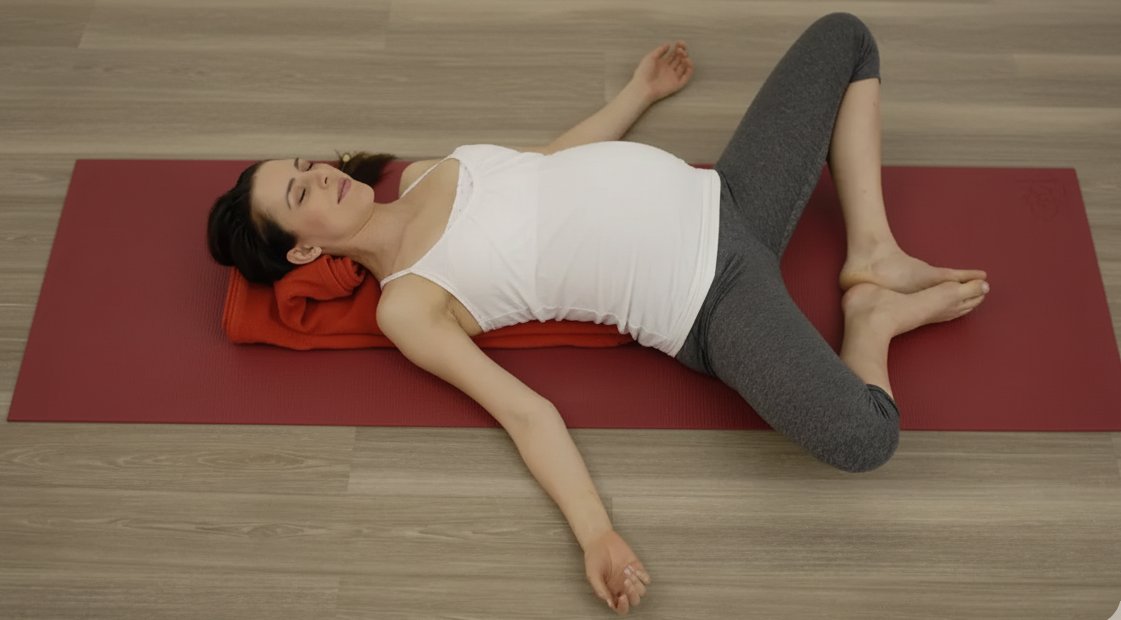
- Knee sways. Feet a little wider. Let both knees drop to one side as you exhale and return as you inhale. Then rest in each twist for a few breaths.
- Hip circles. Knees to chest, one hand on each knee, and draw slow circles, then change direction.
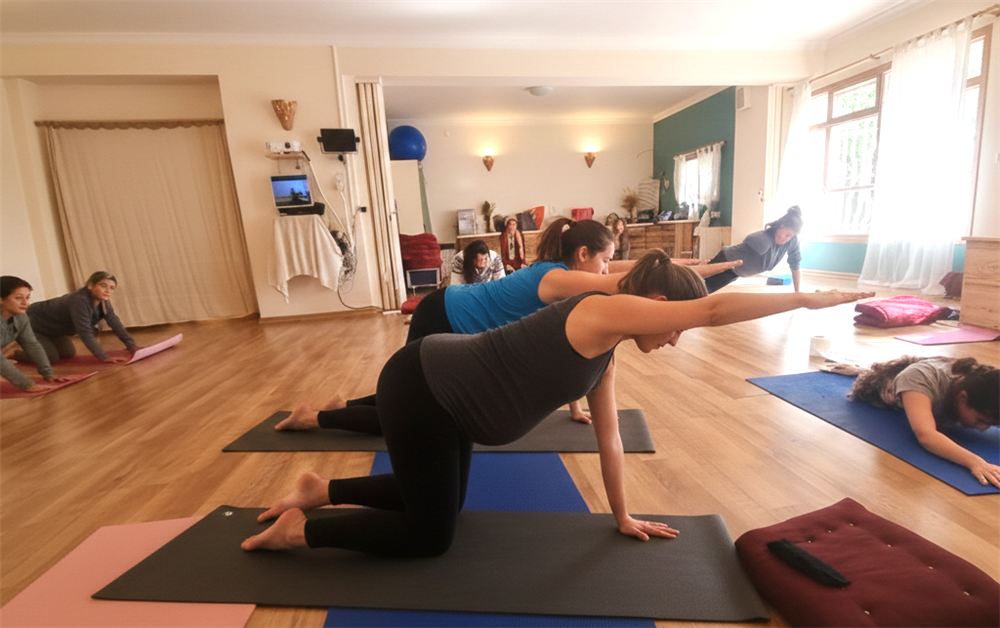
- Cat and cow. On hands and knees, round the back on the exhale with a light pelvic floor lift, and lengthen into a soft arch on the inhale.
- Low lunge with circles. Step one foot forward beside the hand, knee over the ankle. Sink the hips and circle them gently. Change sides.
- Seated twist. Kneeling on the heels (or on a cushion), turn gently to each side on the exhale, starting the movement from the belly.
On days with more energy, the more active version added a few rounds of a short flow: hands and knees, downward dog, plank, lowering to the belly, a small cobra, and back. Or one or two sun salutations.
Adjusting to the cycle
The course added about ten minutes that changed through the month, when there was a cycle to follow:
- During the period. Slow down. Supported forward bends, legs up the wall, gentle back bends such as a small cobra or a supported camel with hands on the lower back. Avoiding inversions at this time is a yogic tradition, not a medical rule.
- Toward ovulation. Build up gradually: sun salutations, standing poses such as warrior and triangle.
- After ovulation or a treatment cycle. Quieter again: balance poses like tree, legs up the wall, slow breathing. If a pregnancy is possible, the course avoided lying on the belly, breath holding and strong breathing techniques.
- Every day, rest. Lie with a rolled blanket along the spine or with the legs up the wall, hands resting on the lower belly. Breathe fully and, if you like, picture the pelvis warm and at ease.
Safety notes
If you are in fertility treatment, check with your clinic about exercise, especially after egg retrieval or embryo transfer, when strong twists, belly-down poses and vigorous work are usually avoided. Skip fast breathing practices such as kapalabhati if you might be pregnant, have high blood pressure or feel dizzy. Back bends, half lotus and inversions are optional: leave them out if your back, knees or neck complain. Sudden severe pelvic pain needs a doctor, not a pose.
The bottom line
PCOS is a long-term hormonal and metabolic condition, managed best with medical care, regular movement and steady habits. The course's practice fits that well: short, daily, pelvis-aware and calming. Its traditional ideas give the practice meaning, while the established benefit is simpler: moving often and resting well.
Sources and further reading
- World Health Organization. Polycystic ovary syndrome: fact sheet. Link
- Teede HJ, Tay CT, Laven JJE, et al. Recommendations from the 2023 International Evidence-based Guideline for the Assessment and Management of Polycystic Ovary Syndrome. Human Reproduction. 2023;38(9):1655–1679. Link
- Verma A, Upadhyay V, Saxena V. Effect of yoga therapy on health outcomes in women with polycystic ovary syndrome: a systematic review and meta-analysis. American Journal of Lifestyle Medicine. 2023;17(1):73–92. Link
- Stony Brook Medicine. PCOS renamed PMOS. 2026. Link
Based on works from the 2011 women's yoga teacher course, reviewed and updated. General information, not medical advice. Medical review: pending.