- Almost every project returns to the same three anchors: the breath, the pelvic floor, and adapting practice to the cycle and stage of life.
- The graduates chose five main subjects: bladder leaking and pelvic floor care, the cycle up close, trying to conceive, menopause, and body image, sexuality and illness.
- The physical ideas that hold up best today are pelvic floor training and regular, balanced movement. The ideas about energy and emotion are the course's tradition, offered as a way of paying attention, not as medical fact.
The idea underneath everything
The course started from a simple observation: most classical yoga was shaped by and for men's bodies, while a woman's body changes from week to week and from decade to decade. Women's yoga, as the course taught it, answers that by adjusting practice to where a woman is right now.
Three tools appear in nearly every project. First, the breath, especially the link between the diaphragm above and the pelvic floor below, which move together as you breathe. Second, gathering the pelvic floor, called mula bandha in yoga, usually on the exhale and just before a bigger movement. Third, a personal journal, kept across the month, to notice how energy, mood, pain and desire rise and fall. Pauses between poses, time to simply feel what just happened, are the quiet fourth tool.
Theme one: leaking and the pelvic floor
The most practical project took on urinary leaking. It explained the two common kinds: stress leaking, when a cough, sneeze or jump pushes past the support of the pelvic floor, and urge leaking, a sudden need to go that cannot wait. It described the pelvic floor as three layers of muscle and connective tissue, a kind of trampoline that holds the bladder, uterus and bowel.
This is the theme with the strongest science behind it. A large review of randomized trials found that women with stress leaking who did pelvic floor muscle training were far more likely to report cure or improvement than women who did not.1 The project's own advice matches that: training has to be regular and long-term, and the most useful habit is to gather the pelvic floor before a cough, a lift or a sneeze. It also sensibly recommended seeing a pelvic floor physiotherapist, especially after birth, to make sure the right muscles are working.
Theme two: the cycle up close
Two projects looked closely at the monthly cycle. One followed ovulation pain, the one-sided ache in the lower belly that some women feel around mid-cycle. Keeping the course journal was what first showed its writer that her pain had a monthly rhythm. Medically, ovulation pain is common, affecting about one woman in five, and is usually harmless, but pain that changes, lasts longer than usual, or comes with bleeding should be checked.2
The other project invited a "dialogue with the uterus": lying still, breathing, and noticing what images or feelings arise from the lower belly. In the course's tradition, the pelvis is a place where emotion and memory gather, and the uterus is a symbol of nourishment and creativity, even for a woman who has had it removed. That is an invitation to attention, not a claim about anatomy.
Theme three: trying to conceive
One project was written from inside the experience of unexplained infertility, when every test comes back normal and no pregnancy follows. It described honestly what this does to a couple, to friendships, to work and to a woman's sense of her own body. Its answer was not a cure. Yoga was offered as a companion to medical treatment, never a replacement: a place to calm the nervous system, to soften guilt and fear, and to keep a steady anchor through months of waiting.
It suggested matching practice to the stages of the cycle or treatment: quiet and inward during bleeding, more lively and strengthening before ovulation, soft and resting afterwards. A teacher's note in the margin added a sensible caution: after a fertility procedure, skip inversions such as shoulder stand and headstand.
Theme four: menopause
Menopause drew more projects than any other subject. They agreed that it is a natural transition, not an illness, and that it can be a time when a woman who spent years caring for others turns toward herself. In medical terms, menopause is reached after 12 months in a row without a period, most often between 45 and 55. The years leading up to it, perimenopause, can bring irregular periods, hot flushes, poor sleep, mood changes and vaginal dryness, and bone density keeps falling afterwards.3
The practices offered were about steadiness: standing balances, slow breathing, pelvic floor work and moving the hips. That fits current advice well. Weight-bearing and strengthening exercise helps maintain bone, and balance training helps prevent falls.4 One project also looked at the thyroid and the stress hormones of the adrenal glands; its sensible core is that tiredness and weight change in midlife deserve a blood test, not just a shrug.
Theme five: body, identity and illness
The last group of projects moved from organs to the whole person. One explored sexuality and creativity, arguing that knowing one's body, relaxing deeply and befriending the pelvic floor can help a woman feel desire and express herself more freely. Another wrote about women living with Parkinson's disease, and how stiffness, tremor and a stooped posture can wound body image. Gentle, adapted practice was offered as a way to keep moving, breathe more fully, and feel at home in a changing body.
A shared practice from the course
Many projects ended with a short home sequence, and they overlap a great deal. This is the common core, about 15 to 20 minutes. Move slowly and stay within comfort.
- Arrive. Lie on your back, knees bent, feet hip-width apart. Rest your hands on your lower belly and watch the breath for a minute.
- Breath and pelvic floor. Inhale and let the belly and ribs widen. On a long exhale, gently gather the pelvic floor inward and upward, as if stopping wind. Release fully on the inhale. Five to ten rounds.
- Knee circles. Hug the knees toward the chest, hands on the knees, and draw slow circles in both directions to ease the lower back.
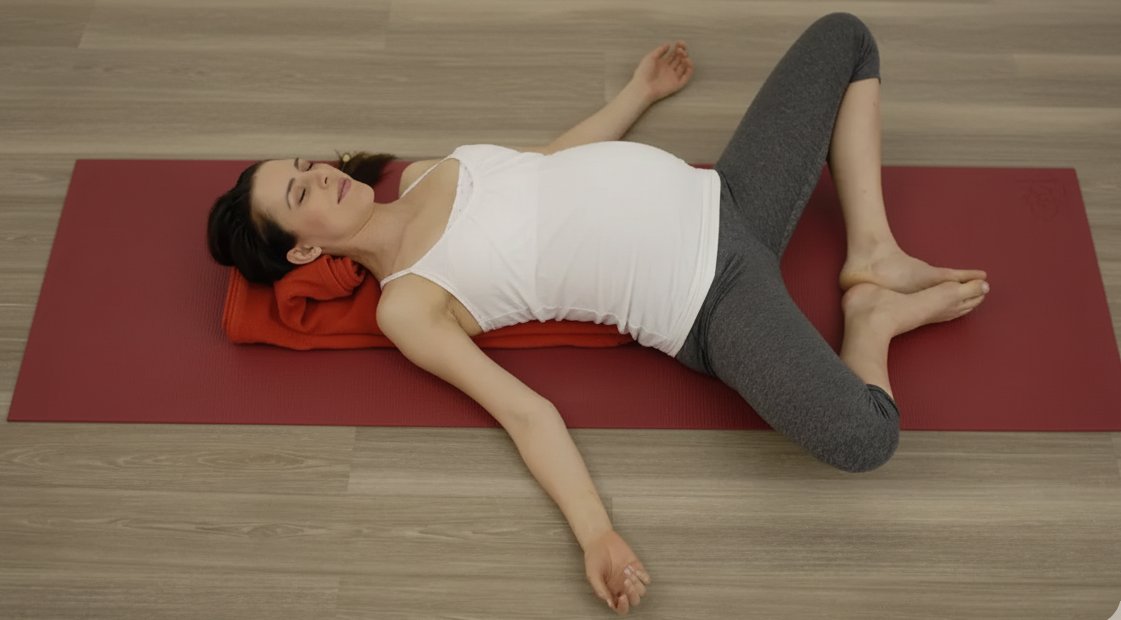
- Lying twist. Arms out to the sides, lower both knees to one side on an exhale, return on an inhale, then go to the other side. On the last round, stay for three breaths on each side.
- Rolling bridge. Feet on the floor. On an exhale, gather the pelvic floor and peel the pelvis up a little; on the inhale, roll down. Repeat, rising only as high as feels easy on the knees and neck.
- Butterfly rock. Bring the soles of the feet together, hold them or use a strap, and rock gently side to side.
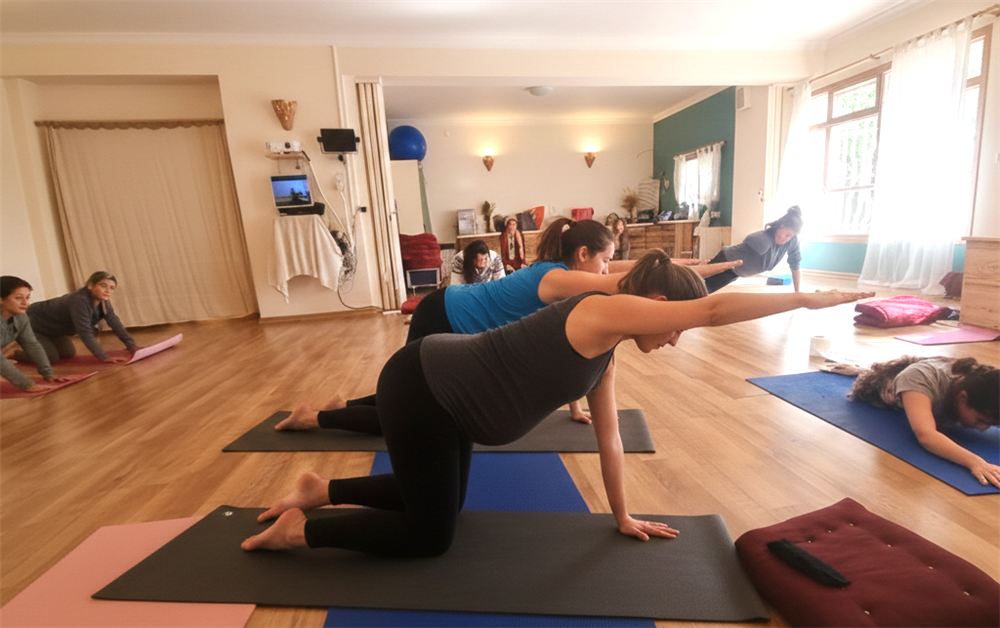
- Cat and pelvic circles. On hands and knees, circle the pelvis both ways, then move between arching and rounding with the breath.
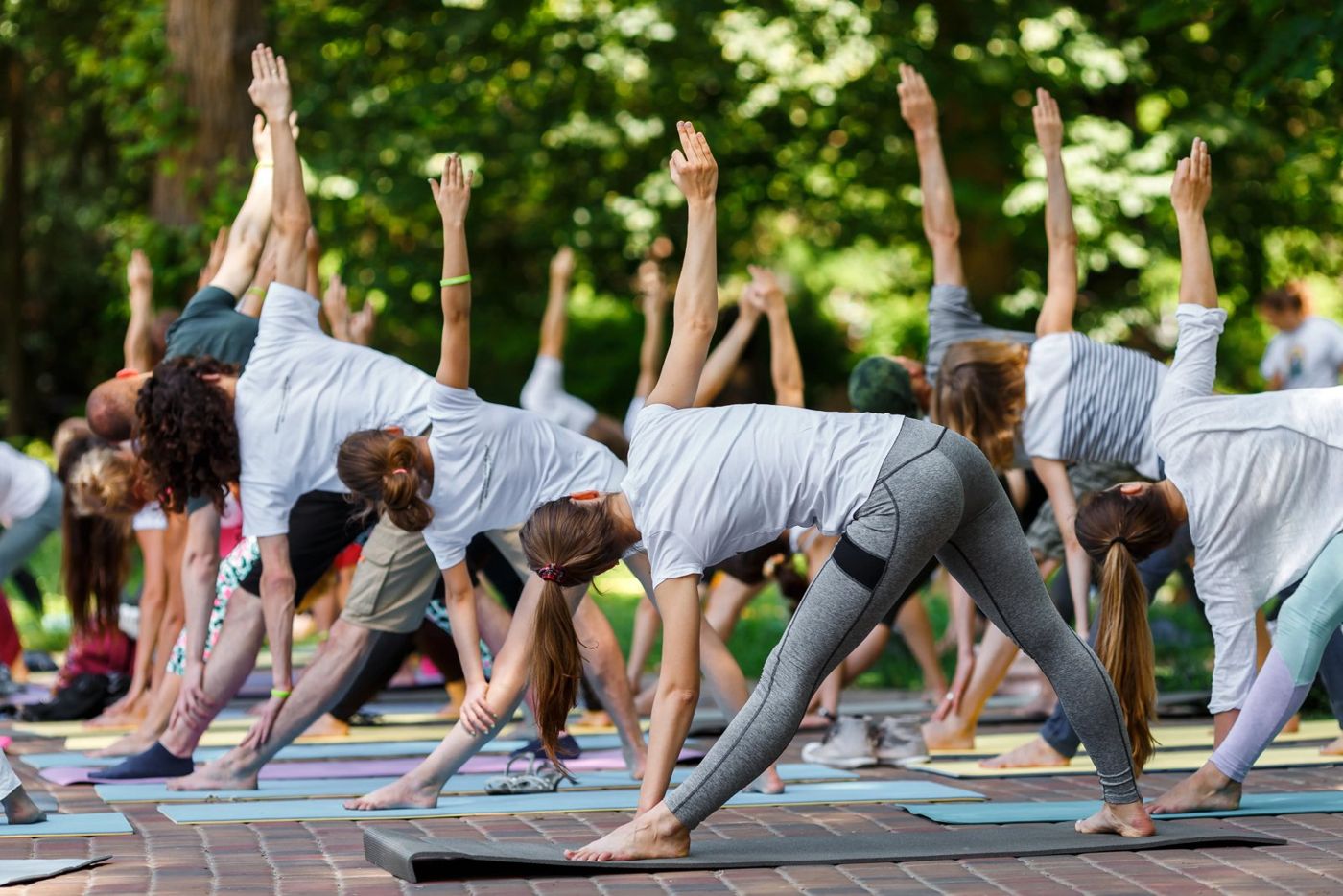
- Standing balance. Stand on one leg, near a wall if needed, eyes on a fixed point. Breathe steadily, then change sides.
Where the projects differ
They agree on the anchors but not on every detail. Some cue an "sss" or "f" sound on the exhale, while a teacher's note warned that switching sounds confuses beginners: pick one. Some treat the energetic language of the tradition, chakras, grounding energy, stagnation, as central; others stay close to anatomy. Several leaned on naturopathic diet rules and herbal remedies; those are left out here, because the evidence for them is thin.
Practice safely
Stop if anything causes sharp pain. Ask your doctor before practicing if you are pregnant, undergoing fertility treatment, recovering from surgery, or living with a neurological condition. New or changing pelvic pain, heavy or unusual bleeding, leaking that keeps getting worse, or a feeling of heaviness in the pelvis should be checked by a doctor or pelvic health physiotherapist.
The bottom line
A decade and more later, the heart of these projects still stands: breathe well, know your pelvic floor, move regularly, and adapt practice to the body you have this week and this decade. The tradition adds something the science does not measure, which is the habit of listening. Used together, with medical care when it is needed, they make a calm and practical way to live in a woman's body.
Sources and further reading
- Dumoulin C, Cacciari LP, Hay-Smith EJC. Pelvic floor muscle training versus no treatment, or inactive control treatments, for urinary incontinence in women. Cochrane Database of Systematic Reviews. 2018;10:CD005654. Link
- MedlinePlus Medical Encyclopedia. Mittelschmerz. U.S. National Library of Medicine. Link
- Office on Women's Health. Menopause basics. U.S. Department of Health and Human Services. Link
- National Institute of Arthritis and Musculoskeletal and Skin Diseases. Exercise for your bone health. Link
Based on works from the 2011 women's yoga teacher course, reviewed and updated. General information, not medical advice. Medical review: pending.