- The brain sets the pace of the monthly cycle. A small region called the hypothalamus steers the pituitary gland, which in turn steers the ovaries.
- Stress works through the same channels. A body under long, heavy strain can quiet the cycle, while calm supports birth and breastfeeding.
- Slow breathing and rest are among the few direct ways we can influence the "rest" side of the nervous system. That is where the course placed practice.
Two messengers, one conversation
The body uses two systems to coordinate itself. Nerves carry fast electrical signals, measured in thousandths of a second. Hormones are chemical messengers carried in the blood. They are slower, but their effects last longer, from minutes to days.
The bridge between the two is the hypothalamus, at the base of the brain. It takes in information from the body and the senses and sends instructions to the pituitary gland just below it. The pituitary then signals other glands, including the ovaries. Most of these loops are kept in balance by feedback: when a hormone rises, it tells the brain to send less of the signal that produced it.
The nervous system's two modes
The automatic, or autonomic, part of the nervous system has two branches that work as a pair. The course works compared them to an accelerator and a brake.
- Sympathetic ("fight or flight"): the heart speeds up, blood pressure rises, blood moves towards the large muscles, digestion slows. Adrenaline from the adrenal glands supports this state.
- Parasympathetic ("rest and digest"): the heart slows, digestion and repair resume, the body stores energy.
Both are healthy. Trouble comes when the accelerator stays pressed for weeks or months.
The monthly cycle, step by step
Cycles commonly last between about 21 and 35 days. In a textbook 28-day cycle:1
- Early in the cycle, follicle-stimulating hormone (FSH) from the pituitary helps a group of follicles in the ovary grow. One becomes dominant and produces rising amounts of estrogen, which thickens the lining of the uterus.
- Around mid-cycle, high estrogen flips the feedback, and the pituitary releases a surge of luteinizing hormone (LH), with a smaller rise in FSH. Ovulation follows roughly a day later.
- After ovulation, the empty follicle becomes the corpus luteum, which makes progesterone and some estrogen. Progesterone prepares the lining for a possible pregnancy and slightly raises body temperature. This phase usually lasts about two weeks.
- If there is no pregnancy, the corpus luteum fades, progesterone and estrogen fall, and the lining is shed as a period. The unfertilised egg simply breaks down; it is not "expelled" with the bleeding.
Birth and breastfeeding
Oxytocin is made in the hypothalamus and released from the back of the pituitary. It drives contractions of the uterus in labor and the "let-down" of milk when a baby suckles, both through feedback loops that build on themselves.3 Prolactin, from the front of the pituitary, makes milk. Frequent breastfeeding keeps prolactin high, which can hold back ovulation for a time.
The works agreed on one point that also fits the evidence: fear and stress hormones can work against oxytocin, so a laboring woman who feels safe, warm and undisturbed tends to labor more easily. Several works also described a burst of adrenaline in the final stage that helps the mother become alert. That is a recognised idea in some birth approaches, but it is less well studied, so we offer it as the course's view rather than settled fact.
Across the years
Estrogen rises at puberty, cycles through the fertile years, and becomes irregular in perimenopause, when hot flushes, sleep changes and mood changes are common. Menopause, twelve months without a period, comes on average around age 52, and the transition before it often lasts several years.2
Stress links back into this rhythm. Ongoing stress, weight loss or very heavy exercise can quiet the hypothalamus enough to stop ovulation. This is a recognised condition, functional hypothalamic amenorrhea, and it is usually reversible when the strain eases.4
The emotional side: the course's map
Every work in the archive paired each hormone with a mood. This part is tradition and personal experience, not established science, but many women find it a useful way to listen to themselves:
- Before ovulation: outward energy, ease with people, starting new things.
- After ovulation: turning inward, calm, reflection, a time to review.
- Before the period: more sensitivity, sometimes irritability or tiredness.
- After birth: attention narrowing around the baby, often felt as a "scattered" mind for everything else.
Research does show that some women are sensitive to normal hormone shifts, but experiences vary widely. Use the map as a question, not a rule.
Where the works differ
- Progesterone and mood. Some works called it calming and protective against low mood. Others linked it to heaviness, irritability or even depression. Both experiences are reported; there is no single effect that applies to every woman.
- When FSH peaks. Some placed the peak at the period, others just before ovulation. In fact it rises a little at the start of the cycle and peaks alongside LH at mid-cycle.1
- How much "love hormone". Some works treated oxytocin as a key to trust and loyalty. Its roles in birth and milk are solid; its broader social effects in people are still debated.
Practice ideas from the course
The works themselves describe few exercises. What follows turns their main principle, supporting the "rest" branch of the nervous system and moving with the cycle instead of against it, into simple practice. Slow breathing, at fewer than about ten breaths a minute, has been linked in small studies to greater parasympathetic activity, more relaxation and less anxiety.5
- Notice your rhythm. For two or three cycles, jot down one line a day: energy, mood, sleep. Look for your own pattern rather than the textbook one.
- Lengthen the exhale. Sit or lie comfortably. Breathe in through the nose for a count of four, out for a count of six. Continue for five minutes. Keep it easy; never strain or hold the breath.
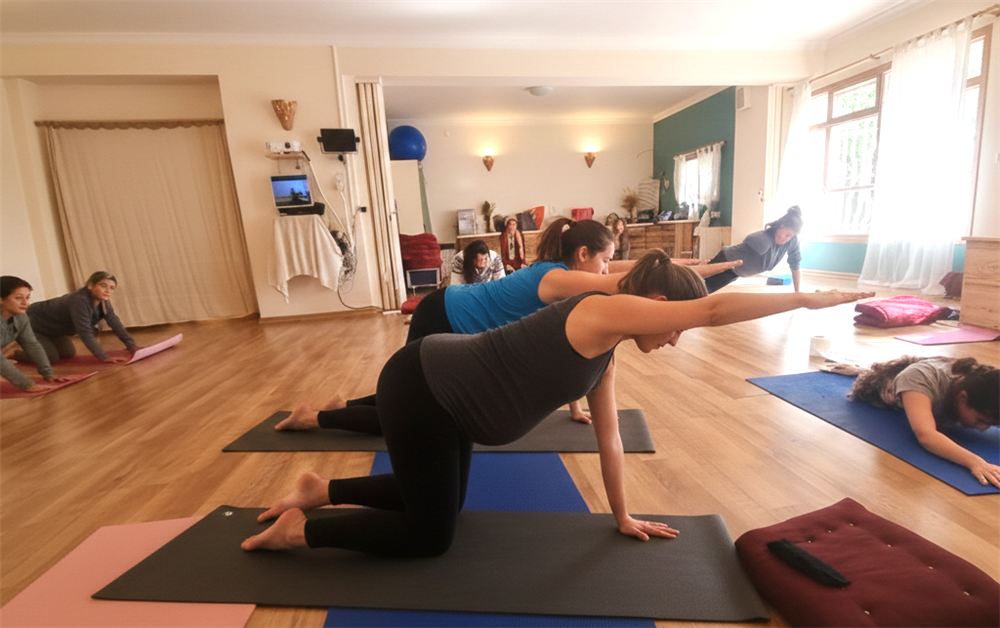
- Match the practice to the phase. On high-energy days, choose more active, flowing sequences. Before and during the period, choose gentler, supported positions and longer rests.
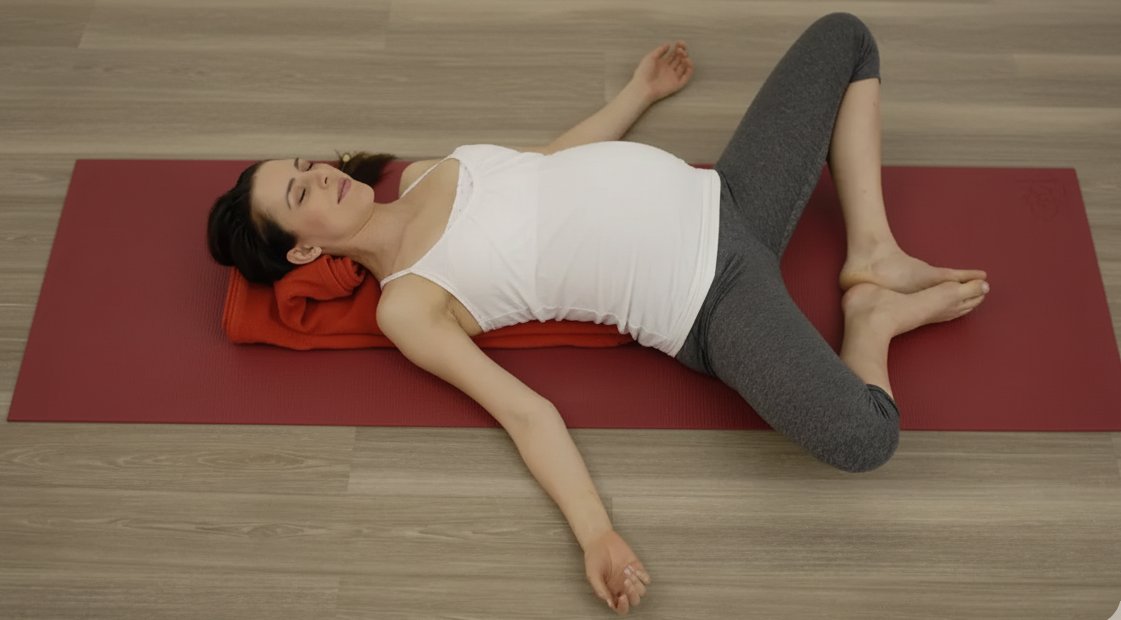
- End with stillness. Close each practice with a few minutes lying on your side or back, supported by cushions, letting the breath slow on its own.
- Protect calm in big transitions. In late pregnancy and after birth, the same principle applies: quiet, warmth, privacy and closeness, as much as your circumstances allow.
When to see a professional
See a doctor if your periods stop for three months or more without pregnancy, if cycles are often longer than 45 days, or if bleeding is very heavy or painful. Seek help too if low mood or anxiety before your period disrupts your life, or if menopause symptoms are hard to live with. If slow breathing makes you dizzy, return to normal breathing.
Relaxin: a hormone with a reputation
The course works on pregnancy hormones gave relaxin a special place, as the hormone that loosens the joints and is often blamed for pelvic pain. Two details are worth updating. First, the timing: in women, relaxin levels are highest in the first trimester, not at the end of pregnancy, and its early roles seem to be tied to implantation and to the heart and circulation adapting to pregnancy.6 Second, the blame: a systematic review of six studies found only low-level evidence for a link between relaxin levels and pelvic girdle pain, and the studies did not agree with each other.7
So relaxin is real and busy, but it is not a simple switch for loose joints or pain. The course's practical advice still fits: in pregnancy, move within a comfortable range rather than pushing to the end of it.
The bottom line
The course's central insight holds up: the female hormonal rhythm is steered by the brain and is sensitive to stress and safety. Practice cannot rewrite hormones, but slow breathing, rest and paying attention to your own pattern are gentle, reasonable ways to support the "rest" side of the system.
Sources and further reading
- Thiyagarajan DK, Basit H, Jeanmonod R. Physiology, Menstrual Cycle. StatPearls. NCBI Bookshelf. Link
- Office on Women's Health, U.S. Department of Health and Human Services. Menopause basics. Link
- Oxytocin. StatPearls. NCBI Bookshelf, updated 2025. Link
- Gordon CM, Ackerman KE, Berga SL, et al. Functional hypothalamic amenorrhea: an Endocrine Society clinical practice guideline. Journal of Clinical Endocrinology & Metabolism. 2017;102(5):1413–1439. Link
- Zaccaro A, Piarulli A, Laurino M, et al. How breath-control can change your life: a systematic review on psycho-physiological correlates of slow breathing. Frontiers in Human Neuroscience. 2018;12:353. Link
- Halls ML, Bathgate RAD, Sutton SW, Dschietzig TB, Summers RJ. International Union of Basic and Clinical Pharmacology. XCV. Recent advances in the understanding of the pharmacology and biological roles of relaxin family peptide receptors 1–4. Pharmacological Reviews. 2015;67(2):389–440. Link
- Aldabe D, Ribeiro DC, Milosavljevic S, Bussey MD. Pregnancy-related pelvic girdle pain and its relationship with relaxin levels during pregnancy: a systematic review. European Spine Journal. 2012;21(9):1769–1776. Link
Based on works from the 2011 women's yoga teacher course, reviewed and updated. General information, not medical advice. Medical review: pending.