- The course matched practice to the cycle: quiet and restorative during the period, stronger after it, and steadying, balance-based work in the days before the next one.
- Regular exercise is linked to less period pain, and yoga shows early promise, though the studies are small.23
- The phases are a guide, not a rule. Your own energy on the day matters more than the calendar.
The cycle, in plain terms
A cycle runs from the first day of one period to the day before the next. In adults it usually lasts somewhere between 21 and 35 days.1 Four things happen across it:
- The period. Estrogen and progesterone have fallen, and the lining of the uterus is shed.
- The follicular phase. Follicle-stimulating hormone (FSH) helps an egg mature, and rising estrogen rebuilds the lining.
- Ovulation. A surge of luteinizing hormone (LH) releases the egg, around day 14 in a 28-day cycle, and earlier or later in shorter or longer ones.
- The luteal phase. Progesterone rises to prepare the lining. If there is no pregnancy, both hormones fall again and the next period begins.1
Many women notice their energy, mood and comfort shifting along with these changes, though the pattern is personal. Premenstrual symptoms are thought to come from how sensitive each woman is to these normal hormonal changes, rather than from a hormone "imbalance".4
The course's map: three seasons
The course described the month as three seasons rather than four phases. Its images were poetic, and they are offered here as the course's approach, not as physiology.
- Letting go, the period: a time to slow down, turn inward and clear what is no longer needed. In yogic language, this is when apana, the downward-moving energy, is strongest.
- Receiving, from the end of the period to ovulation: energy returns, the mind feels clear and outward, and the practice can be fuller and more dynamic.
- Acceptance, from ovulation to the next period: a more inward, sometimes heavier time, when the aim is steadiness and kindness to oneself.
Running through every phase were the same three anchors: slow breathing with a long exhale, gentle work with mula bandha (a light lift of the pelvic floor on the exhale), and a calm, listening attention to the pelvis. Slow breathing that lengthens the exhale is a well-known way to help the body settle.
During the period: rest and soften
Almost every practice in the archive for these days was quiet, close to the floor and short. The pelvic floor work was softer than usual, and strong abdominal effort was left out. A typical ten-minute sequence:
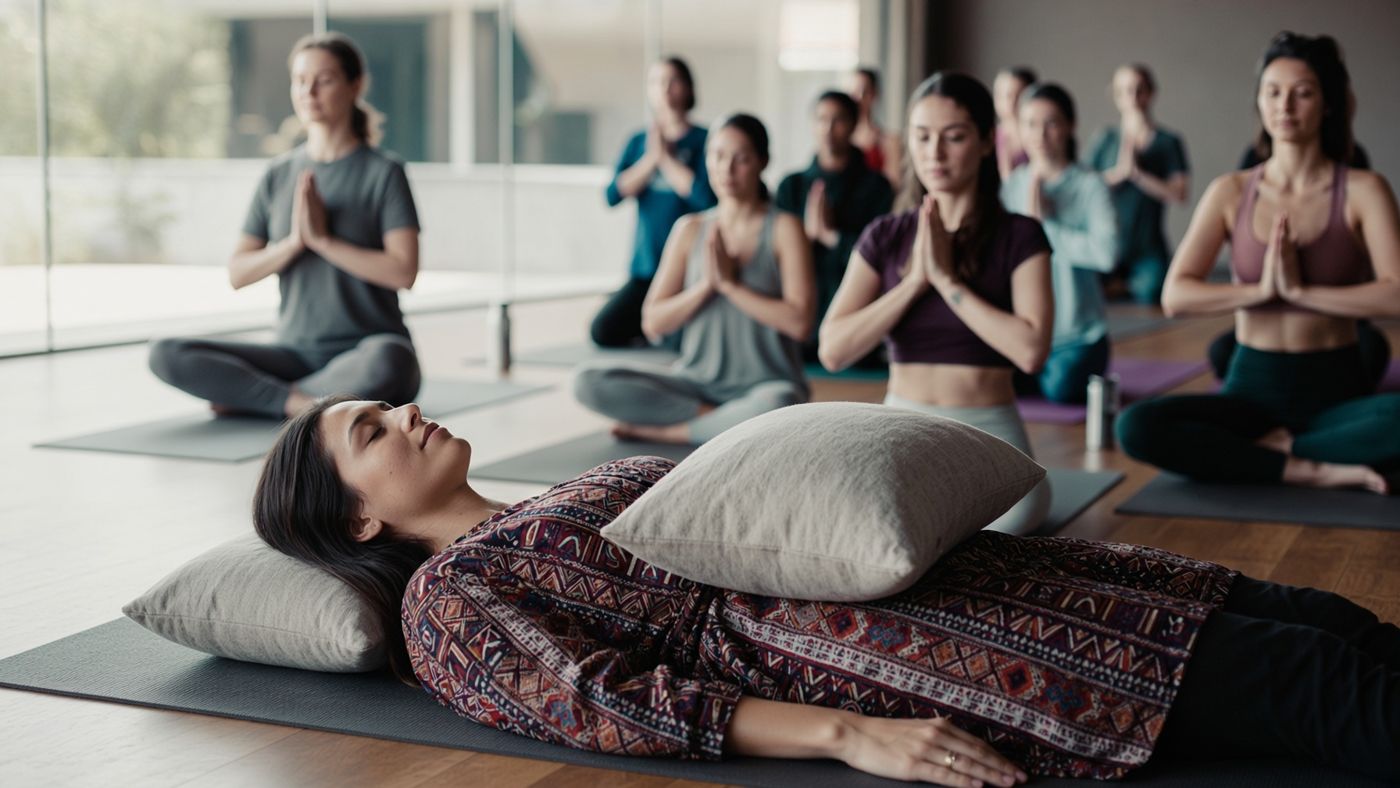
- Arrive. Lie on your back, knees bent or supported on a bolster. Rest your hands below the navel with thumbs and index fingers touching in a diamond shape (the course called it the earth mudra). Breathe slowly into the lower belly.
- Pelvic rocking. Feet on the floor. On the exhale, let the lower back ease toward the mat; on the inhale, let it return. Small and slow.
- Knee circles. Hug the knees in, a hand on each, and circle them gently in both directions to loosen the hips.
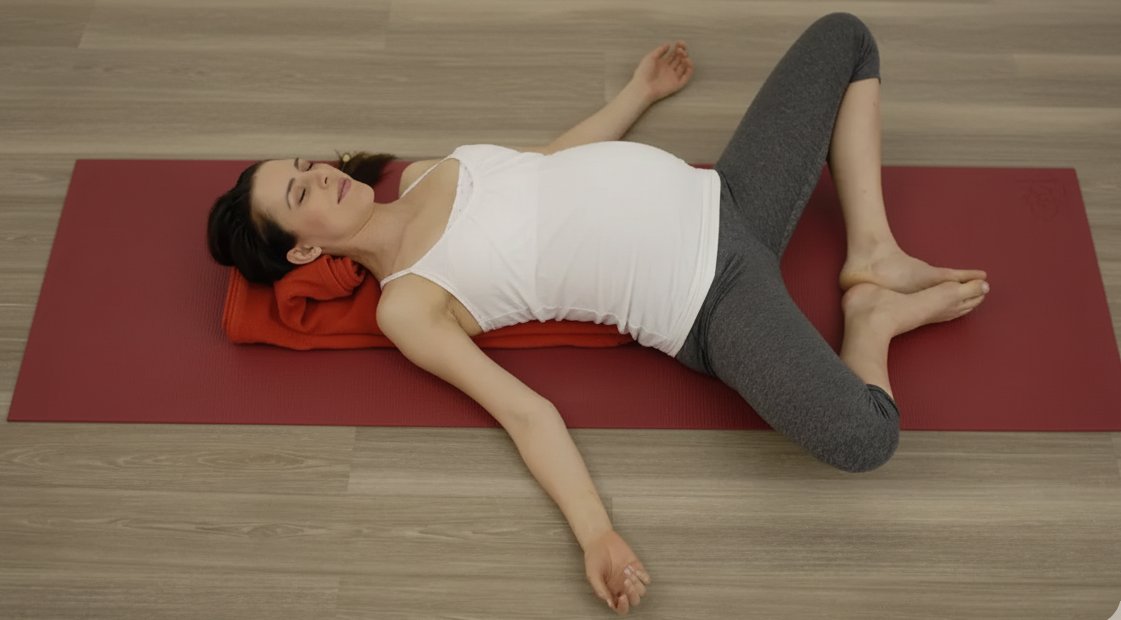
- Reclined butterfly. Soles of the feet together, knees falling open onto cushions. Stay for several breaths.
- Knee-drop twist. Feet on the floor, arms wide. On an exhale, let both knees fall to one side, breathe, and change sides.
- Cat and cow, then child's pose. On hands and knees, round and arch with the breath, then fold back toward the heels with the knees wide and rest.
- Rest. Lie down, cover yourself and stay a few minutes. A low hum on the exhale was a favorite way to quiet the nervous system.
After the period: build energy
For the days after bleeding ends, the course invited more movement: bridge lifts rolling up one vertebra at a time, hip-opening seated forward bends, cat and cow with circles of the pelvis, standing poses such as Warrior I, and standing quad stretches. The idea was to restore energy gradually, then let the practice become stronger and more dynamic toward ovulation.
After ovulation: steady and balance
For the longer stretch before the next period, the course leaned on balance, twists and forward bends, to feel grounded when mood or focus may wobble:
- Breathe with a long exhale. Lying down, lift the arms overhead as you inhale and lower them on a long exhale, perhaps with a soft "shhh".
- Bridge. Exhale to lift the hips slowly, inhale at the top, exhale to roll down. Five or six times.
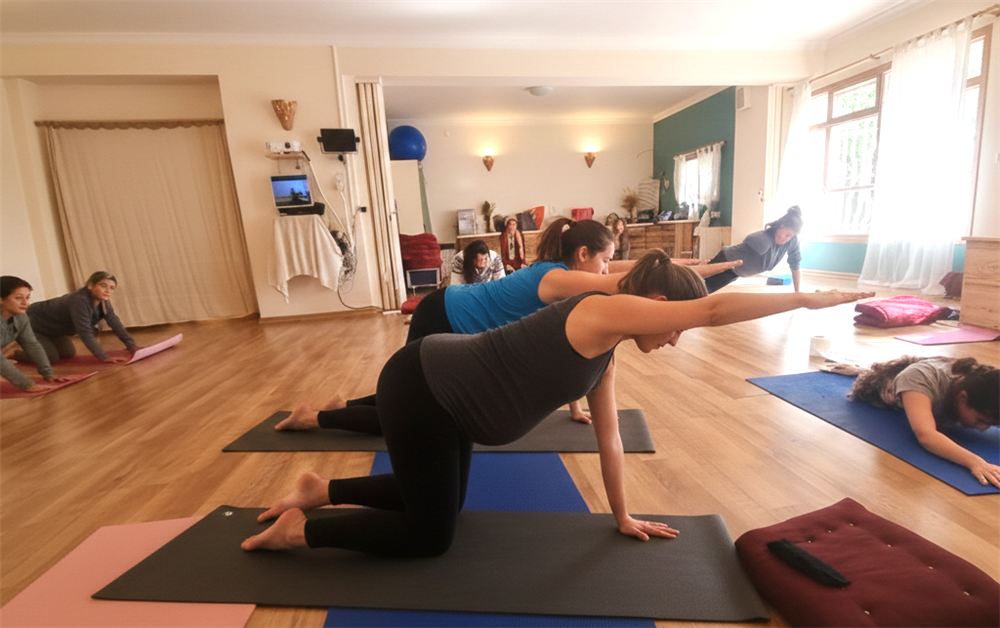
- Opposite arm and leg. On hands and knees, reach one arm forward and the other leg back on an inhale, return on the exhale. Alternate sides.
- Standing balance. Tree or eagle pose, near a wall if you like, eyes resting on one still point.
- Seated twist and forward bend. Twist gently to each side, then fold over one straight leg for a few slow breaths.
- Settle. Sit comfortably and breathe slowly for a minute or two.
Where the works differ
Inversions. Several works ruled out upside-down poses during the period, a common teaching in some yoga traditions. Yet one suggested legs up the wall for the same days, and another included headstand for the energetic days before ovulation. There is no good evidence that inversions during menstruation are harmful. It is reasonable to skip them if they feel wrong, and to do them if they feel fine. Headstand itself needs proper training at any time of the month.
How much pelvic floor work. Most works kept mula bandha soft during the period; one left it out entirely. All agreed it should never be forced.
How much change is possible. Some works promised that the right practice could "erase" premenstrual symptoms or irregular cycles. That goes beyond the evidence. Practice may ease symptoms for some women, but it is not a cure.
What the evidence says
A Cochrane review found that exercise, most often three sessions a week of 45 to 60 minutes, may substantially reduce period pain compared with doing nothing, though the trials were of low quality.2 A systematic review of yoga for period pain found preliminary evidence that it is safe and helps quality of life, and called for larger studies.3 For premenstrual symptoms, the NHS suggests regular exercise, yoga or meditation for stress, and good sleep.4
When to see a doctor
See a doctor if period pain stops you from daily life or does not ease with simple pain relief, if bleeding is very heavy or you pass large clots, if periods stop or become very irregular, or if premenstrual mood changes affect your life. Practice is a support, not a substitute for care.
The bottom line
The course's central idea is simple and kind: notice where you are in the month, and let the practice meet you there. Rest more when you need it, move more when you feel strong, and use breath and balance to steady the days in between.
Sources and further reading
- Cleveland Clinic. Menstrual cycle (normal menstruation): overview and phases. Link
- Armour M, Ee CC, Naidoo D, et al. Exercise for dysmenorrhoea. Cochrane Database of Systematic Reviews. 2019;(9):CD004142. Link
- McGovern CE, Cheung C. Yoga and quality of life in women with primary dysmenorrhea: a systematic review. Journal of Midwifery & Women's Health. 2018;63(4):470–482. Link
- NHS. Premenstrual syndrome (PMS). Link
Based on works from the 2011 women's yoga teacher course, reviewed and updated. General information, not medical advice. Medical review: pending.