- Lower back pain is very common in pregnancy, and it tends to become more common as pregnancy goes on.
- Regular exercise, on land or in water, may ease the pain. The evidence points in a helpful direction, but it is low quality. Yoga looks promising, based on only a few small studies.
- Back pain with fever, bleeding, pain when you pee, pain under the ribs, or numbness in the legs or genitals needs medical attention.
How common is it?
Very. A 2023 review pooled 28 studies with almost 13,000 pregnant women from around the world. On average, about 40% had lower back pain, and the share grew with each trimester:1
The studies varied a great deal, so these are rough figures. Other researchers put it higher: the Cochrane review described below says more than two-thirds of pregnant women have lower back pain at some point.2 Whichever number is closer, you are far from alone.
Pain at the front of the pelvis or deep in the buttocks, known as pelvic girdle pain, is a related but separate problem. We cover it in its own article.
Why it happens
There is no single cause. The explanations that come up most often are:
- Softer ligaments. During pregnancy, ligaments naturally soften and stretch to prepare the body for labour.5 Hormones such as relaxin and progesterone are thought to play a part.1
- More load. The growing baby and uterus, and the weight gained in pregnancy, add to what the spine carries.1
- A shifting posture. As the bump grows, the curve of the lower back tends to deepen and the body's centre of gravity moves forward, which stretches the muscles and ligaments of the lower back.1
Tiredness and being less active have also been linked to back pain in pregnancy.1
What the research says Evidence: low
The main summary is a Cochrane review from 2015, which looked at 34 trials with more than 5,000 pregnant women. Fifteen of those trials, with 1,847 women, looked at lower back pain.2
- Exercise. In seven trials (645 women), land-based exercise reduced pain, and in two trials it also helped women manage daily activities better. The authors concluded that any exercise, on land or in water, may reduce pregnancy-related back pain, but rated the evidence as low quality.2
- Water exercise. It is included in that conclusion, but the review does not report a separate result for it. If swimming or water classes feel good, there is no reason to avoid them, and no strong proof that they beat other exercise.
- Hands-on therapy. Single studies of osteopathic-style manual therapy, and of programs combining manual therapy, exercise and education, also suggested less pain, with moderate- to low-quality evidence.2
The authors were clear that new studies are very likely to change these conclusions.2
A larger review from 2019 looked at whether exercising in pregnancy prevents back and pelvic pain. Across 32 studies and more than 52,000 women, exercise did not lower the chance of developing pain, but women who exercised had less severe pain, during pregnancy and in the early weeks after birth. The evidence ranged from very low to moderate quality.3
And yoga?
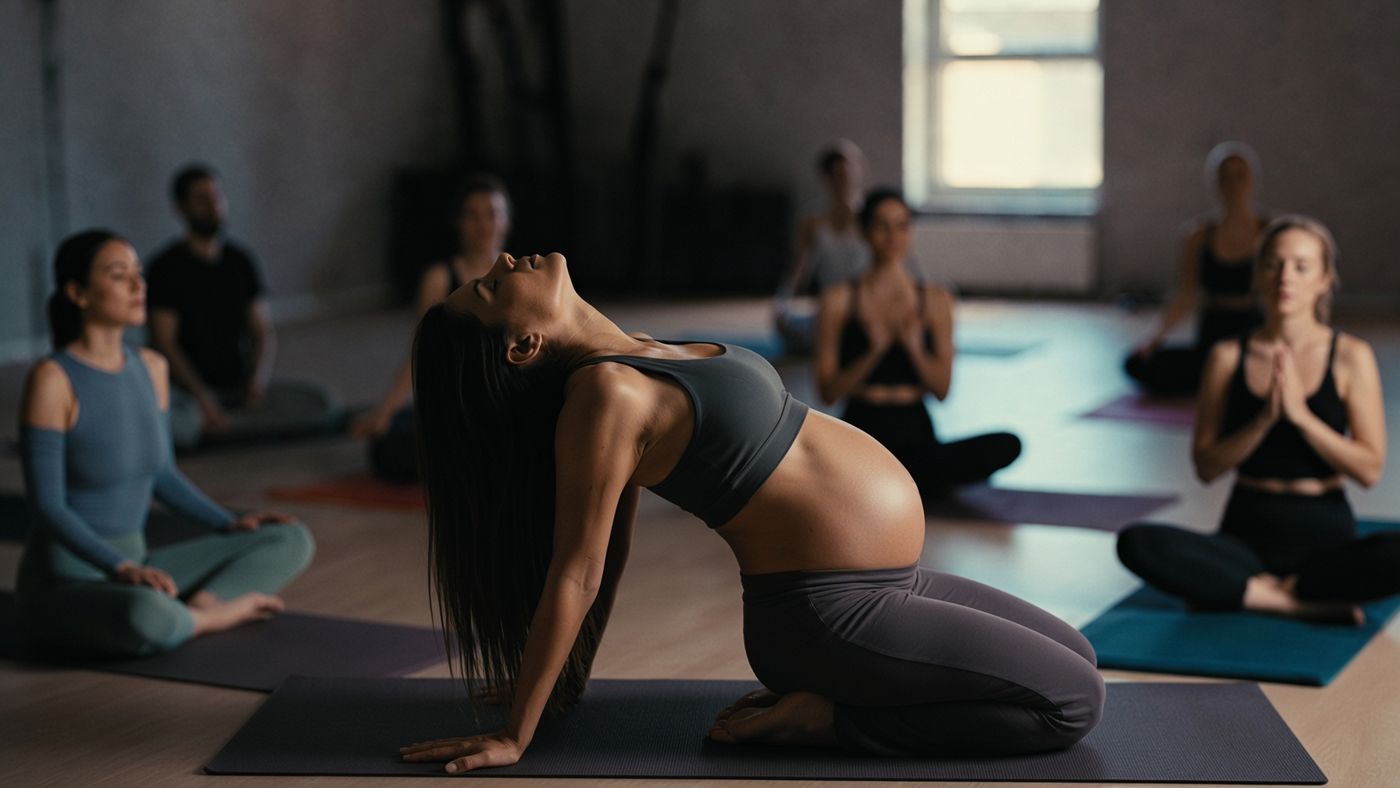
Yoga has been studied far less. In one Brazilian trial, 60 women with back and pelvic pain were randomly assigned to 10 weeks of yoga or to written posture advice. Pain dropped more in the yoga group.4 It is an encouraging result, but a single small trial, and quite a few women dropped out along the way.
So the honest summary is this: yoga is a reasonable, gentle way to move, and it fits the broader finding that exercise may help. It is not proven to work better than walking, swimming or any other movement you enjoy.
Everyday comfort
These tips come from NHS guidance. They have not been tested in trials, but they are sensible and low-risk.5
- Sitting: keep your back straight and well supported. A maternity support pillow can help.
- Lifting: bend your knees and keep your back straight, avoid heavy objects, and move your feet when you turn rather than twisting.
- Carrying: split shopping between two bags.
- Shoes: flat shoes spread your weight evenly.
- Rest: use a supportive mattress and get enough rest, especially later in pregnancy. A massage or a warm bath may also help.
- Pain relief: paracetamol is an option in pregnancy unless your GP or midwife says otherwise.
Sleeping: the safest position to fall asleep in is on your side, left or right. After 28 weeks, falling asleep on your back has been linked to a higher risk of stillbirth. Pillows under the bump and between the knees can make side lying more comfortable. If you wake on your back, simply turn onto your side again.6
A gentle practice
Not a treatment. A few minutes of slow movement that many women find soothing. Stop anything that hurts, and check with your midwife or doctor if you have been told to limit exercise.
- Arrive on all fours. Knees under hips, hands under shoulders, fingers facing forward. Lift the belly gently so the back is long and flat, like a tabletop.
- Round the back (cat). On an exhale, draw the belly in and let the back rise towards the ceiling, head and tailbone softening down. Keep the elbows soft and move only as far as is comfortable.5
- Return to flat. On the inhale, come back to the flat tabletop. The NHS version of this movement asks you not to sink the back into a hollow, so if the full "cow" arch feels uncomfortable, stop at flat.5 Repeat slowly up to 10 times.
- Small pelvic rocks. Sitting tall on a chair or ball, feet flat, gently rock the pelvis forward and back a few centimetres, letting the breath set the pace.
- Rest on your side. Lie on your side with one pillow between the knees and another under the bump.6 Breathe slowly into the back of the ribs for a few minutes.
When back pain needs attention
Contact your midwife or GP urgently if you have back pain and you are in your second or third trimester (it can be a sign of early labour), or you also have a fever, bleeding from the vagina or pain when you pee, or you have pain in one or both sides, under the ribs.5
Call your local emergency number or go to the emergency department if you have back pain and lose feeling in one or both legs, your bottom or your genitals.5
The bottom line
Lower back pain in pregnancy is common and usually not a sign that anything is wrong. Staying active, in whatever form feels good, is the best-supported thing you can do, even if the evidence is still modest. Yoga can be part of that. Look after how you sit, lift and sleep, and know the few warning signs that mean you should call for help.
Sources
- Salari N, Mohammadi A, Hemmati M, Hasheminezhad R, Kani S, Shohaimi S, Mohammadi M. The global prevalence of low back pain in pregnancy: a comprehensive systematic review and meta-analysis. BMC Pregnancy and Childbirth. 2023;23:830. Link
- Liddle SD, Pennick V. Interventions for preventing and treating low-back and pelvic pain during pregnancy. Cochrane Database of Systematic Reviews. 2015;(9):CD001139. Link
- Davenport MH, Marchand AA, Mottola MF, et al. Exercise for the prevention and treatment of low back, pelvic girdle and lumbopelvic pain during pregnancy: a systematic review and meta-analysis. British Journal of Sports Medicine. 2019;53(2):90–98. Link
- Martins RF, Pinto e Silva JL. Treatment of pregnancy-related lumbar and pelvic girdle pain by the yoga method: a randomized controlled study. Journal of Alternative and Complementary Medicine. 2014;20(1):24–31. Link
- NHS. Back pain in pregnancy. Last reviewed 10 January 2024. Link
- NHS. Tiredness and sleep problems in pregnancy. Last reviewed 11 March 2024. Link
This article is general information, not medical advice. Medical review: pending.