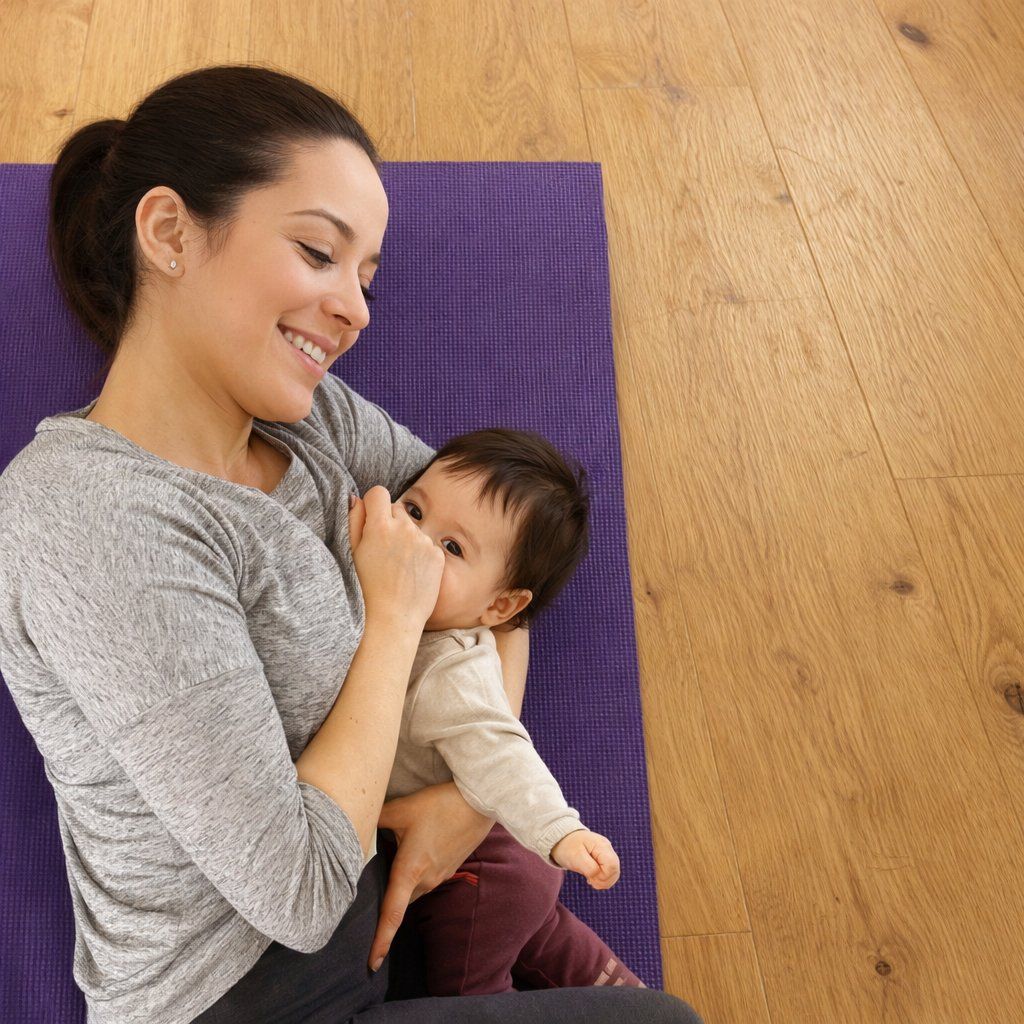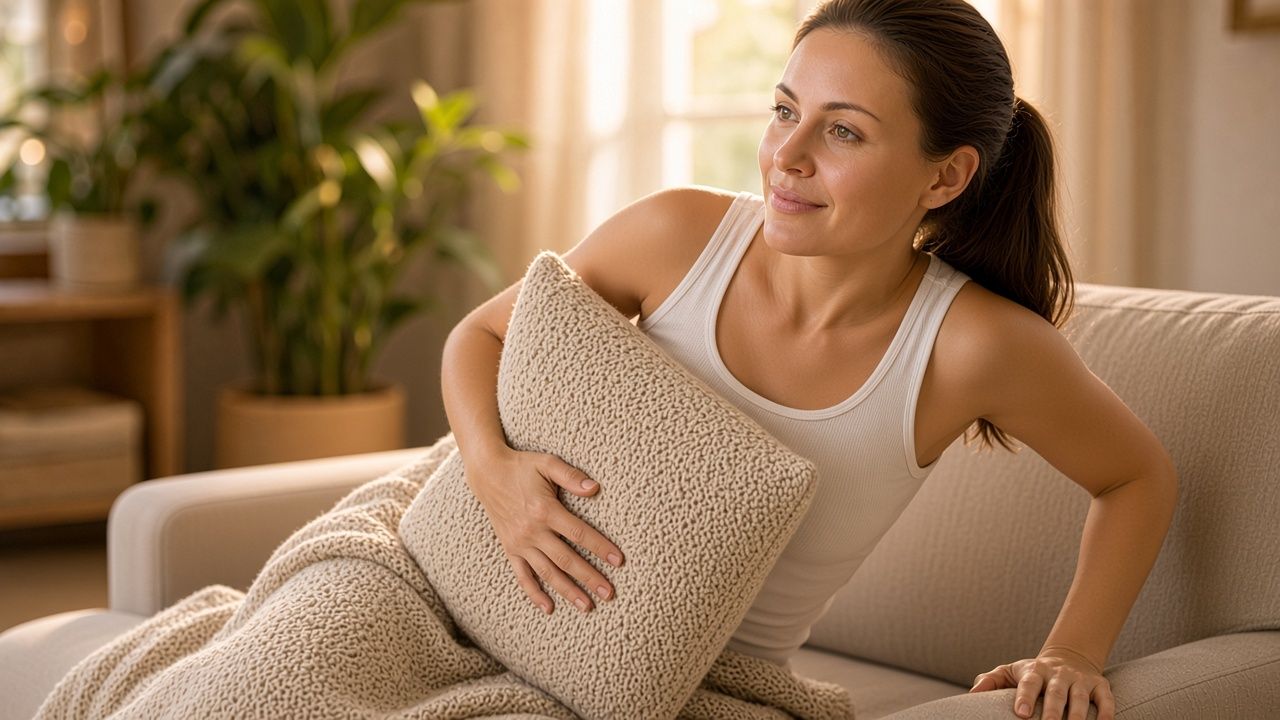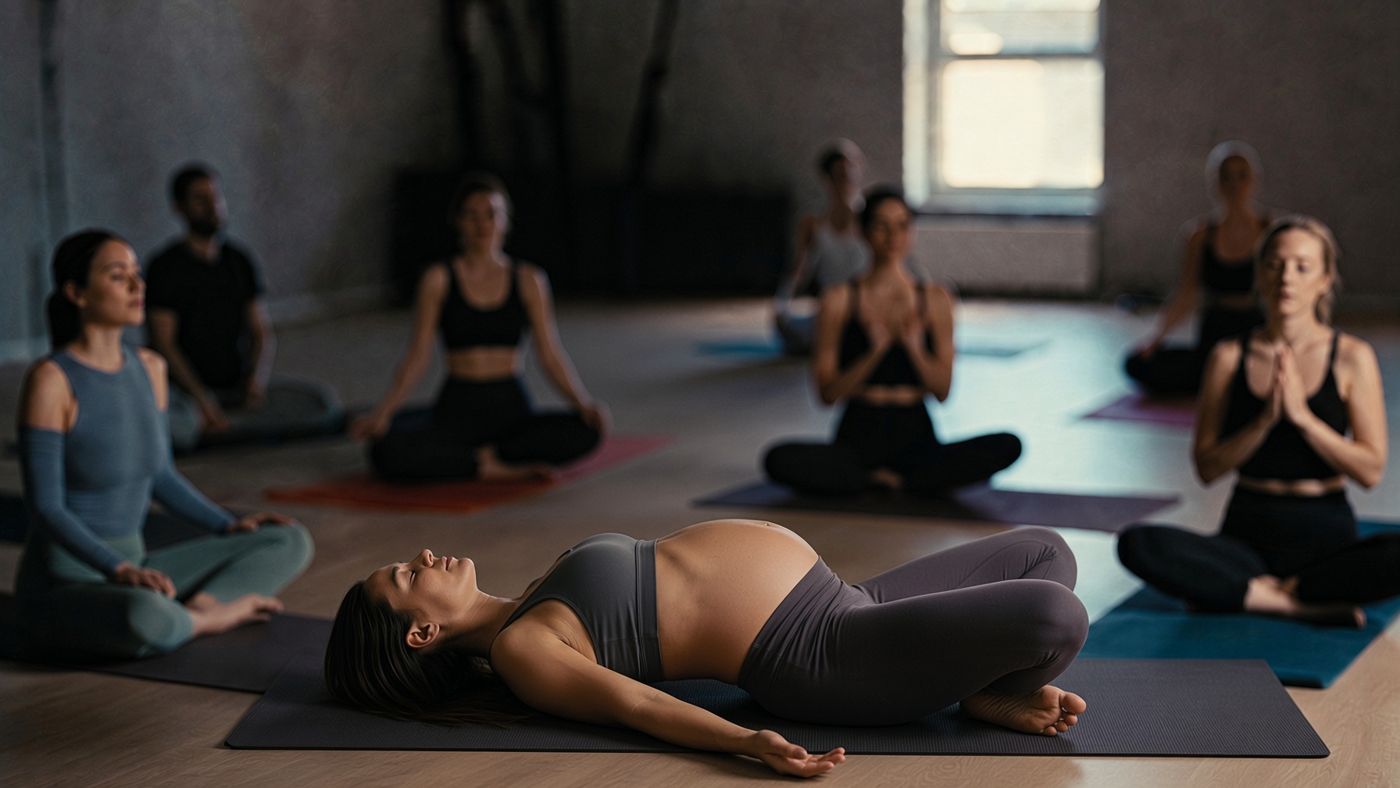
- Vaginismus is an involuntary tightening of the muscles around the vagina when something is about to be inserted. It is common, it is not your fault, and it is treatable.
- The breath and the pelvic floor move together: the floor softens and lowers as you breathe in, and lifts gently as you breathe out. This sequence is built on that rhythm.
- Yoga can support release and a kinder relationship with the body. It does not replace care from a doctor, a pelvic health physiotherapist or a sex therapist.
What vaginismus is
With vaginismus, the muscles around the entrance to the vagina tighten on their own when you try to insert something, such as a tampon, a finger, a speculum or a penis. You are not choosing to tighten, and you cannot simply decide to stop.1
The causes are often unclear. Anxiety or fear about sex, an earlier painful experience, a difficult examination, a difficult birth, painful infections, or messages that sex is shameful can all play a part.1 Today, doctors usually group vaginismus and painful sex together under one diagnosis, genito-pelvic pain/penetration disorder, because the two often overlap.2
Research describes a loop that many women will recognise: pain leads to fear, fear makes the muscles brace, and bracing makes the next attempt more painful. Several studies have found higher resting tension in the pelvic floor muscles of women with this condition.2 Treatment that works on both the body and the fear tends to work best. That usually means pelvic floor physiotherapy, gradual use of vaginal trainers (dilators), relaxation and breathing, and talking therapy, often together.12
Why the breath matters
The diaphragm, under your ribs, and the pelvic floor, at the base of the pelvis, behave like two ends of the same cylinder. Imaging studies show that both move down as you breathe in and both move up as you breathe out.3 So every slow inhale is a natural, gentle softening of the pelvic floor. You do not have to force anything; you can learn to follow it.
The course sequence uses this in every pose: a soft lift of the pelvic floor and lower belly at the end of the exhale, and a full, deliberate release on the inhale. The release is the real work.
The course's approach
The practice in the archive has three aims: to ease general tension in the body, to teach the difference between gathering and releasing the pelvic floor, and to build positive, friendly feelings toward this part of the body.
In the yoga tradition the pelvis is often described as a place where emotion and memory are held, and practices for this area lean on imagery, sound and warmth rather than effort. That is tradition, not physiology. But it fits well with what is known: that fear and the pelvic floor are closely linked, and that feeling safe helps muscles let go.2
One idea in the original course work has been updated. It suggested strengthening the pelvic floor so that it could relax better. For a pelvic floor that is already overactive, current practice puts the emphasis the other way: awareness and letting go first, with only light, short squeezes used to feel the contrast. So in the version below, every gathering is gentle and every release is longer and fuller than the squeeze before it.
The practice
About 30 to 40 minutes. Move slowly, rest whenever you like, and leave out anything that brings pain or anxiety.
On your back
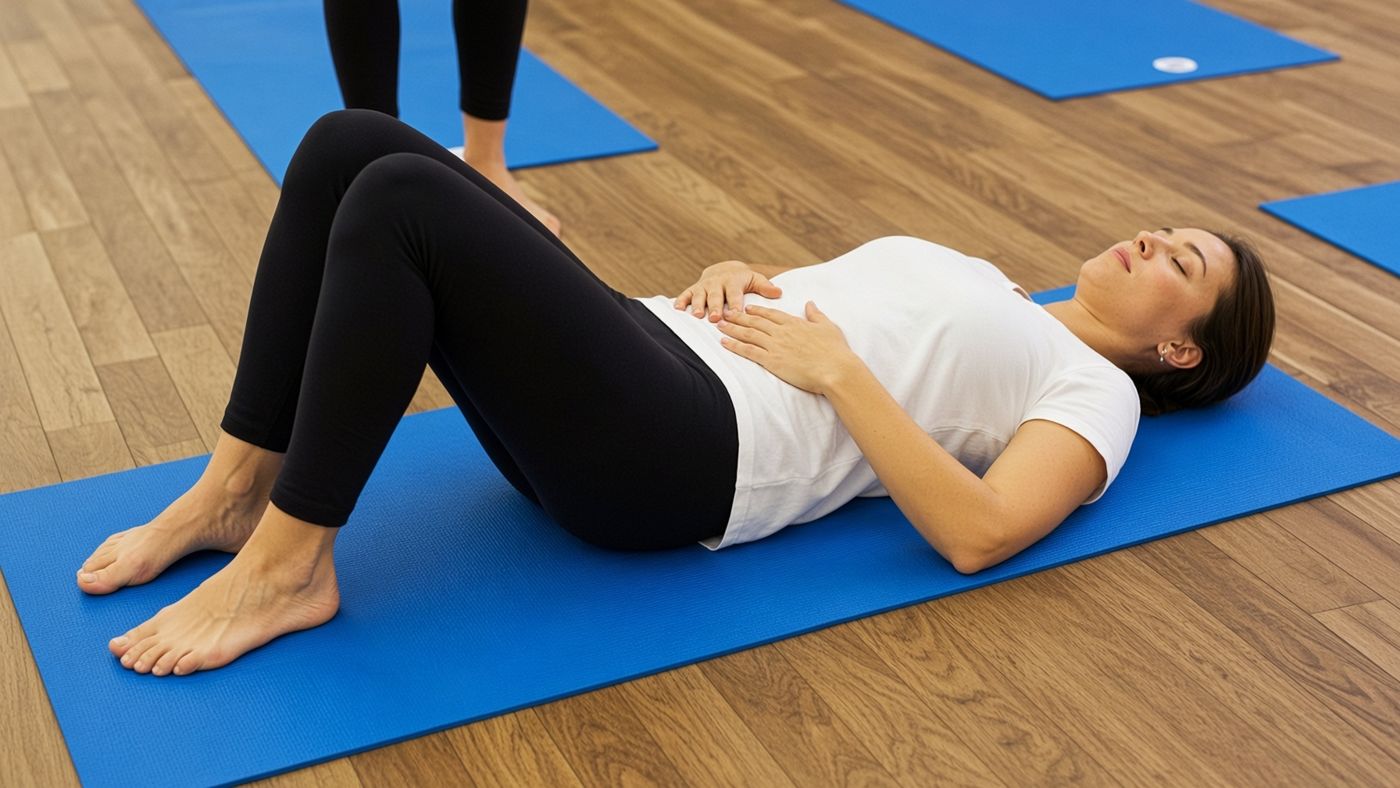
- Arrive. Lie on your back and let the mat take your weight. Breathe naturally for a minute. Then rest your hands on your belly and imagine the diaphragm lowering as you breathe in and rising as you breathe out.
- Long exhale. Lengthen the out-breath. At the end of each exhale, let the lower belly and pelvic floor draw in very lightly. As you breathe in, let everything go, completely.
- Arms and sound. Breathe in as the arms float overhead to the floor. Breathe out with a soft, long "shhh" as they return to your sides. The course pairs the end of the sound with a light lift of the pelvic floor, then a full release on the inhale. Three rounds.
- Knees to chest. Hug the knees in, then make slow circles with them, hands resting on the knees, to soften the hip joints in both directions.
- Crossed-leg release. Cross one thigh over the other, feet on the floor. Breathing out, press the thighs together lightly. Breathing in, let go fully and let the lower back find its natural curve. Notice how the area around the vagina feels as it releases. Five times, then let the crossed knees fall to one side in a gentle twist with arms wide. Change sides.
- Cradle the hips. Bend the knees out to the sides with the soles of the feet facing up, holding the feet or big toes. Rock gently from side to side and let the groins soften.
- Bound-angle rest. Bring the soles of the feet together and let the knees open, with cushions under the thighs if that feels better. Rest the hands on the floor or the lower belly and simply breathe.
- Small bridges. Feet hip-width apart. Breathing out, lift the hips a little. Breathing in, lower slowly and release the pelvic floor completely. Repeat a few times, then stay up for a few breaths if it feels easy, keeping the pelvic floor soft rather than gripping.
On hands and knees, then closing
- Cat and cow. Breathe in to let the belly drop and the chest open. Breathe out to round the back, starting the movement from the base of the pelvis.
- Hip circles. Start with small circles of the pelvis, then let them grow, eyes closed, like a slow belly dance. Figures of eight are welcome. The course adds a soft hum.
- Leg reach and downward dog. Reach one leg back level with the hips, keeping the pelvis steady. If it suits you, move into downward dog with that leg lifted, then bend the knees and rest the belly on the thighs before changing sides.
- Pigeon, supported. From all fours, bring one knee forward between the hands. Breathe in to lengthen the spine; breathe out to fold forward over the front leg. Stay a few breaths and let the groin and pelvic floor soften. Use a cushion under the hip, or choose a reclined figure-four on your back instead if the knee complains.
- Child's pose, knees wide. Let the pelvis, the groins and the vagina release toward the floor.
- Seated forward fold. Sit with legs long, stroke down the legs with your palms, then fold forward only as far as is comfortable.
- Warm hands. Lie back in bound angle again. Rub your palms until warm and rest them on the groins. The course suggests imagining the area opening slowly, like a flower.
- Rest. Lie in relaxation for at least five minutes.
Go gently
Pain is not a sign of progress. Keep every squeeze light and short, and make every release longer. If any pose or image stirs up distress, stop and rest, and consider working with a therapist. Before assuming the cause is vaginismus, see a doctor to rule out infection or skin conditions, and ask about a pelvic health physiotherapist. If you are recovering from a birth, wait until your caregiver is happy for you to return to exercise, and skip deep hip openers until then.
The bottom line
Vaginismus is a protective reflex that has become too strong, not a failing. This practice from the course archive offers a slow way to meet that reflex with breath, warmth and patience, moving with the natural rise and fall of the pelvic floor and spending most of the time in release. Used alongside professional care, it can be a kind and steady companion.
Sources and further reading
- NHS. Vaginismus. NHS website (UK). Link
- Dias-Amaral A, Marques-Pinto A. Female genito-pelvic pain/penetration disorder: review of the related factors and overall approach. Revista Brasileira de Ginecologia e Obstetrícia. 2018;40(12):787–793. Link
- Talasz H, Kremser C, Kofler M, Kalchschmid E, Lechleitner M, Rudisch A. Phase-locked parallel movement of diaphragm and pelvic floor during breathing and coughing: a dynamic MRI investigation in healthy females. International Urogynecology Journal. 2011;22(1):61–68. Link
Based on works from the 2011 women's yoga teacher course, reviewed and updated. General information, not medical advice. Medical review: pending.