- Deep trunk muscles (the pelvic floor, the deepest abdominal layer, the small muscles along the spine and the diaphragm) work as a team to steady the body, often switching on just before you move.
- Pregnancy, birth, long hours of sitting and pain can change how this team works. Gentle, regular, unhurried practice helps you find it again.
- The course's core idea still holds: steady first, then move. Some of its numbers and absolute rules did not survive a closer look.
Movers and stabilizers
Almost every work in the course archive opens with the same picture. The body has large, superficial muscles that create movement: they bend, extend and rotate the joints, they are strong and quick, and they tire fast. Beneath them sit smaller, deeper muscles that lie close to the joints. Their job is less to move the bones than to control them: to keep a joint steady while the larger muscles do their work.
The students described these deep muscles as endurance muscles, built to work gently for long periods rather than to produce force. That description fits what we know: postural muscles such as the multifidus contain a high share of slow, fatigue-resistant fibres. The course also liked a simple image of a "zipper" muscle: the deep abdominal layer is the one you use without thinking when you gently draw in to close a tight pair of trousers.
It is a useful teaching picture. In reality the line between movers and stabilizers is not sharp. Many muscles do both, depending on the task, and the more careful works in the archive said so.
Who is on the team
Every work agreed on a central group in the trunk:
- The lifting muscles of the pelvic floor (the levator ani), as distinct from the sphincters that close the openings.
- The transversus abdominis, the deepest of the four abdominal layers. Its fibres run horizontally around the waist, from the lower ribs, the pelvis and the connective tissue of the lower back to the midline at the front, like a wide belt.
- The deepest, smallest back muscles, especially the multifidus, which spans a few vertebrae at a time along the spine.
- The diaphragm, the breathing muscle that forms the roof of the abdomen.
Together these four form something like a container around the abdomen: a roof, a floor, a belt and a back wall. When they work together they help manage pressure inside the abdomen and give the lower spine and pelvis support. Several works added muscles that both move and stabilize, such as the inner thigh muscles, the iliopsoas and the deep shoulder blade muscles. That is a reasonable extension, as long as it is clear these also have big moving roles.
What they do, and when
The course stressed timing: the deep muscles switch on first, before and during an effort, and let go at the end. This part is well supported. In a classic laboratory study, the transversus abdominis contracted just before the arm moved in people without back pain, as if the body were preparing the trunk in advance. In people with low back pain, that contraction came later.1
The pelvic floor joins in too. When women contract the pelvic floor, the deep abdominal muscles tend to activate with it, and the other way round.2 This is the scientific side of what many works described as a link between the belly, the back and the pelvic floor. For women this matters: the pelvic floor supports the bladder, uterus and bowel, and it has to respond whenever pressure in the abdomen rises, in a cough, a sneeze, a laugh or a lift.
The course placed these ideas inside a wider yogic frame: the pelvis as the body's centre, the breath (and in particular the downward-moving energy called apana in the yoga tradition) as a way into this deep layer. These are ideas from the tradition and from the course's approach, not physiology, but many people find them a helpful way to direct attention inward.
What weakens them
The works listed the same causes again and again: long hours of slumped sitting, shallow breathing under stress, pushing down hard when emptying the bowel or bladder, pregnancy and birth, and abdominal training that presses the belly down and out instead of drawing it in and up. Pain was also on the list, and rightly so: pain can change how the deep muscles are recruited. In people with back pain the timing of the transversus abdominis may change,1 and the multifidus can become smaller and less active.
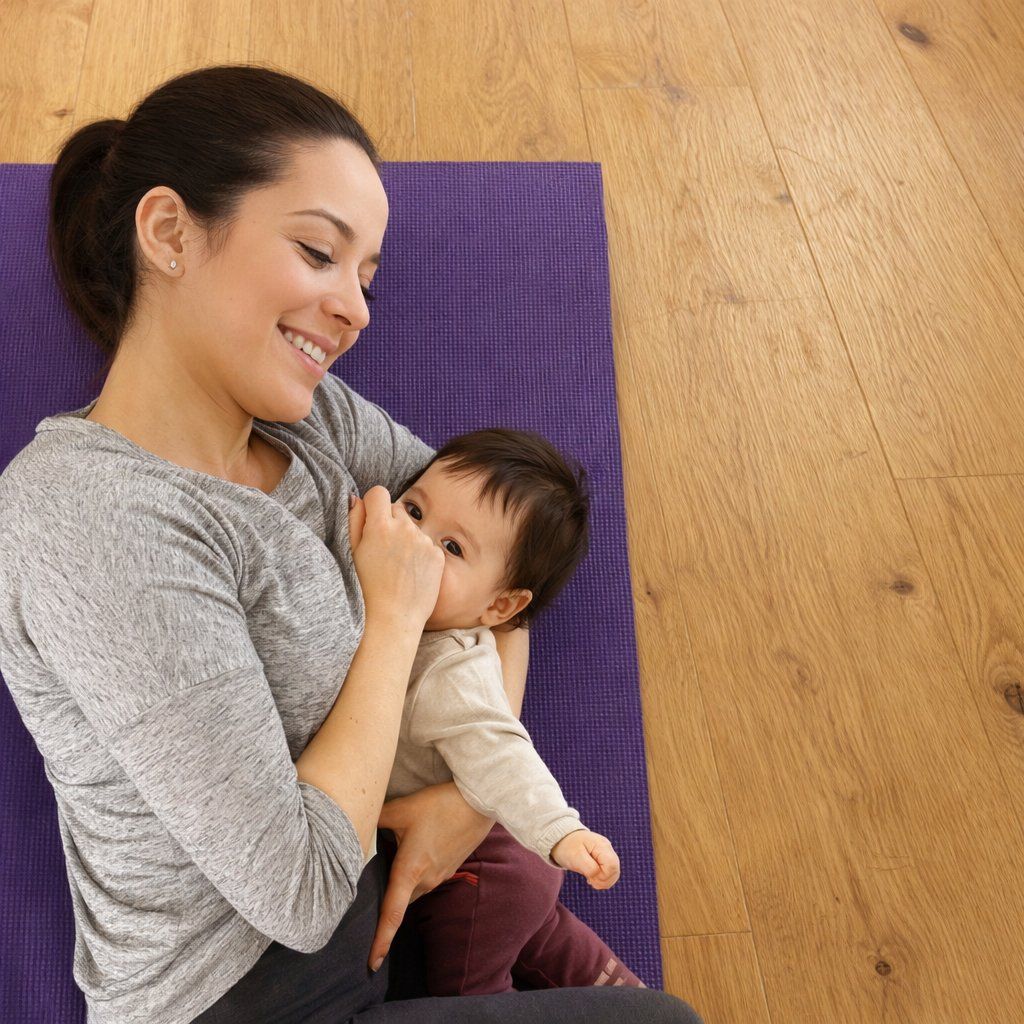
After birth this is especially relevant. The abdominal wall has been stretched for months and the pelvic floor has carried weight and, for many, stretched in birth. Reconnecting with this deep team is one of the gentlest ways to begin.
Practice ideas from the course
The works shared a clear principle: steady first, then move. Gather the centre, and only then begin the movement. Here is how they put it into practice.
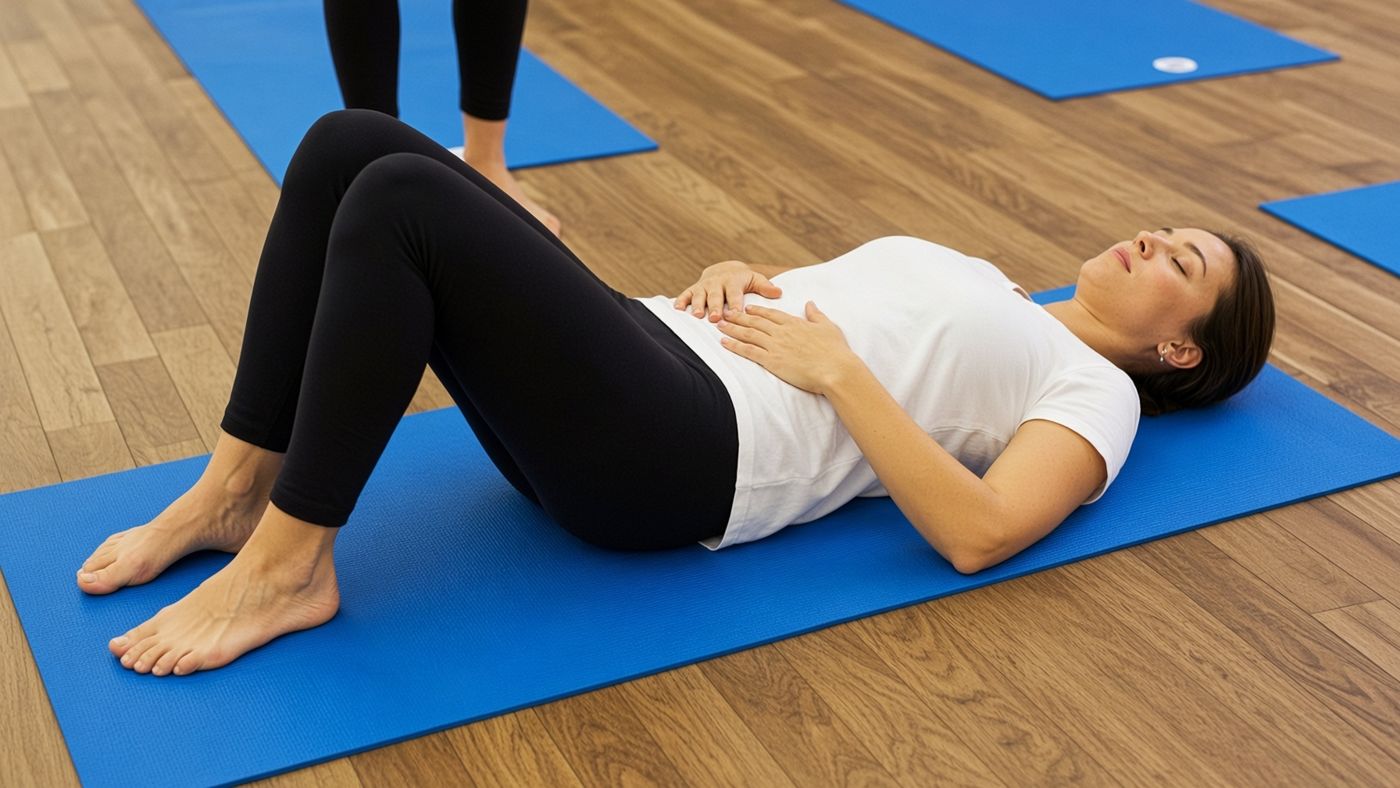
- Find a neutral position. Lie on your back with knees bent and feet on the floor. Let the lower back keep its natural small curve, neither pressed flat nor arched.
- Breathe wide. Inhale into the sides and back of the ribs, letting the belly and pelvic floor soften.
- Gather on the exhale. As you breathe out, gently lift the pelvic floor, as if drawing it inward and up, and let the lower belly draw softly toward the spine. Think about a quarter of your effort, not a squeeze.
- Lengthen. Imagine growing taller from the pelvis up through the crown of the head, with space between the ribs and the hips.
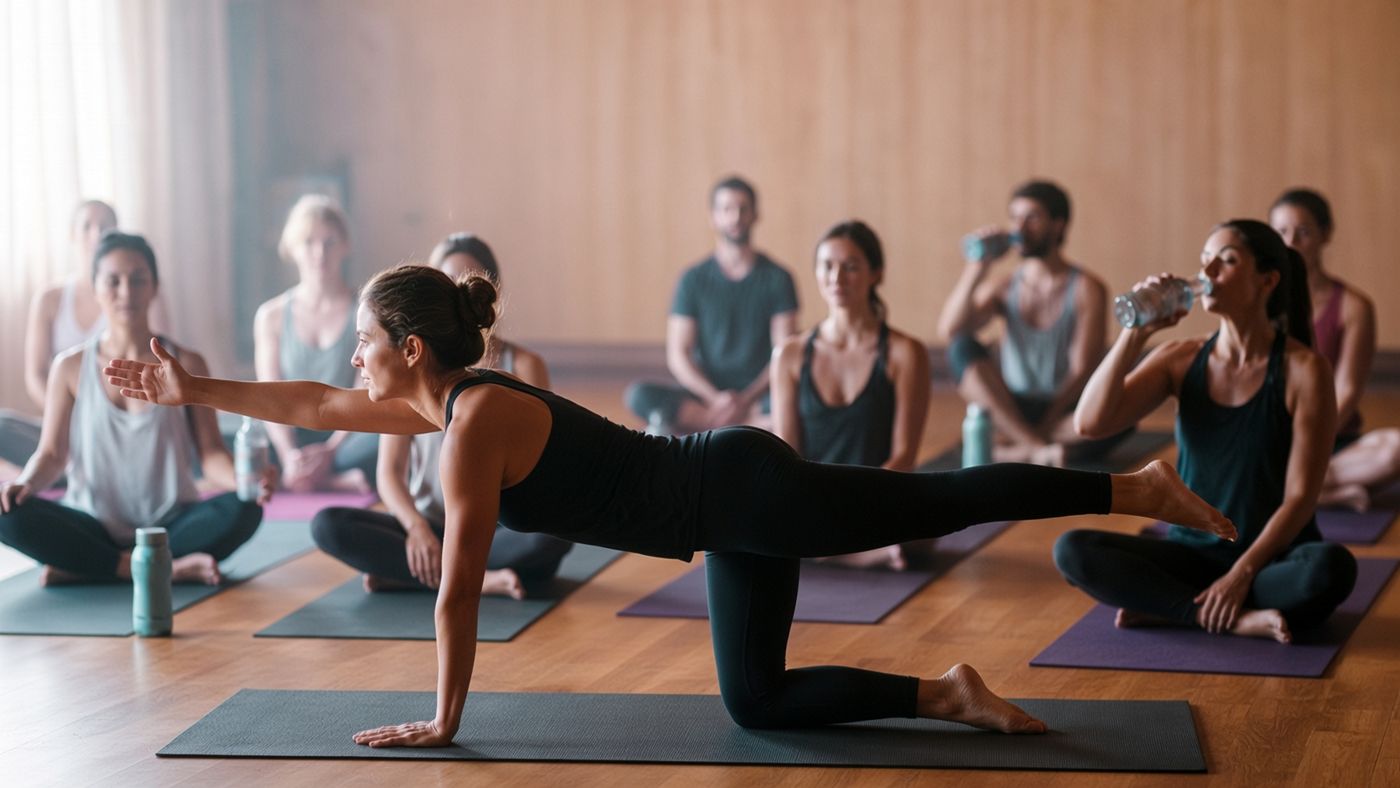
- Add small movements. Keeping that quiet support, slide one heel away along the floor or lift one arm overhead, then return. Short levers first.
- Use the floor or a wall. Positions where the hands or feet push against something steady, such as all fours, a supported bridge or a standing pose with a wall, suit this kind of work well.
- Take it into daily life. Gather before you lift a child, a bag or a basket, and exhale as you lift. Roll to your side to get out of bed.
The works agreed that this layer changes slowly, and that steady, regular practice over weeks and months matters more than intensity.
Safety notes
Practise within a comfortable, pain-free range, and let the breath stay easy: do not hold it while you gather. After a birth, start when your caregiver agrees. Leaking, a feeling of heaviness or bulging in the pelvis, pain during or after practice, or back pain that does not settle are reasons to see a pelvic health physiotherapist or your doctor.
Where the works differed, and what needed updating
The works agreed on the core message but not on the details. Some listed only the four trunk muscles; others added the hips and shoulders. One said the stabilizers strengthen quickly; most said slowly. Some said we cannot control them at will; others offered exercises to do exactly that.
Several popular numbers in the archive could not be confirmed: that stabilizers limit excess joint movement "by 80%", that they act alone below "20% of maximal effort", or that they take exactly three to six months to strengthen. The claim that they build bone mass because they have the "largest contact with bone" is also not supported. These are best left out.
The rule "they stop working in pain, so never exercise in pain" is close but too absolute. Pain does change how these muscles work, which is why practice should stay comfortable. But for long-term back pain, gentle movement is usually helpful. Research has also softened the idea that training the deep core is the only answer: for chronic low back pain, motor control exercise of this kind works about as well as other kinds of exercise, not better.3
For the pelvic floor the evidence is stronger. Regular pelvic floor muscle training clearly helps many women with stress urinary incontinence.4
The bottom line
The deep stabilizers are not a secret switch, and no single exercise unlocks them. They are a team that works best when you breathe freely, move in a comfortable range and give your body time. The course's simple advice holds up well: steady first, then move, and build slowly.
Sources and further reading
- Hodges PW, Richardson CA. Inefficient muscular stabilization of the lumbar spine associated with low back pain: a motor control evaluation of transversus abdominis. Spine. 1996;21(22):2640–2650. Link
- Sapsford RR, Hodges PW, Richardson CA, Cooper DH, Markwell SJ, Jull GA. Co-activation of the abdominal and pelvic floor muscles during voluntary exercises. Neurourology and Urodynamics. 2001;20(1):31–42. Link
- Saragiotto BT, Maher CG, Yamato TP, et al. Motor control exercise for chronic non-specific low-back pain. Cochrane Database of Systematic Reviews. 2016;(1):CD012004. Link
- Dumoulin C, Cacciari LP, Hay-Smith EJC. Pelvic floor muscle training versus no treatment, or inactive control treatments, for urinary incontinence in women. Cochrane Database of Systematic Reviews. 2018;(10):CD005654. Link
Based on works from the 2011 women's yoga teacher course, reviewed and updated. General information, not medical advice. Medical review: pending.