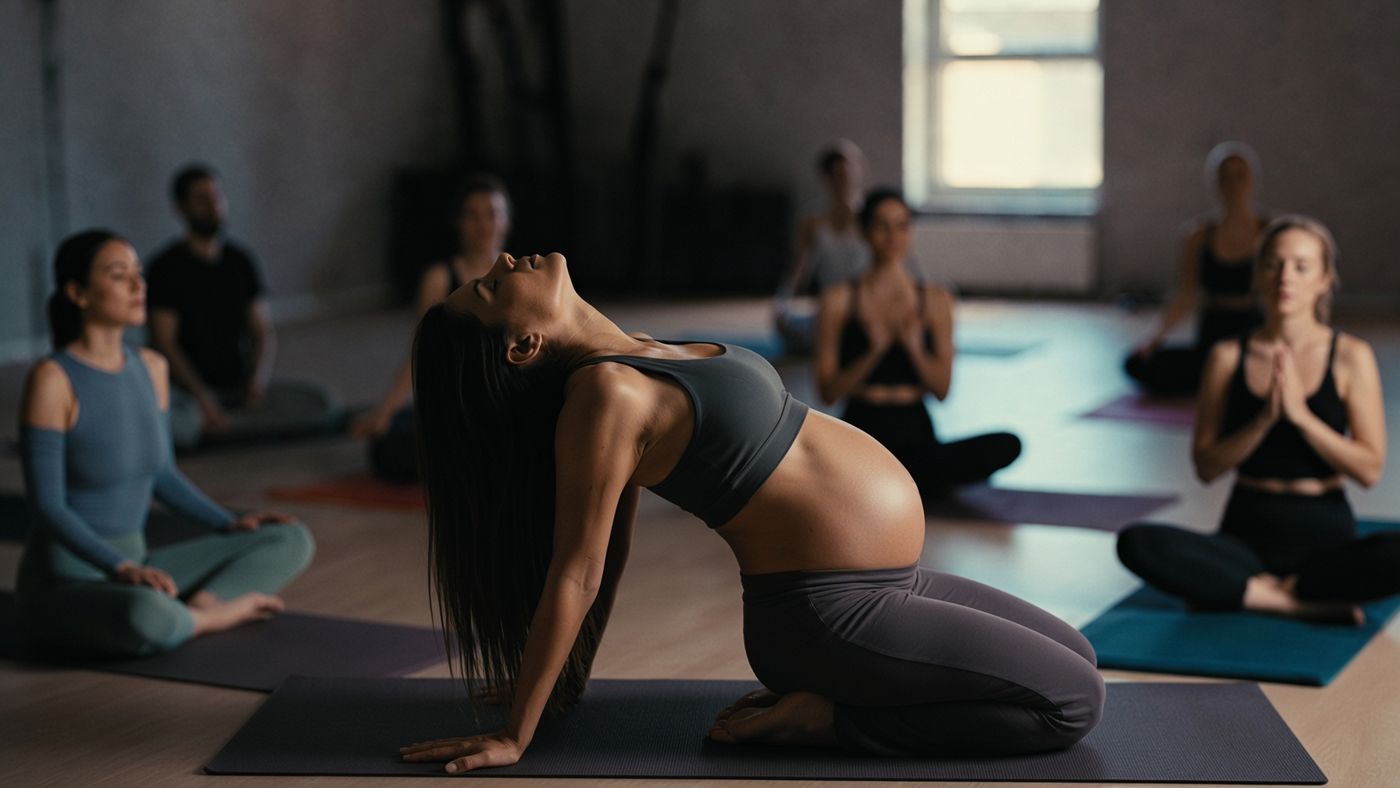
- Worry and mixed feelings are common in pregnancy. In a large review, about one in five women reported anxiety symptoms in each trimester, and more in the third.
- The course's approach: notice what is changing without judging it, find an "anchor" in the body and the breath, and treat change as temporary and even interesting rather than threatening.
- The practice below is gentle and suits most healthy pregnancies. If worry is persistent or heavy, tell your midwife or doctor. That is part of care, not a failure.
A season of constant change
Few times in life bring so much change so quickly. The belly grows, balance shifts, sleep and energy change, and the body that was familiar a few months ago can feel like someone else's. Alongside the physical changes come new roles, new plans and, often, new fears about the unknown.
The course works start from an old idea, usually credited to the Greek philosopher Heraclitus: nothing lasts except change. The body is always changing, through the stages of life, the seasons and even the hours of the day. Pregnancy simply makes this impossible to ignore.
Unease about this is normal. A review that pooled studies from around the world found that about 18% of pregnant women reported anxiety symptoms in the first trimester, 19% in the second and almost 25% in the third.1 The NHS notes that pregnancy can be a stressful time, and that some women experience anxiety or depression for the first time while pregnant.2
Watching instead of fighting
The heart of the course's approach is observation. Yoga, as these works describe it, is a way of learning to watch yourself: your reactions, your habits, the old patterns you fall back on under pressure. Not every discovery is pleasant. But once you can see a reaction, you are a little less ruled by it.
In practice this meant a simple instruction, repeated through the whole class: look at what is coming up, in the body or in the mind, without trying to change it. Just be there. If worry, criticism or impatience appear, breathe, notice them, and let them pass. Be patient with yourself.
The course also offered a reframe. Change does not have to mean danger. It can be temporary, new, even exciting. What is often missing, the works suggest, is a little trust that things can settle, in their own time.
An anchor in the body
One image runs through the material. In the body, the deep stabilizing muscles hold us upright and keep us balanced, even under strain. The course asked women to find a similar anchor in the mind: a belief, a value or a simple knowing that change can lead to growth. With something to lean on, you do not collapse when things are uncertain.
This is a teaching image, not a scientific claim, and the anchor will look different for every woman. For some it is faith, for some it is a person, for some it is the breath itself. The practice gives you a physical feeling of being held, by the floor, by your own legs, by a steady breath, to come back to.
The practice
About 45 minutes, slow and unhurried. Use cushions freely. The aim is to notice, not to stretch further.
- Change your place. Stand in mountain pose (tadasana) where you usually practise. Spread the toes, feel the whole foot on the floor, let the tailbone point down. Then move your mat to a spot that feels less familiar or less comfortable, and stand again. Notice what the small change stirs up, in the body and in your feelings.
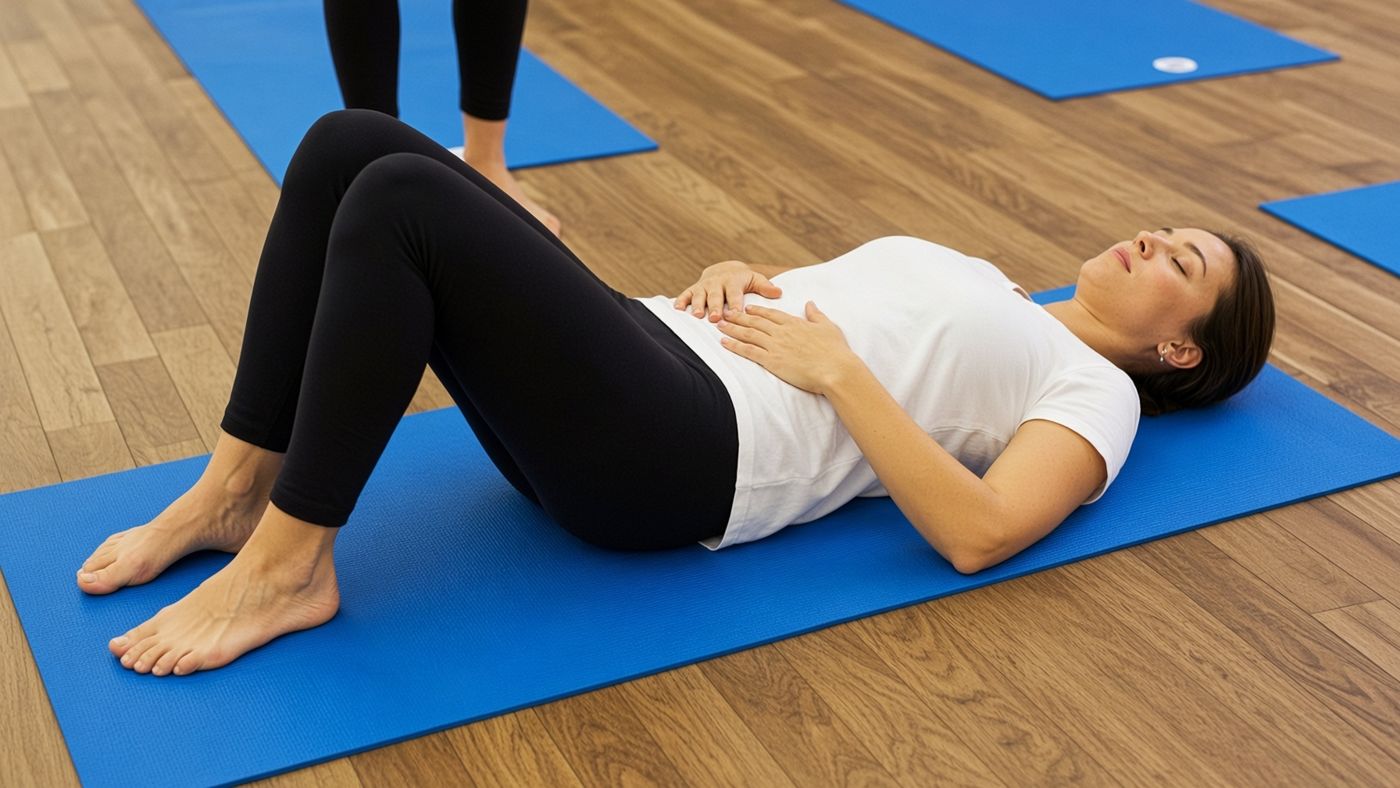
- Arrive. Lie down with your knees bent, hands on the belly, and breathe fully. In later pregnancy, keep this to a few minutes or lie propped on cushions or on your side.3 Feel the floor holding you.
- Gentle bridge. On an exhale, lift the hips a little; on an inhale, stay; on an exhale, lower slowly. On the way down, let the pelvic floor soften completely, and notice what it feels like to come down without gripping.
- Butterfly and knee circles. Sit or recline with the soles of the feet together, knees falling open on cushions. Rest the hands on the knees and circle them slowly. Then rest here and breathe.
- Open twist. From the butterfly, let the knees drift to one side and the head to the other, then switch. Keep twists gentle and open, turning away from the belly rather than across it.
- Side-lying. Lie on one side with a cushion between the knees. Circle the top shoulder slowly, then the top knee. Roll to the other side and repeat. Pause and notice: does one side feel different from the other?
- Open the chest. Recline over a bolster or firm cushions along the spine, arms open. This supported fish lets the chest widen and gives the breath more room.
- Standing, swaying. Back in mountain pose, shift the weight slowly from toes to heels and from side to side, then find the centre.
- Moving rounds. Do three slow rounds of a gentle sun salutation, adapted to your stage of pregnancy. Add one thing each round: hip circles in a wide stance, then pelvic circles on all fours, then a long "ahh" on each exhale.
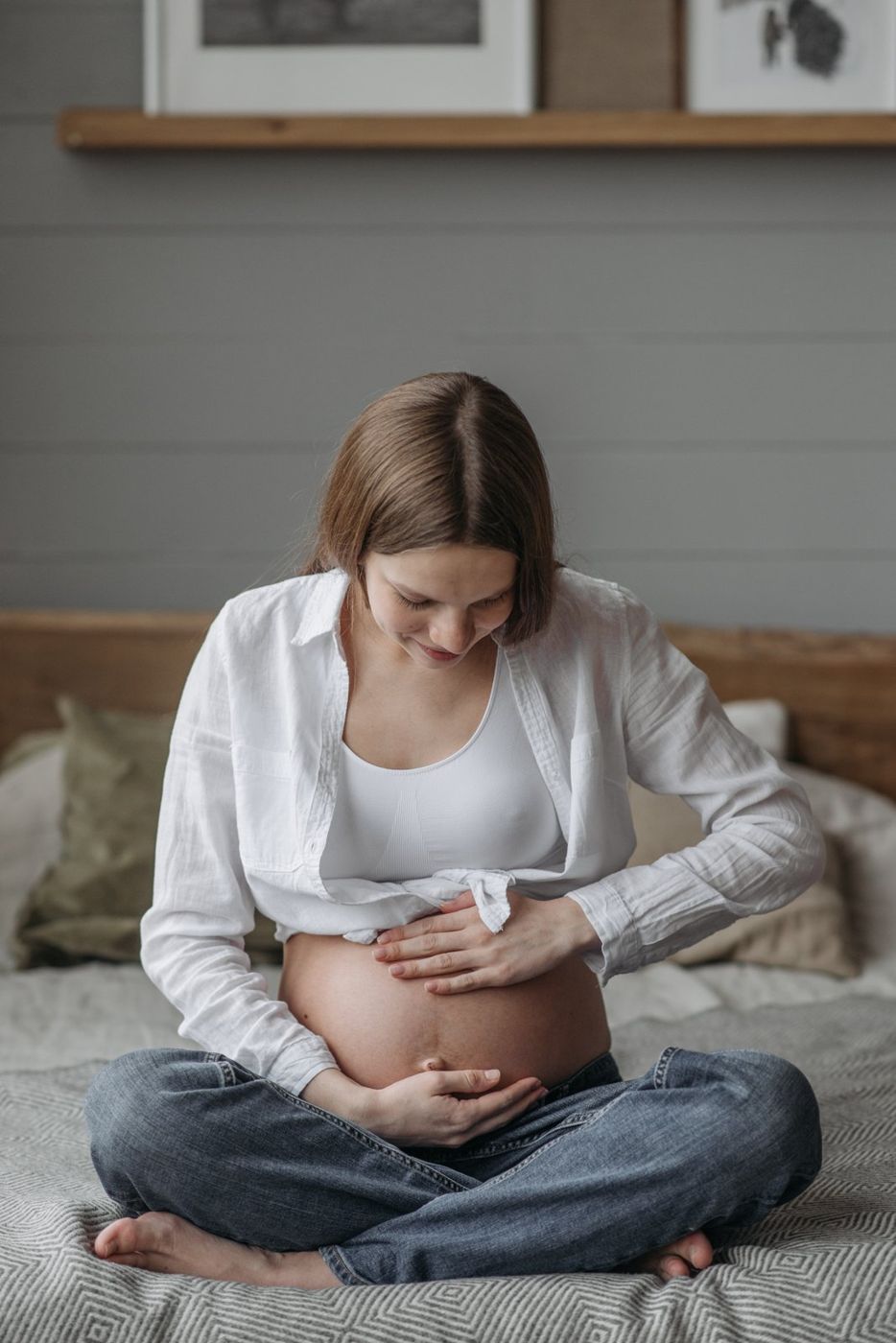
- Making room. Standing, rest the hands on the belly. On each inhale let the arms move a little further away, as if the belly were growing. Let the movement get bigger with every breath.
- Steady gaze. Sit comfortably and rest your gaze on your fingernails for a minute or two. Then close the eyes and compare: how do you feel now, compared with the start of class? What changed?
- Rest. Lie on your side, well supported, for at least five minutes. The course closed with a moment of gratitude for the chance to bring new life into the world.
Keeping it safe
If you are healthy and your pregnancy is going well, gentle activity is considered safe and beneficial, but check with your midwife or doctor first if you have any complications.4 Avoid lying flat on your back for more than a few minutes in later pregnancy, keep cool, drink water, and stop if you feel dizzy, too hot, unwell or in pain.3 Skip the wide stance and deep hip circles if they cause pain at the front or back of the pelvis. If low mood or worry lasts, keeps you awake or stops you enjoying things, talk to your midwife or GP.2
The bottom line
Change is the one constant of pregnancy, and feeling unsettled by it is common. Yoga will not remove that feeling, and it is not a treatment for anxiety. What this course offered is a way of meeting change: noticing it without judgment, finding a steady place in the body and the breath, and trusting a little more that things can settle. Many women find that a calm, kind practice like this makes the changing weeks easier to live with.
Sources
- Dennis CL, Falah-Hassani K, Shiri R. Prevalence of antenatal and postnatal anxiety: systematic review and meta-analysis. British Journal of Psychiatry. 2017;210(5):315–323. doi:10.1192/bjp.bp.116.187179. Link
- NHS. Mental health in pregnancy. nhs.uk. Link
- NHS. Exercise in pregnancy. nhs.uk. Link
- American College of Obstetricians and Gynecologists. Physical activity and exercise during pregnancy and the postpartum period. ACOG Committee Opinion No. 804. Obstetrics & Gynecology. 2020;135(4):e178–e188. Link
Based on works from a 2009 pregnancy yoga teacher course, reviewed and updated. General information, not medical advice. Medical review: pending.