- Pregnancy hormones slow the gut, and iron supplements can add to it. Constipation and straining in turn make haemorrhoids (piles) more likely.
- Fibre, plenty of fluids and regular movement are the first steps. In one trial, simple diet and toilet-habit advice cut the rate of haemorrhoids by more than half.
- Don't strain, don't sit on the toilet for long, and check with a midwife, doctor or pharmacist before using any laxative, cream or medicine.
Why the gut slows down
The pregnancy hormone progesterone relaxes smooth muscle, including the muscle in the walls of the gut. Food moves through more slowly, and stools can become harder and less frequent.1 Supplements can play a part too: iron, calcium and some multivitamins are known to cause constipation in some women.1
Daily life adds its share. Less movement, changes in eating and sleep, and not drinking enough can all make things worse. If you take iron, do not stop it on your own. Talk to your midwife or doctor; there may be other ways to take it that suit you better.
Why haemorrhoids appear
Haemorrhoids are swollen blood vessels inside or around the back passage. They can itch, ache or feel sore, they can hurt when you pass a stool, and they sometimes bleed a little bright red blood. Some can be felt as a lump outside the anus.2
In pregnancy several things come together. Blood volume rises, the growing uterus increases pressure inside the abdomen, and blood pools more easily in the veins around the anus. Progesterone relaxes the vein walls as well as the gut.3 Constipation and straining add pressure on top.2 Haemorrhoids are most common in the third trimester and in the weeks after birth; studies report them in roughly 15 to 41 out of every 100 women.3
What helps Evidence: moderate for fibre
The research on treating constipation in pregnancy is thin. A Cochrane review found only two small trials with usable data, and concluded that fibre supplements probably make bowel movements more frequent. There was not enough evidence to judge other treatments.4 The everyday advice is still sound and safe:
- Fibre, every day. Wholegrain bread and cereals, fruit, vegetables and nuts.1 Prunes are a traditional favourite and were part of the trial below. Increase fibre gradually, along with more water.
- Plenty of fluids. Water first.12
- Regular movement. Walking, swimming or a pregnancy-suitable class.1
- Unhurried toilet habits. Go when you feel the urge, and don't strain.2
That last point matters more than it sounds. In a randomized trial in Lithuania, pregnant women who received structured advice (regular meals, enough fluid, fruit, vegetables, bran and prunes, regular walking, not ignoring the urge, and keeping toilet time under about three minutes) developed haemorrhoids far less often: 15% by discharge after birth, compared with 41% in the group without the advice.3 It was one trial, but the advice carries no risk.
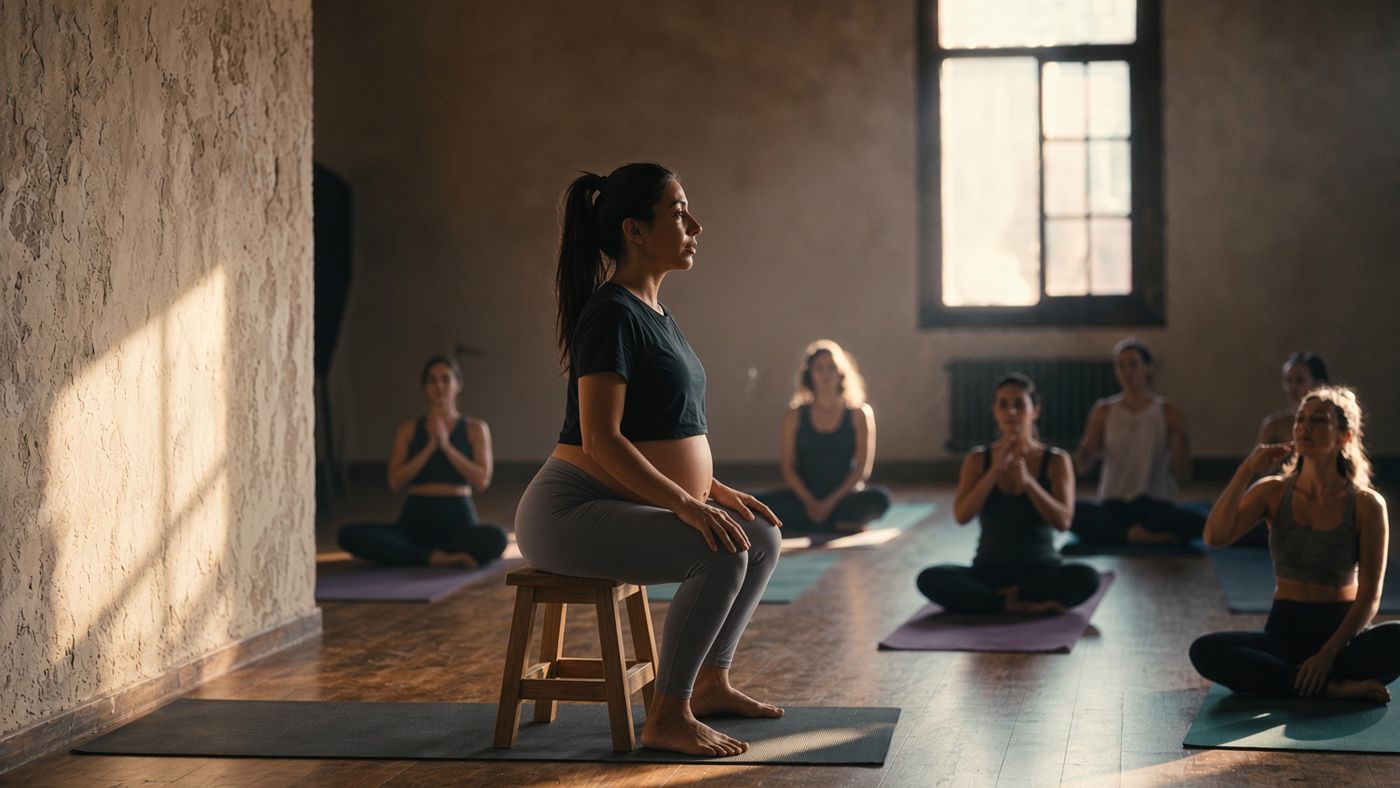
A footstool. Raising the feet on a small stool brings the knees above the hips, closer to a squat. In a small study of healthy adults, this was linked with less straining and a greater sense of emptying.5 It has not been tested in pregnancy, but it is low-risk and many women find it easier.
Easing haemorrhoids. Hold a cloth wrung out in iced water gently against the area. Use moist toilet paper and pat rather than rub. Avoid long periods of sitting or standing.2 Creams and suppositories can soothe symptoms, but ask your midwife, doctor or pharmacist before using one, and do the same before any laxative, as not all are recommended in pregnancy.12
On the toilet: breathe, don't push
This is where yoga meets the bathroom. Holding the breath and bearing down raises pressure in the abdomen and on the veins of the back passage. Instead, sit with your feet raised, lean slightly forward with a long back, and let the belly soften. Breathe out slowly through the mouth, as if sighing, and let the pelvic floor and anus release on the out-breath. Then simply wait. If nothing happens in a few minutes, get up and try again later.
A gentle practice
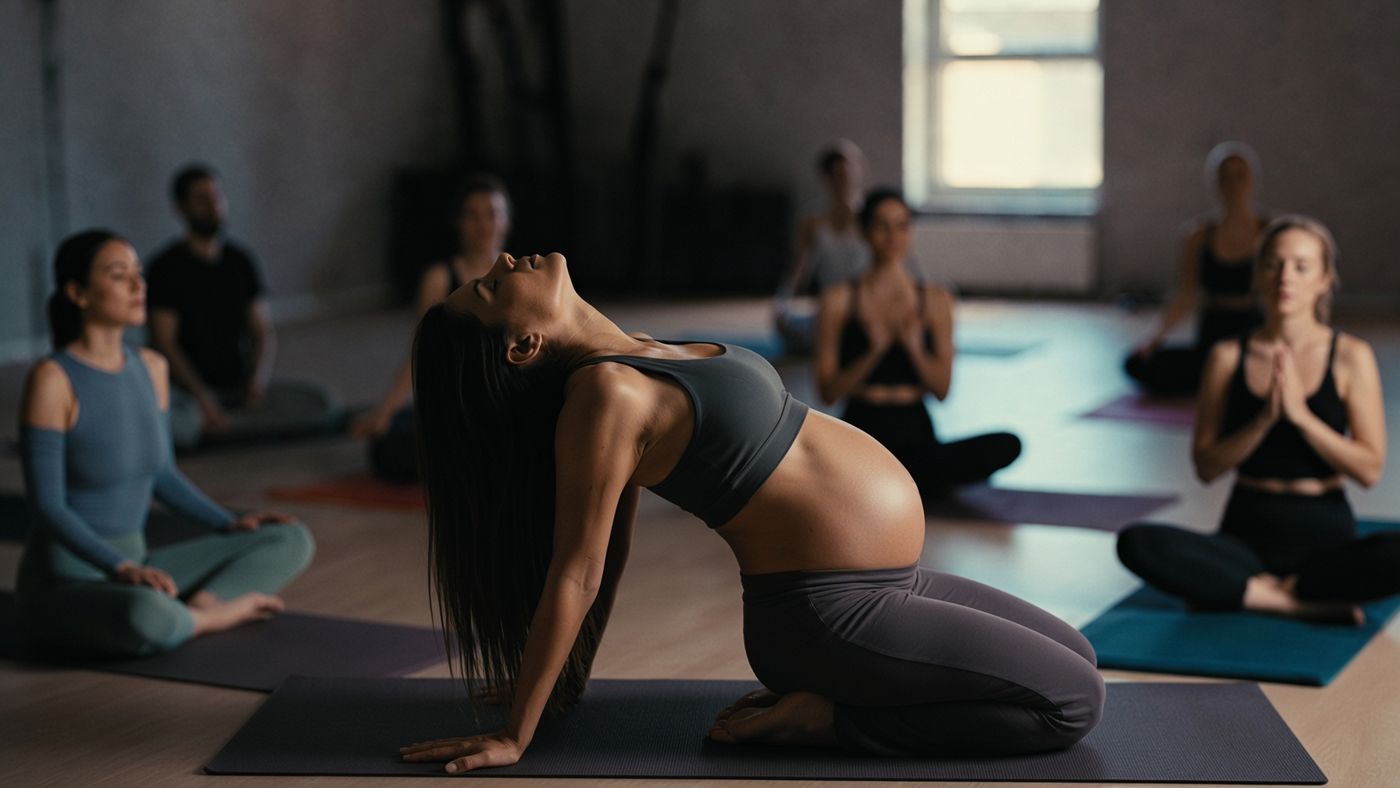
In the course's approach, slow full breathing calms the body and lets the diaphragm move the belly gently from inside, while soft twists and hip movements bring ease to the abdomen and pelvis. These ideas come from the yoga tradition, not from trials; treat the sequence as a way to move and relax, not as a cure. Go slowly and stop anything that is uncomfortable.
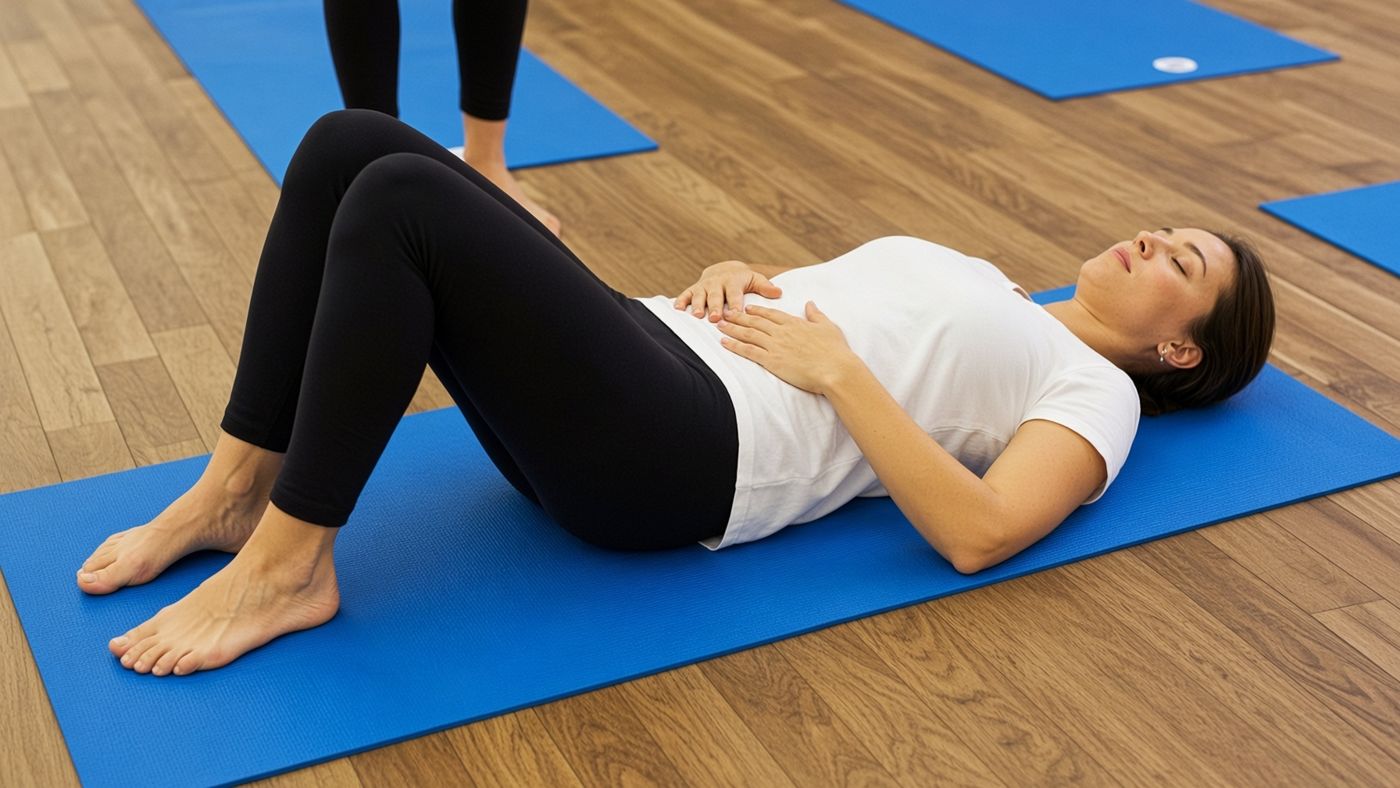
- Arriving. Lie on your back, knees bent, feet hip-width apart, hands on the lower belly. Breathe slowly and fully. On each exhale, let the pelvic floor lift very lightly, and on the inhale let it soften. If you have sore haemorrhoids, keep this lift barely there. Later in pregnancy, put a cushion under your head and shoulders or lie on your side; if you feel dizzy, breathless or unwell on your back, roll to your left side.
- Knee circles. Draw the knees towards you, keeping them wide apart to make room for the belly. Hands on the knees, circle them slowly a few times each way. Exhale as the knees come in, inhale as they move away.
- Lying twist. Feet on the floor, let both knees fall slowly to one side, with a cushion between or under them. Keep the twist open and easy, never squeezing the belly. Take a few full breaths, return to centre, change sides.
- Legs up the wall. Sit side-on to a wall, then swing your legs up as you lie back, with a folded blanket under the hips and the legs comfortably apart. Stay for a few breaths, keeping the pelvic floor soft. Keep it short later in pregnancy and come out on your side if you feel lightheaded.
- Warrior with a heel lift. Come to standing by rolling to your side first. Step one foot back into a short, steady lunge, front knee over the ankle, arms rising on the inhale. Gently lift and lower the back heel a few times to work the calf. Stand near a wall or chair for balance.
- Wide warrior and a soft squat. Open the stance wide, arms out at shoulder height, front knee bent no further than the toes. Then turn to face forward, toes turned out, hands together at the chest, and let the hips sink only as far as is comfortable. Repeat steps 5 and 6 on the other side.
- Seated forward fold. Sit on a folded blanket, legs wide apart or one leg bent, and fold forward from the hips with a long back, letting the belly drop between the legs. Never press the belly against the thighs.
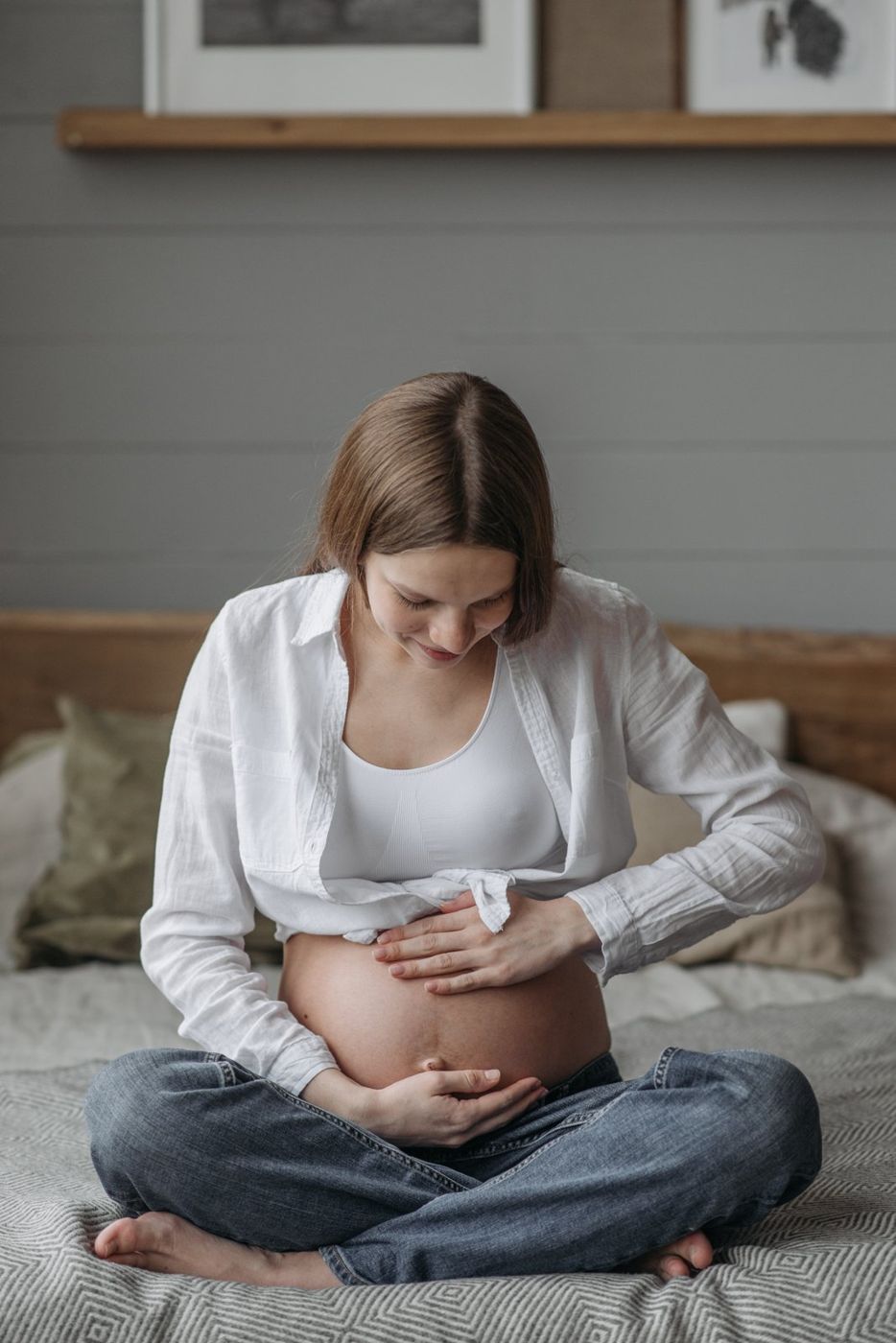
- Seated breathing. Finish sitting cross-legged on a cushion, as in the picture above, hands resting on the knees or belly. Breathe slowly in and out for a few minutes, letting the belly, the pelvic floor and the jaw soften together.
When to see your midwife or doctor
See your midwife or doctor if constipation is severe, if you go three or more days without a bowel movement, or if it does not improve with simple changes. Seek urgent help if there is blood in your stool or bleeding from the back passage, vomiting, unexplained weight loss, or severe tummy pain, cramping or bloating.1 Always ask before starting any laxative, cream or medicine, and mention any lump or bleeding so it can be checked.
The bottom line
Constipation and haemorrhoids are common in pregnancy and closely connected. Fibre, water, daily movement and an unhurried, unstrained way of using the toilet are the foundation, and the evidence suggests they can genuinely help prevent problems. A gentle practice and a slow out-breath can make the whole process calmer.
Sources
- Pregnancy, Birth and Baby (Healthdirect Australia). Constipation during pregnancy. Link
- NHS. Piles in pregnancy. Link
- Poskus T, Sabonyte-Balsaitiene Z, Jakubauskiene L, et al. Preventing hemorrhoids during pregnancy: a multicenter, randomized clinical trial. BMC Pregnancy and Childbirth. 2022;22:374. Link
- Cochrane. Interventions for treating constipation in pregnancy. Cochrane Database of Systematic Reviews, CD011448. Link
- Modi RM, Hinton A, Pinkhas D, et al. Implementation of a defecation posture modification device: impact on bowel movement patterns in healthy subjects. Journal of Clinical Gastroenterology. 2019;53(3):216–219. Link
Based on works from a 2020 pregnancy yoga teacher course, reviewed and updated. General information, not medical advice. Medical review: pending.