- True sciatica, from a disc pressing on a nerve root, is uncommon in pregnancy. Much of the buttock and leg pain women call "sciatica" comes from the pelvic joints and muscles.
- Either way, staying gently active usually helps more than resting. Exercise in pregnancy has been shown to reduce back pain, though the evidence is limited.
- Numbness around the genitals or bottom, trouble peeing, or weakness in both legs needs emergency care.
What sciatica is
The sciatic nerve is the largest nerve in the body. It forms from nerve roots that leave the lower spine, passes through the pelvis and deep under the buttock muscles, and runs down the back of the thigh to the lower leg and foot.
Sciatica is the name for pain caused when this nerve is irritated or compressed. It is usually felt in the buttock and the back of one leg, often reaching the foot. It can burn, tingle, feel numb or make the leg weak, and it may get worse with movement, coughing or sneezing. Back pain can come with it, but the leg usually hurts more.1
The most common cause is a bulging or slipped disc in the lower back. Narrowing of the spinal canal, a vertebra slipping out of place, or an injury can also cause it.1 Most episodes settle within a few weeks to a few months.
Is it really sciatica?
In pregnancy, often not. A review of pregnancy-related back pain estimates that sciatica affects only about 1% of pregnant women,2 and a herniated disc causing severe pain is thought to occur in roughly 1 in 10,000 pregnancies.3
Back and pelvic pain, by contrast, are very common. Pain from the joints at the back of the pelvis or from tight, overworked buttock muscles can also spread into the buttock and thigh, and it is easy to mistake for sciatica. You will often read that the baby's head presses on the nerve late in pregnancy. That idea is popular, but it is not well documented, so we do not rely on it here.
The difference matters, because the advice is not quite the same. A physiotherapist or doctor can tell which you have with a careful examination. Pain that goes below the knee with numbness or tingling sounds more like a nerve; pain centred over the back of the pelvis, worse when turning in bed or standing on one leg, sounds more like the pelvic joints. These are clues, not a diagnosis.
What helps
For sciatica in general, the advice is to keep up normal activities as much as you can, start gentle movement early, and avoid long periods of sitting or lying still. Heat on the sore area can ease it.1
For back and pelvic pain in pregnancy, a Cochrane review found that land-based exercise reduced pain and disability compared with usual care, and an 8–12 week exercise programme reduced the number of women reporting back and pelvic pain.4 The evidence was low to moderate quality, and the authors expect new studies may change the picture. Yoga, water exercise, physiotherapy and support belts are all used.2
Some practical things also help: sitting with the back supported, getting up from a chair often, sleeping on your side with a pillow between the knees, and moving your feet to turn instead of twisting the spine. For pain relief in pregnancy, paracetamol can be used unless your doctor or midwife says not to; check with them or a pharmacist before taking anything else.6
A gentle practice
The course's approach combines two ideas: easing the lower back with slow, small movement, and gently strengthening the deep trunk muscles that share the work of holding the spine. If the buttock muscles feel tight, a mild stretch is added. Nothing here should increase the leg pain. If a movement sends pain down the leg, make it smaller or skip it.
- Settle and breathe. Lie on your side with a pillow between the knees, or sit well supported. Take a few slow breaths, letting the belly and lower ribs widen on the inhale and soften on the exhale.
- Cat and cow, small. Come onto hands and knees, wrists under shoulders, knees under hips. Exhale and gently round the back, drawing the lower belly in. Inhale and let the back return to neutral or just past it. Keep it slow and avoid sinking deep into the lower back. Five breaths.
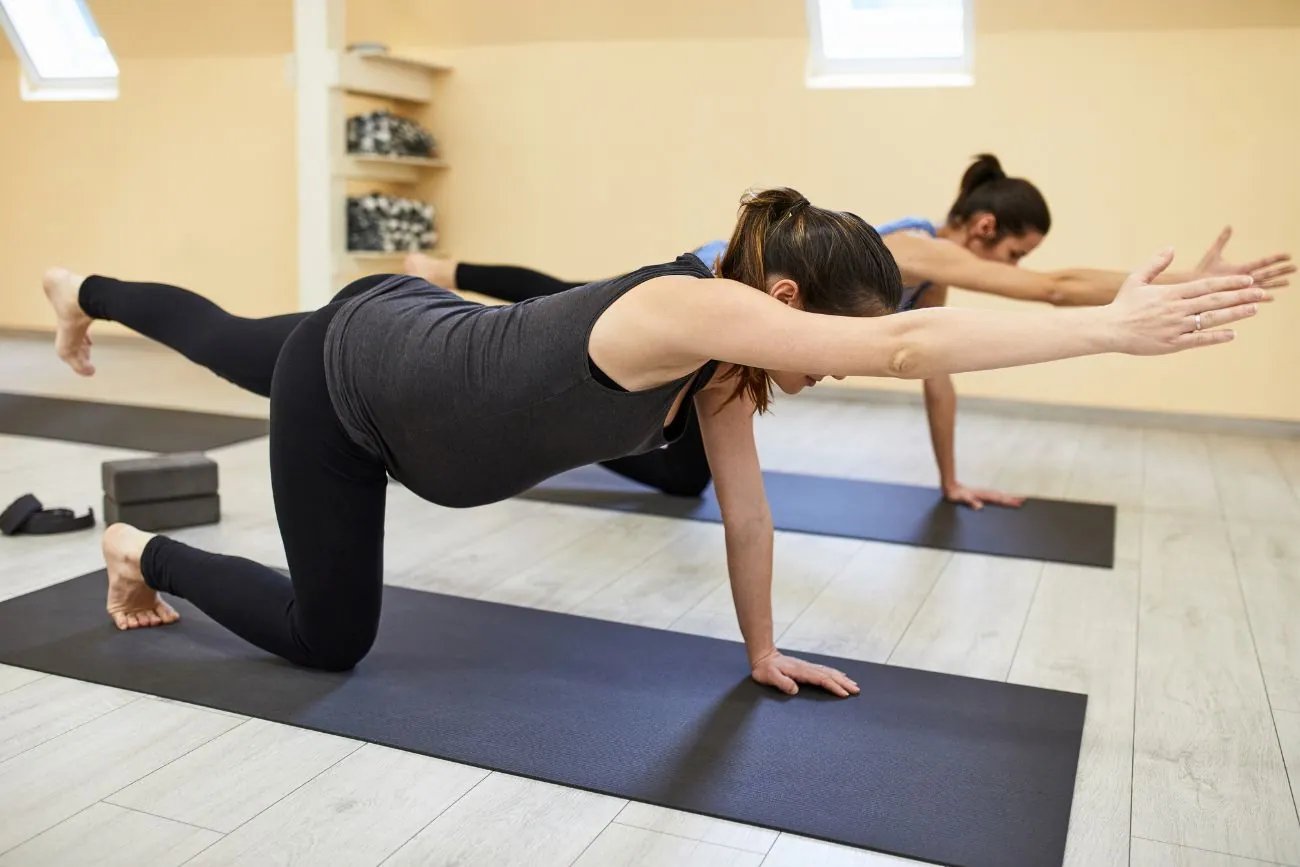
- Bird-dog. From hands and knees, as in the photo above, exhale and slide one leg back along the floor, then lift it to hip height if comfortable, reaching the opposite arm forward. Keep the pelvis level and the back long. Move in and out three times, then hold for three breaths. Change sides. If balance is hard, keep the hand down and just slide the leg back.
- Wide-knee child's pose. Knees wide to make room for the belly, hips toward the heels, forehead on a block or cushion. Rest for five breaths.
- Seated figure-four. Sit on a chair, feet flat. Place one ankle on the opposite knee and let the raised knee open. Lengthen the spine and lean forward only slightly, until you feel a mild stretch in the buttock. Five breaths each side. This replaces pigeon pose, which can strain the pelvic joints in pregnancy.
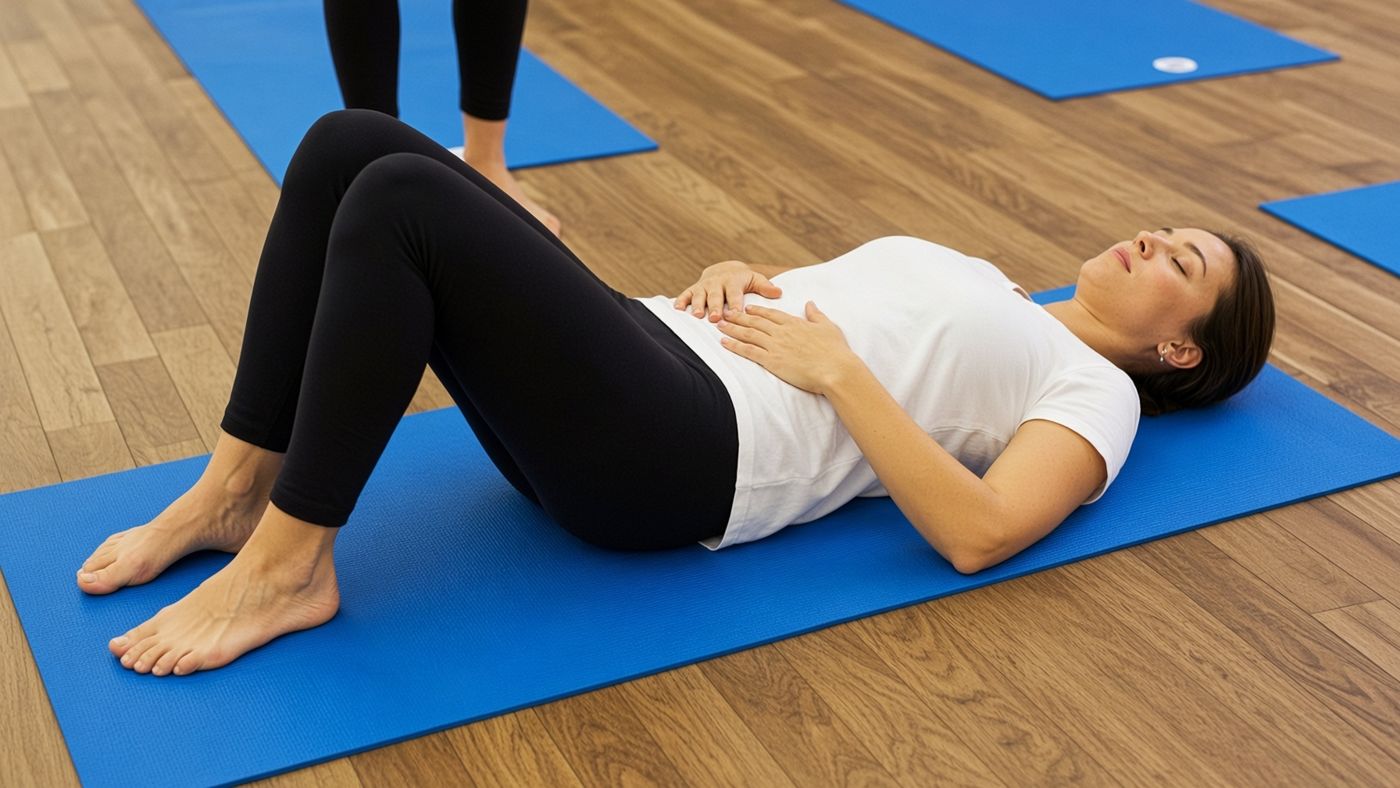
- Small bridge. Lying on your back with knees bent and a block between the thighs, exhale, draw the lower belly in and lift the hips a little. Lower on the inhale. Three to six slow rounds. Only stay on your back briefly, and roll to your side if you feel dizzy, sick or short of breath.5
- Rest on your side. Finish lying on your left or right side, a pillow between the knees and another under the belly, for a few minutes of quiet breathing.
A few safety notes. Avoid deep backbends, deep twists and long stretches that pull on the leg. If you have pelvic girdle pain, keep the knees close together when moving and avoid wide or one-legged positions that hurt. Stop if you feel pain, bleeding, contractions, leaking fluid, chest pain or dizziness.5
When to see your midwife or doctor
Get emergency help if you have numbness around the genitals or bottom, trouble starting to pee or controlling your bladder or bowel, sciatica in both legs, or weakness or numbness in the legs that is severe or getting worse.16 Contact your midwife or doctor promptly if back pain comes with fever, bleeding, pain when peeing or pain under the ribs, or if it could be early labour.6 See them too if the pain is not improving after a few weeks, is getting worse, or stops you sleeping or walking. They can refer you to a physiotherapist who specialises in pregnancy.
The bottom line
Leg and buttock pain in pregnancy is real and can be exhausting, but most of it is not a damaged nerve, and most of it eases with time. Keep moving gently, change position often, and get a proper assessment if the pain is strong, lasting, or comes with the warning signs above.
Sources
- NHS. Sciatica. Link
- Katonis P, Kampouroglou A, Aggelopoulos A, et al. Pregnancy-related low back pain. Hippokratia. 2011;15(3):205–210. Link
- Di Martino A, Russo F, Denaro L, Denaro V. How to treat lumbar disc herniation in pregnancy? A systematic review on current standards. European Spine Journal. 2017;26(Suppl 4):496–504. Link
- Liddle SD, Pennick V. Interventions for preventing and treating low-back and pelvic pain during pregnancy. Cochrane Database of Systematic Reviews. 2015;(9):CD001139. Link
- American College of Obstetricians and Gynecologists. Physical activity and exercise during pregnancy and the postpartum period. Committee Opinion No. 804. Obstetrics & Gynecology. 2020;135(4):e178–e188. Link
- NHS. Back pain in pregnancy. Link
Based on works from a 2020 pregnancy yoga teacher course, reviewed and updated. General information, not medical advice. Medical review: pending.