- Swelling of the feet and ankles is common in pregnancy, especially later on, in hot weather and after long standing. It usually goes away after birth.
- Gentle movement, resting with your feet up, avoiding long standing and time in water are the reasonable, low-risk ways to ease it. No treatment has strong evidence behind it.
- Sudden swelling of the face, hands or feet, or one painful swollen leg, is not "normal swelling" and needs a call the same day.
Why the legs swell
During pregnancy the body holds more water than usual. That extra fluid tends to settle in the lowest parts of the body, so the feet and ankles show it first, and it is often worse at the end of the day, in warm weather or after a long time on your feet. As the womb grows it can also press on the blood flow from the legs, which adds to the build-up.1
This kind of swelling is uncomfortable rather than dangerous. Shoes feel tight, rings stop sliding off, the legs feel heavy by evening. It usually settles in the weeks after birth.
Why new veins appear
Veins in the legs carry blood up, against gravity, back to the heart. Small valves inside them stop the blood from slipping back down. When those valves do not work well, blood pools, and the vein swells and twists. That is a varicose vein.2
Pregnancy is a common time for them to appear or for existing ones to get worse, because of the extra fluid and the pressure of the womb on the veins of the pelvis and legs. Some women also notice swollen veins around the vulva, which can feel heavy or sore. Varicose veins often improve after birth, and procedures to treat them are not usually recommended during pregnancy.2
What helps, day to day
The everyday advice is simple, and none of it is risky:12
- Move often. Regular walks during the day, and simple foot exercises: flex and point the feet, and circle each ankle.
- Don't stand still for long. If your work keeps you on your feet, shift your weight, walk a little, or rise onto your toes from time to time. Long sitting with the feet down is not much better.
- Feet up. Whenever you can, rest with your legs raised on cushions.
- Comfortable shoes and socks. Avoid tight straps or anything that pinches as the feet swell.
- Compression stockings. These may ease aching and swelling in varicose veins.2 In the few small trials in pregnancy they did not clearly reduce leg volume,3 so think of them as a comfort option, and ask your midwife which kind suits you.
Why water helps Evidence: low
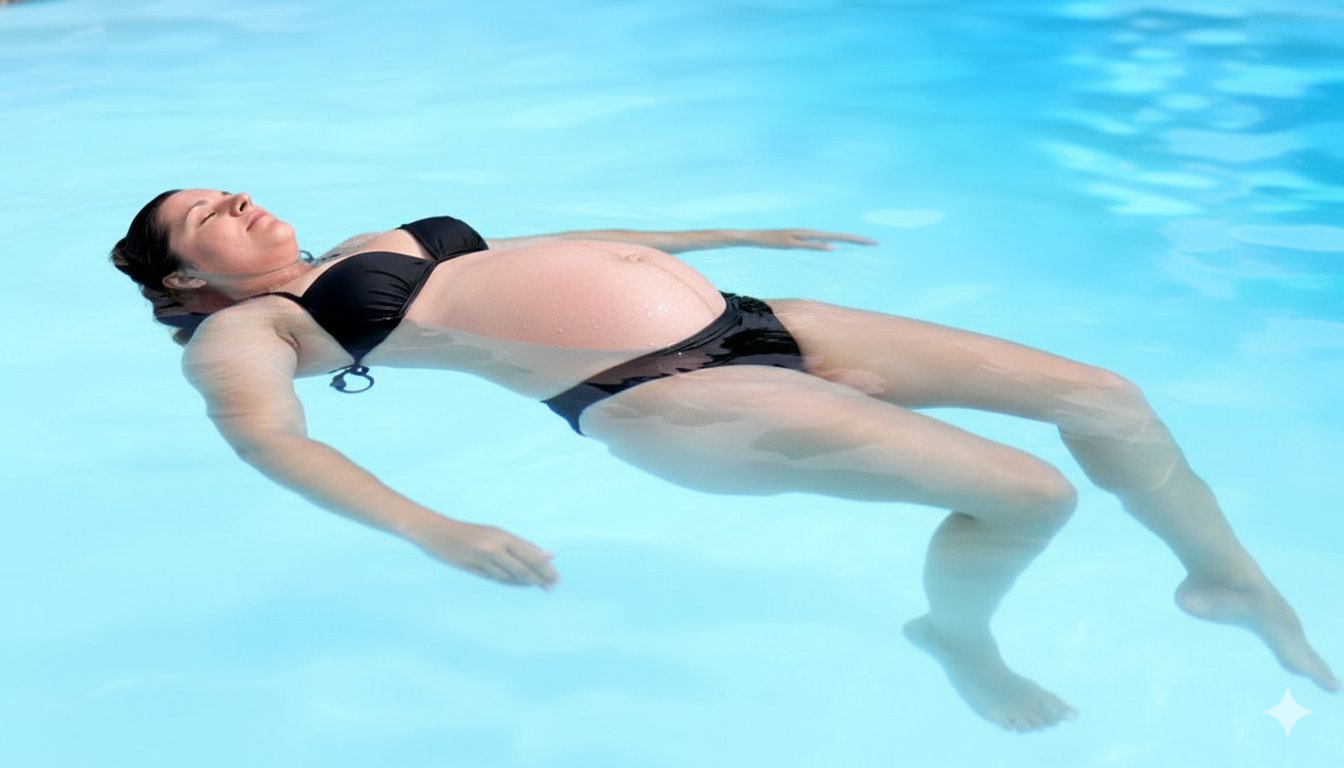
There is a reason so many pregnant women love the pool. Water takes the weight off the joints,5 and the pressure of the water around the legs seems to help fluid move. A Cochrane review of treatments for leg swelling and varicose veins in pregnancy found one small trial in which 20 minutes of immersion in a swimming pool reduced leg volume.3
The review's overall verdict is honest: there is not enough evidence to recommend any specific treatment, and water immersion and reflexology looked "promising" but unproven.3 Still, a relaxed swim or a float on your back, like the one in the picture above, is safe, pleasant exercise in pregnancy for most women, and it may help the legs too.
Swollen veins around the vulva
A work on varicose veins in our 2022 course archive gave this its own place, because women rarely ask about it. Swollen veins in the vulva are thought to affect roughly 8% of pregnancies, as the growing womb presses on the veins of the pelvis.6 They can feel like heaviness, pressure or soreness, especially by the end of the day or after a long time standing. For most women it is mild.
The reassuring part: they usually disappear within about a month to six weeks after birth, and on their own they are not a reason to rule out a vaginal birth.6 Treatment is not usually done during pregnancy.2 The everyday advice is the same as for the legs: avoid long standing and move often. The course added resting with the hips raised on a cushion for a few minutes, so gravity helps (later in pregnancy, keep time flat on your back short), and gentle pelvic floor squeezes and releases. Tell your midwife about them, so they can be noted before birth.
A practice for heavy legs
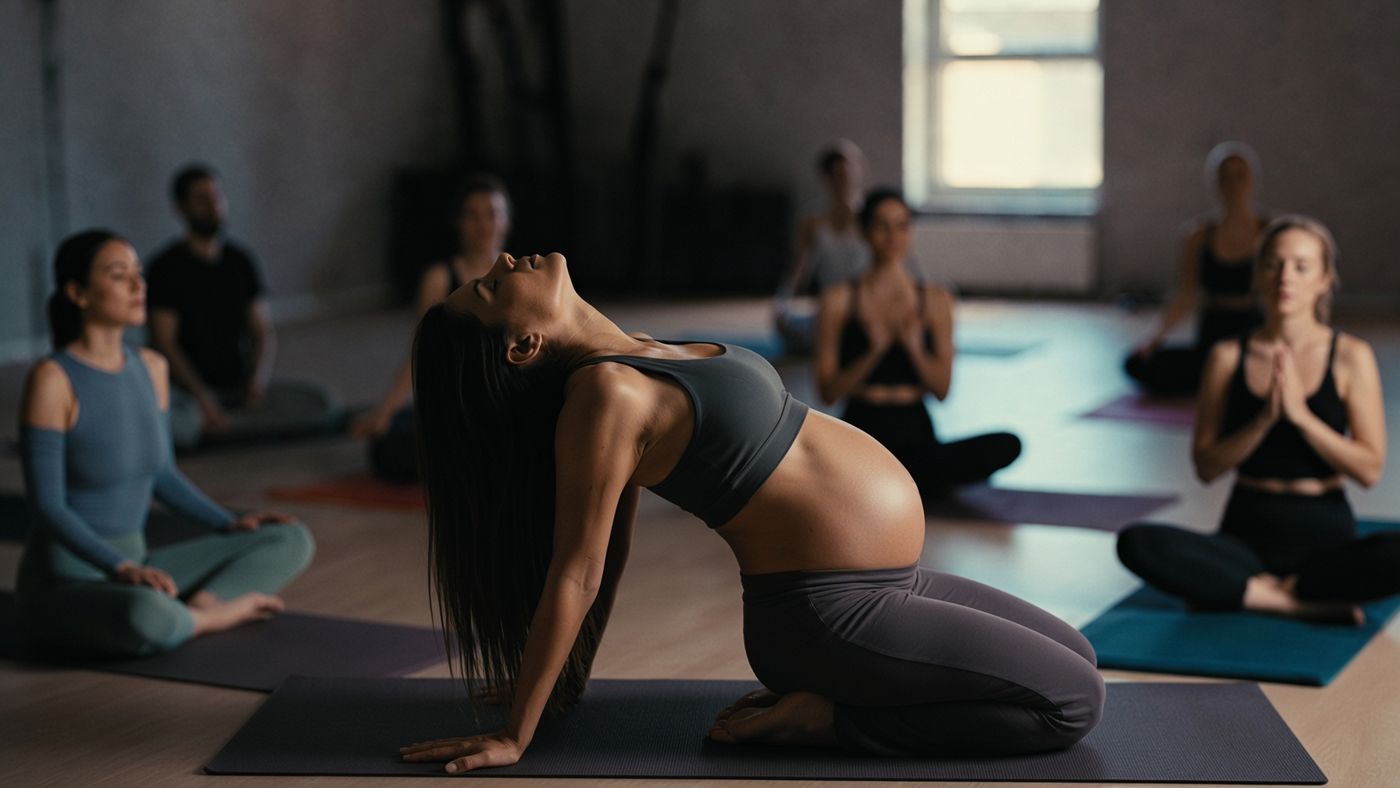
The course's approach to swelling and varicose veins focuses on helping blood return from the legs: freeing the hips, working the calf muscles, raising the legs so gravity helps, and full, slow breathing. Ten to twenty minutes is enough. Have a strap, a cushion or two and a wall nearby.
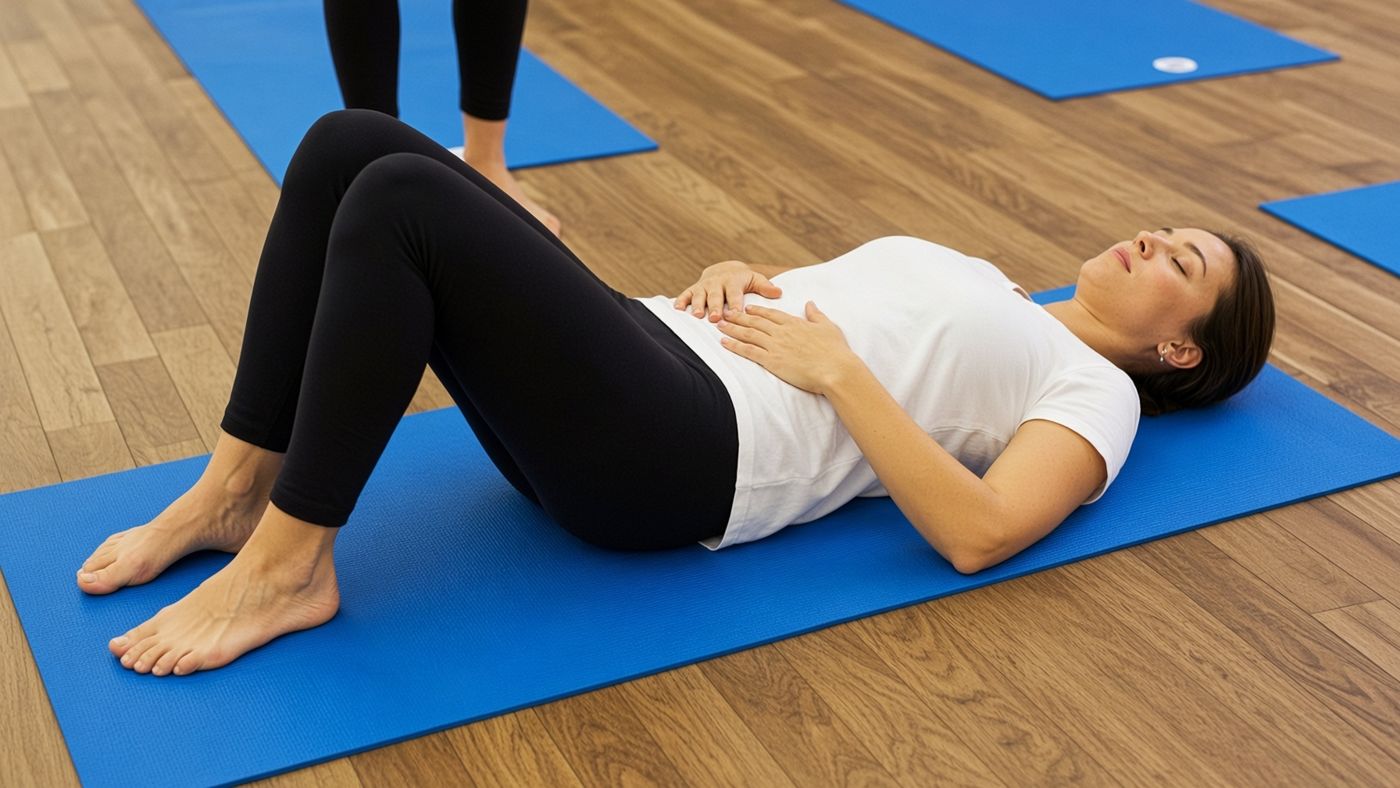
- Arrive. Lie on your side with a pillow between the knees, or on your back only briefly with your head and shoulders raised. Breathe slowly, letting each inhale and exhale grow a little longer.
- Breath and arms. On a full inhale, raise the arms overhead. On a long exhale, lower them, letting the breath out with a soft "ooo" sound. Five rounds.
- Leg circles. With one knee bent and foot on the floor, lift the other leg and circle it slowly from the hip, a few times each way. Then circle the ankle, and flex and point the foot. A strap around the foot makes this easier. Change legs.
- Leg lifts with the breath. Exhale to lift one leg, inhale to lower it, five times each side. If lying on your back is uncomfortable, do this lying on your side.
- Bridge. Knees bent, feet hip-width apart. On an exhale, gently lift the pelvis, keeping the weight in the feet and off the neck; inhale to lower. The course pairs this with a gentle lift of the pelvic floor. A few rounds.
- Legs up, gently. Sit side-on to a wall, then swing the legs up it, a cushion under the pelvis. Try legs together, then wide, flexing the heels. Stay a few breaths in each. In later pregnancy, or if you feel dizzy, do this instead lying on your side with the top leg raised on cushions.
- Calf stretch. Standing with hands on a wall, step one foot back and press the heel toward the floor. Hold for several breaths, then change legs.
- Child's pose to a short downward dog. Rest in a wide-knee child's pose for a few breaths. On an exhale, lift into a short downward dog and "walk" the feet, bending one knee then the other. Walk the hands back toward the feet and roll up slowly to standing. Skip the dog if it brings on dizziness or heartburn.
- Rest with legs raised. Finish lying on your side with cushions under the top leg, or sitting back with the lower legs resting on a chair seat. Stay as long as you like.
A few safety notes for any trimester: later in pregnancy, avoid lying flat on your back for more than a few minutes, as it can make you dizzy.5 Get up slowly. Keep the effort gentle, drink water, and stop if anything hurts.
When to see your midwife or doctor
Call your midwife, GP or maternity unit straight away if swelling in your face, hands or feet comes on suddenly, especially with a bad headache, blurred vision or flashing lights, severe pain just below the ribs, or feeling very unwell. These can be signs of pre-eclampsia.1 Get urgent help, too, for throbbing pain and swelling in one leg, often with red or darker skin: it can be a blood clot (deep vein thrombosis), which is more likely in pregnancy. With shortness of breath or chest pain, call emergency services.4 A varicose vein that bleeds also needs prompt medical care.2
The bottom line
Swollen ankles and new veins are a normal, if uncomfortable, part of pregnancy for many women, and most improve after birth. Keep moving, avoid long standing, put your feet up, enjoy the water if you can, and use a gentle practice to help the legs. Know the warning signs, and trust yourself to call when swelling feels different.
Sources
- NHS. Swollen ankles, feet and fingers in pregnancy. Link
- NHS. Varicose veins. Link
- Smyth RMD, Aflaifel N, Bamigboye AA. Interventions for varicose veins and leg oedema in pregnancy. Cochrane Database of Systematic Reviews. 2015;(10):CD001066. Link
- NHS. Deep vein thrombosis (DVT). Link
- NHS. Exercise in pregnancy. Link
- Giannella L, Montanari M, Delli Carpini G, Di Giuseppe J, Ciavattini A. Huge vulvar varicosities in pregnancy: case report and systematic review. Journal of International Medical Research. 2022;50(5):03000605221097764. Link
Based on works from a 2020 pregnancy yoga teacher course, reviewed and updated. General information, not medical advice. Medical review: pending.