- As the belly and breasts grow, the upper back tends to round and its muscles work harder to hold you upright. Small studies have measured this change.
- Gentle movement that mobilises the upper back, opens the chest and strengthens the muscles around the shoulder blades is a reasonable way to ease the load. Deep, forceful stretching is not the goal.
- Pain under the ribs, or pain at the tip of the shoulder, is not ordinary back pain. Get it checked straight away.
Why the upper back works harder
The upper back is a strong, steady part of the spine. Its twelve vertebrae are joined to the ribs, which makes it stable but not very mobile. The shoulders sit on top of it, and they are the opposite: built for range, not stability. The shoulder blades glide over the back of the ribs, held in place almost entirely by muscle. When those muscles are tired or out of balance, this is often where you feel it.
Pregnancy adds to their work in a few ways.
- Posture. The growing belly and breasts add weight at the front of the body. In a small study that measured the spine with a radiation-free 3D scanner, the rounding of the upper back (thoracic kyphosis) increased over the course of pregnancy.3 The muscles between and around the shoulder blades are the ones resisting that pull forward.
- Softer ligaments. During pregnancy, ligaments naturally become softer and stretch to prepare the body for labour.1 This is best known for its effect on the pelvis and lower back, and it is one reason the course favoured steady, supported movement over deep stretches.
- A stretched belly. As the abdominal muscles lengthen around the baby, they offer less support at the front, and the back muscles take up more of the work.
- Tiredness and tension. Poor sleep, worry and long hours sitting all tend to show up as tight shoulders and a stiff neck.
The research on upper back pain in pregnancy is thin. Most studies look at the lower back and pelvis, so we cannot give you a reliable figure for how common it is. What we can say is that the mechanics above are well described, and that the general advice for back pain in pregnancy applies here too.
Everyday things that help
- Sit supported. Sit with your back straight and well supported. A cushion behind the lower back helps the upper back stay tall without effort.1
- Lift and carry well. Bend your knees, keep your back straight, avoid heavy loads and balance shopping between both hands.1
- Keep moving. Pregnancy yoga and water-based classes can strengthen the muscles that support your back.1
- Ask for a referral. If the pain is strong or keeps coming back, your midwife or GP can refer you to an obstetric physiotherapist.1
The course's approach
The 2020 course looked at this area as a meeting point. In the yogic view it taught, the shoulders carry a sense of responsibility, and pregnancy brings plenty of that, alongside excitement and worry. This is a way of paying attention, not a medical explanation. In practice it meant three things: wake up the joints gently, strengthen what holds the shoulder blades, and leave time to soften and rest. Strong stretching was deliberately left out.
A gentle home practice
About 15 to 20 minutes. Move slowly, breathe through the nose if you can, and stop anything that hurts or makes you dizzy. Use cushions, a chair and a wall freely.
- Settle. Sit cross-legged on a firm cushion, with more cushions under the knees if needed. Let the back grow tall. Breathe into the back and sides of the ribs for a few minutes.
- Neck and shoulder circles. Let the head drop gently to one side, roll it slowly forward and up to the other side, and back again. Keep the movement in front of you rather than rolling the head far back. Then place your fingertips on your shoulders and draw slow circles with the elbows, forward and up on the inhale, back and down on the exhale. Change direction.
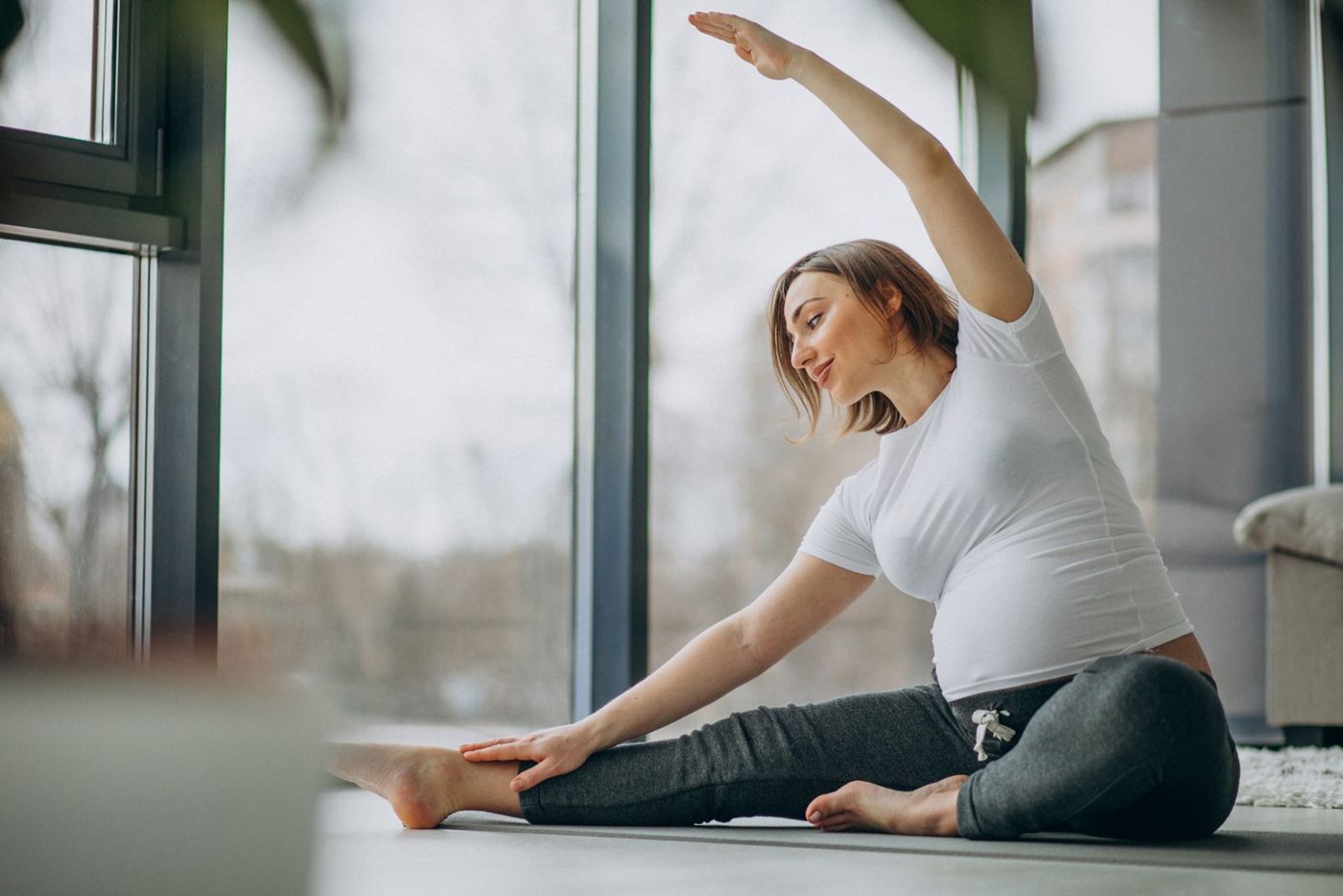
- Shoulder-blade arcs. Sit with one leg stretched out, as in the photo above. Rest the left hand on the floor beside or slightly behind you. On an inhale, sweep the right arm up and over in a slow, wide arc, letting the eyes follow the hand. Feel the shoulder blade glide over the ribs. A few rounds, then change sides. Keep the lean small; this is about the shoulder, not about reaching far.
- Cat and cow. Come to hands and knees, hands under shoulders, knees hip-width apart. On the inhale, lift the chest and gaze slightly forward. On the exhale, round the upper back between the shoulder blades and let the head soften down. Keep the belly supported rather than letting it sag.
- Thread the needle, supported. From hands and knees, with the knees a little wider to give the belly room, slide the left arm under the right and lower the left shoulder and cheek onto a cushion. Rest the shoulder blade there for a few breaths. Come out slowly and change sides.
- Dog pose at the wall. Stand facing a wall, hands on it at shoulder height. Walk back until the arms and back form a long line, hips over the feet. Press the hands into the wall and feel the shoulder blades draw wide. This gives the same shoulder work as downward dog without bringing the head below the heart.
- Warrior with open arms. Step the feet wide, right toes forward, back foot turned out. Bend the front knee only as far as is steady, keep the shoulders over the hips, and spread the arms wide. Let the shoulders stay low and soft. Use a chair beside you if balance feels uncertain. Change sides.
- Chest opener. Stand with the feet apart and clasp your hands behind your back, or hold a strap or towel between them. Lift the chest gently and let the shoulder blades draw towards each other. If you want to fold forward, go only halfway, with the hands on a chair seat, and come up slowly.
- Cow-face arms with a strap. Kneeling or sitting tall, reach the right hand up and bend it behind the head. Take the left hand behind the back and hold a strap between the two hands rather than forcing them to meet. A few breaths, then change sides and shake the arms out.
- Rest. Lie on your left side with a pillow between the knees, one under the belly and one under the head, or rest in child's pose with the knees wide and the head on a cushion. Let the shoulder blades spread. Stay for several minutes.
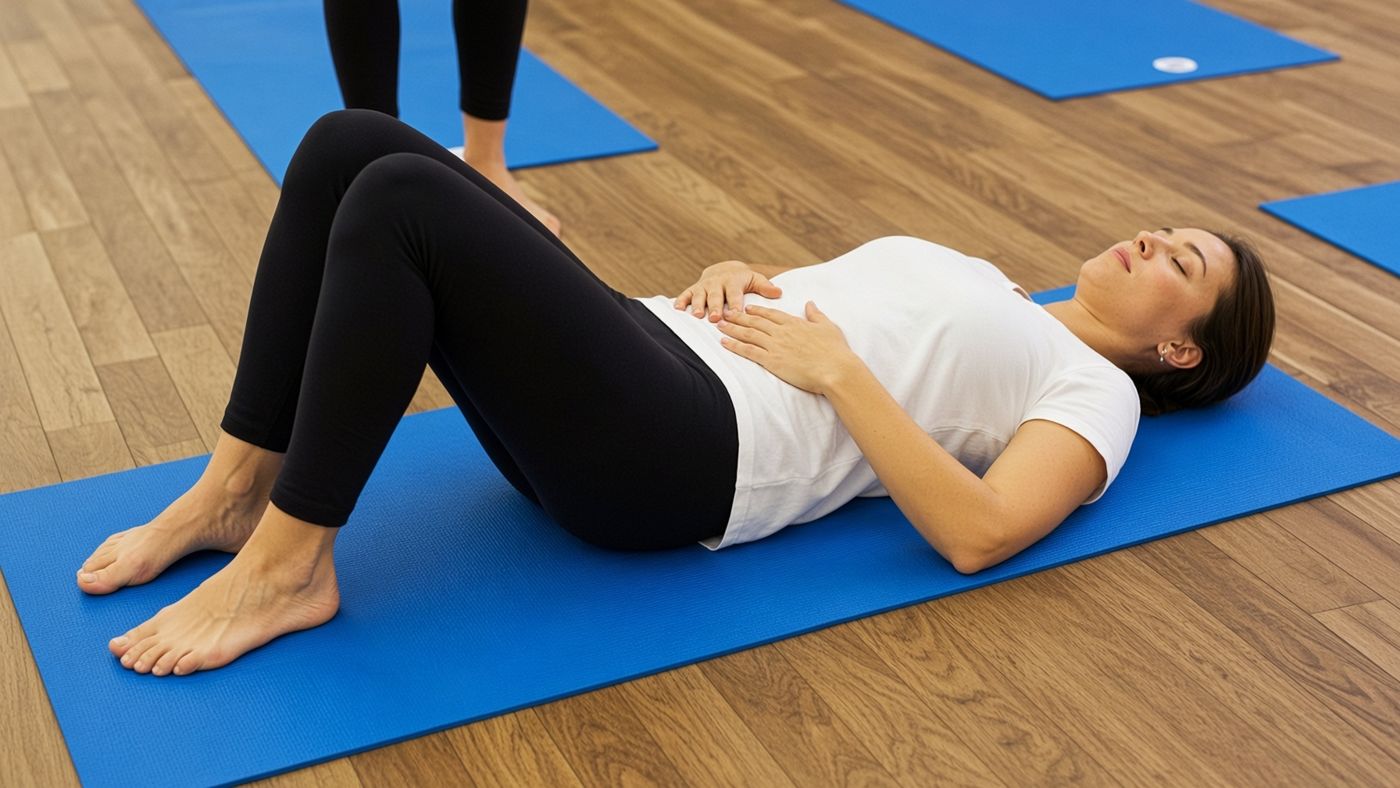
Safety notes for pregnancy. In later pregnancy, avoid lying flat on your back for more than a few minutes, as it can make you feel dizzy and is not good for the baby.2 Skip head-down positions and strong back-bends that tip the head far back. Do not practise on an empty stomach, keep cool, and stop if you feel any discomfort, dizziness or overheating.2 If you have a complication in pregnancy, check with your midwife or doctor before starting.
When to see your midwife or doctor
Pain under the ribs, especially with a severe headache, problems with vision, sudden swelling of the face, hands or feet, vomiting or heartburn that medicine does not help, can be a sign of pre-eclampsia. Call your maternity unit straight away.4 Back pain with pain on one or both sides under the ribs should also be checked urgently.1
Pain at the tip of the shoulder, where the shoulder ends and the arm begins, in early pregnancy can be a sign of internal bleeding from an ectopic pregnancy. Get medical advice right away, and call an ambulance if you also have severe tummy pain, dizziness or fainting.5
Also contact your midwife or GP if you have back pain with fever, vaginal bleeding or pain when you pee, or back pain in the second or third trimester that could be early labour. Loss of feeling in the legs, bottom or genitals is an emergency.1 Pain that keeps getting worse, wakes you at night, or comes with numbness or tingling down an arm is worth a professional look too.
The bottom line
Upper back and shoulder-blade pain in pregnancy usually comes from muscles doing more work as your shape changes. Supported sitting, careful lifting and a short, gentle practice that moves the upper back and strengthens the shoulder blades are reasonable ways to ease it. Know the few signs that are not about muscles at all, and do not wait if you notice them.
Sources
- NHS. Back pain in pregnancy. Link
- NHS. Exercise in pregnancy. Link
- Betsch M, Wehrle R, Dor L, Rapp W, Jungbluth P, Hakimi M, Wild M. Spinal posture and pelvic position during pregnancy: a prospective rasterstereographic pilot study. European Spine Journal. 2015;24(6):1282–1288. Link
- NHS. Pre-eclampsia. Link
- NHS. Ectopic pregnancy: symptoms. Link
Based on works from a 2020 pregnancy yoga teacher course, reviewed and updated. General information, not medical advice. Medical review: pending.