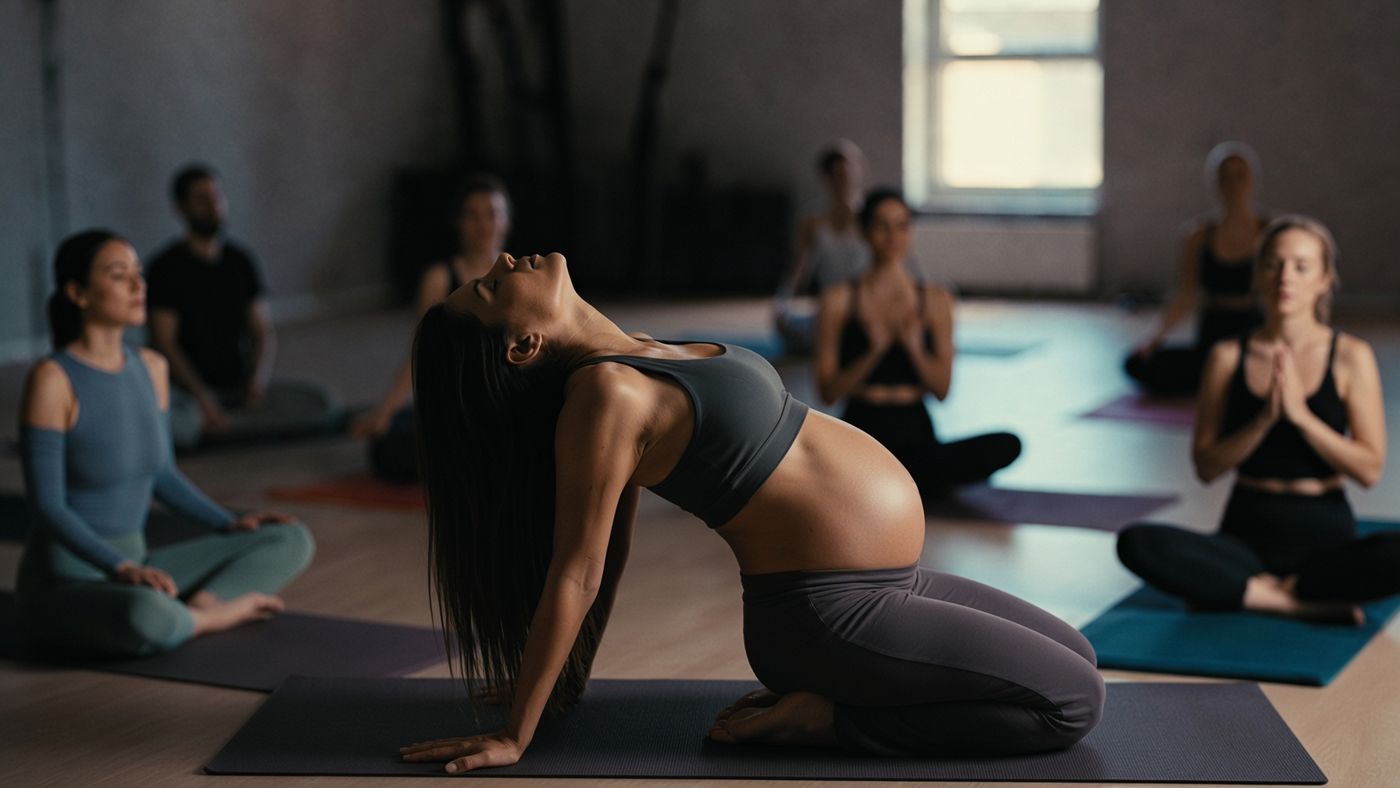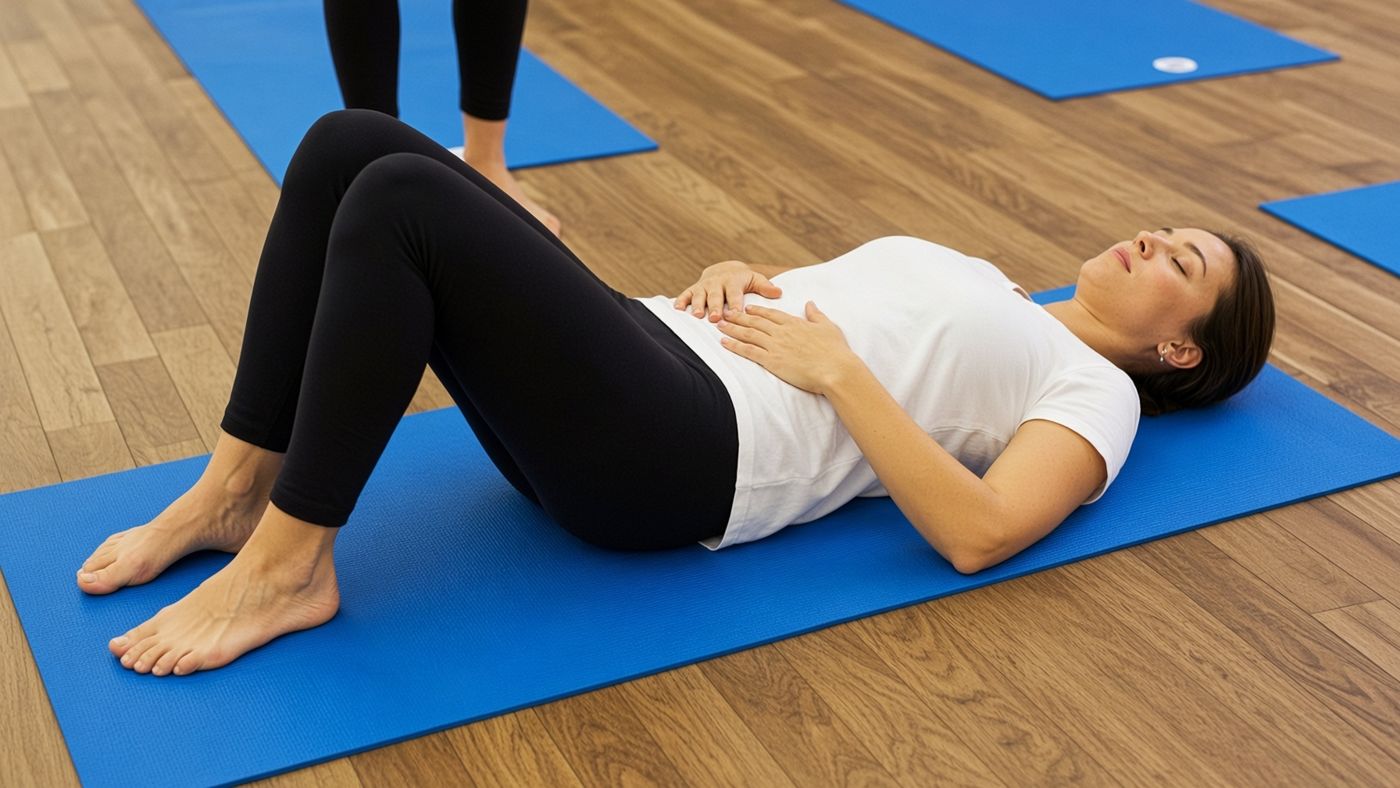
- As pregnancy goes on, the chest and shoulders tend to round and tighten. Gentle chest opening, slow breathing and rest are a comfortable way to give the upper body room.
- Slow breathing with a long out-breath is linked with feeling calmer and less anxious, and relaxation and yoga may modestly help with labour pain. The evidence is real but not strong.
- Release is a skill you can rehearse: a sighing exhale, a soft jaw, a loose neck, and time to rest on your side.
Why the course paired heart and release
The course group saw the heart in two ways. Physically, the chest is where pregnancy often closes in: the growing belly and breasts draw the shoulders forward, the muscles at the front of the chest shorten, and breathing can feel high and cramped. Emotionally, the heart stood for everything pregnancy brings: love, worry, excitement, and the quiet work of accepting a body that changes week by week.
Release was the other half. The group wrote about letting go on every level: relaxing muscles, loosening fixed expectations, and making peace with what you manage to do and what you do not. They saw it as something to practise long before birth, so that softening in a busy, bright, unfamiliar room becomes a little more familiar.
These are the course's ideas, a way of paying attention rather than medical explanations. Some of the original material described energy lines through the arms and a direct link between the jaw and the pelvis. Those ideas are part of yoga tradition but are not established anatomy, so we have left them out.
What the evidence supports
A systematic review of slow breathing, under about ten breaths a minute, found it was associated with greater heart rate variability, a marker of a well-regulated nervous system, and with people reporting more relaxation and comfort and less anxiety and anger.3 The review was small, and its studies were in non-pregnant adults, so treat it as encouraging rather than proven for pregnancy.
For labour itself, a Cochrane review of relaxation techniques found low-quality evidence that yoga reduced pain intensity, and that relaxation, yoga and music may help reduce pain and increase satisfaction with pain relief.4 The review rated the evidence as low to very low quality, and more and larger trials are needed.
What no one can promise is that a practice like this will make labour shorter or easier. It is a way to rehearse calm, not a guarantee of it.
A heart-opening and release practice
About 25 minutes. Move slowly, let the breath set the pace, and stop anything that hurts, makes you dizzy or feels like straining. Keep cushions, a rolled blanket, a strap and a wall nearby.
- The release breath. Stand with the feet hip-width apart. Inhale and float the arms up. Exhale, let the arms fall and let the breath out through an open mouth with a soft "haaa". Three rounds. Let the sound be as loud or quiet as feels right; it often helps the shoulders drop.
- Seated chest opener. Sit on a cushion or a firm ball with the feet steady on the floor. Take the hands behind your back and hold a strap or towel between them. Inhale, lift the breastbone and widen across the collarbones. Exhale, let the pelvic floor and belly soften. Change the grip and repeat. Finish by letting the shoulders hang and rolling them slowly a few times.
- Jaw and face. Start with a big yawn. Then run the tip of the tongue slowly around the outside of the teeth, three times each way; it looks odd and feels very releasing. Inhale through the nose and breathe out through an open mouth, letting the tongue reach out toward the chin. Place the fingertips at the hinge of the jaw in front of the ears and make small circles.
- Neck release. Sitting tall, bring the right ear toward the right shoulder as you exhale, without lifting the shoulder. Stay for a few full breaths, then return to the centre and go to the other side. Let the chin drop to the chest and rest there. If you take the head back, do it only a little, keep the throat soft and come up slowly.
- Hands and knees. Come to all fours with the knees wide enough to give the belly room. Move the spine freely: arches, rounds, figures of eight. Then plant the right hand, sweep the left arm out to the side and up, opening the chest, and turn the gaze only as far as is comfortable. Back down, a few rounds, then change sides.
- Goddess with open arms. Stand with the feet wide, toes turned out and the knees pointing the same way as the toes. Inhale, arms rise. Exhale, bend the knees a little and lower the arms to a cactus shape, elbows at shoulder height. Five slow rounds, then stay for two or three breaths. Hold a chair if balance feels uncertain.
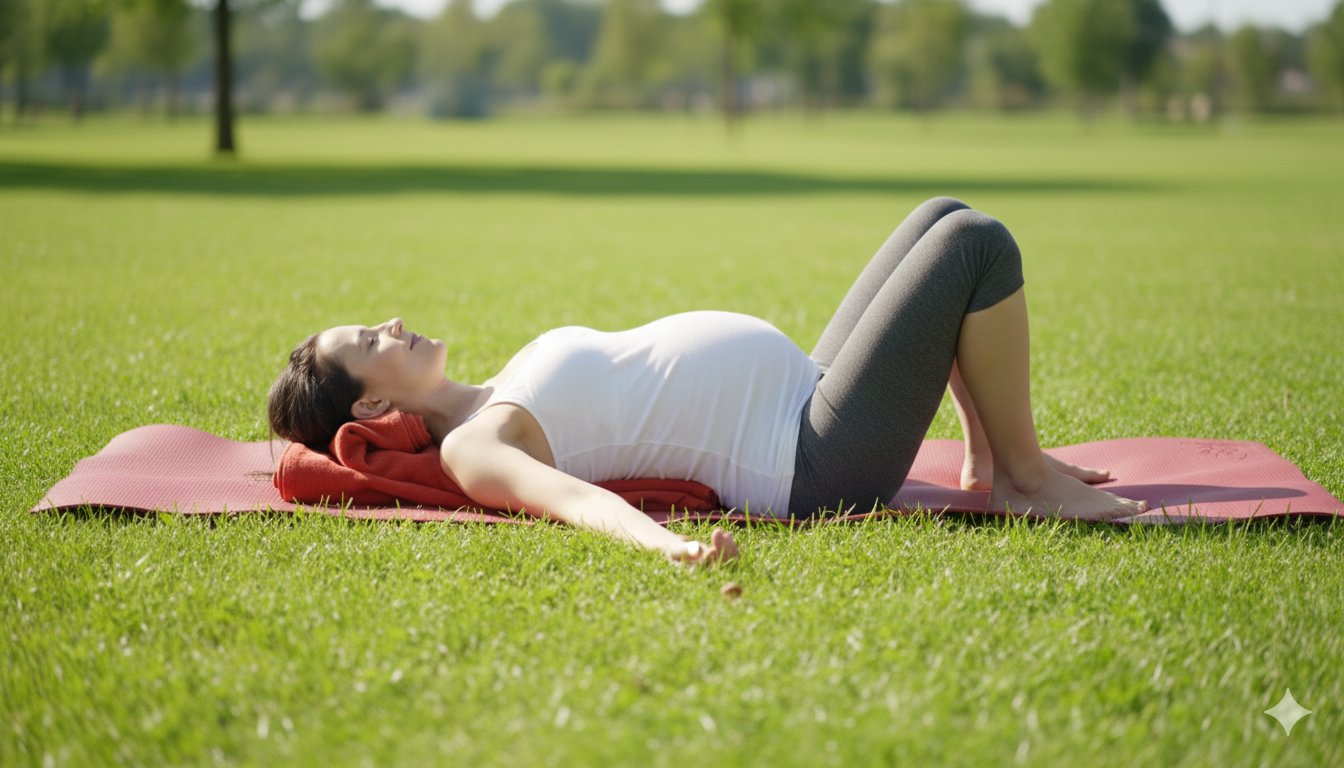
- Supported heart opener. Lie back over a blanket rolled lengthwise under the spine and head, knees bent, feet on the floor and arms resting out to the sides, as in the photo above. Let the chest widen with each inhale and the whole back grow heavy with each exhale. From mid-pregnancy, add a second cushion under the head and upper back so you are slightly raised, and stay only a few minutes.
- Leg release. Come up by rolling to your side and pushing up with the arms. Sit with the legs out, shake them loose, circle the ankles and let the knees sway gently side to side.
- Rest on your side. Lie on your left or right side with a pillow between the knees, one under the belly and one under the head. Stay for several minutes, breathing slowly. Late in pregnancy, lying with the legs up the wall is another option, with the hips a little away from the wall and only for a short time.
- Close. Come up slowly to sit. Wrap the arms around yourself, then change which arm is on top. Take a moment to thank the body for its work.
Safety notes for pregnancy. In later pregnancy, avoid lying flat on your back for more than a few minutes.1 After 28 weeks, the safest position to fall asleep in is on your side, either left or right, so if you tend to drift off in rest, rest on your side.2 Skip strong back-bends and head-down positions, keep cool, and stop if you feel uncomfortable, too hot or unwell.1 If you have a pregnancy complication, check with your midwife or doctor before starting.
When to see your midwife or doctor
Contact your midwife or maternity unit straight away if your baby is moving less than usual or the pattern of movements changes.2 The same applies to vaginal bleeding, fluid leaking, chest pain, severe headache or breathlessness at rest.
A practice like this can bring feelings to the surface. That is common. But if low mood, worry or fear stay with you, talk to your midwife or GP: depression and anxiety can start for the first time in pregnancy, and they can be treated.5 If you feel in crisis, get urgent help.
The bottom line
Opening the chest and practising release are gentle, low-risk ways to give a changing body room and to rehearse softening before birth. The evidence for slow breathing and relaxation is encouraging but modest. Take what feels good, rest on your side, and reach out early if the body or the heart asks for more care.
Sources
- NHS. Exercise in pregnancy. Link
- NHS. Reducing the risk of stillbirth. Link
- Zaccaro A, Piarulli A, Laurino M, et al. How breath-control can change your life: a systematic review on psycho-physiological correlates of slow breathing. Frontiers in Human Neuroscience. 2018;12:353. Link
- Smith CA, Levett KM, Collins CT, Armour M, Dahlen HG, Suganuma M. Relaxation techniques for pain management in labour. Cochrane Database of Systematic Reviews. 2018;3:CD009514. Link
- NHS. Mental health in pregnancy. Link
Based on works from a 2022 pregnancy yoga teacher course, reviewed and updated. General information, not medical advice. Medical review: pending.