- Heartburn becomes more common as pregnancy goes on. In the third trimester, well over half of women have it.
- Smaller meals, a gap of about three hours before bed and propping up your head and shoulders at night are the first steps. Antacids or alginates from a pharmacist can help, but say that you are pregnant.
- In practice, keep the head above the stomach. Avoid hanging the head down and lying flat after eating.
Why it happens
At the top of the stomach is a ring of muscle that normally stops acid from rising into the gullet. In pregnancy, the hormone progesterone relaxes smooth muscle throughout the gut. That includes this ring, and it also slows down how quickly the stomach empties. Later on, the growing uterus pushes up against the stomach as well. Together these let acid come back up.12
The result is a burning feeling in the chest or throat, often after meals or when lying down. Some women notice a sour taste in the mouth, burping, a feeling of fullness, nausea, or bringing up a little food.
It is very common. Studies report about one woman in five with heartburn in the first trimester, rising to roughly 60–70% in the third.2 You are more likely to get it if you had indigestion before pregnancy or have been pregnant before.1 It usually eases after the birth.
What helps first
The NHS recommends starting with everyday changes:1
- Eat smaller meals more often, instead of three large ones. A very full stomach pushes acid up more easily.
- Sit upright while you eat and for a while afterwards.
- Leave at least three hours between your last meal and going to bed.
- Prop up your head and shoulders in bed. Sleeping on your left side may also help.
- Cut down on caffeine and on rich, spicy or fatty food. Avoid alcohol and smoking.
Many women also find that loose clothing around the waist is more comfortable, and that eating slowly and chewing well helps. Notice your own triggers. Chocolate, citrus, tomato and fizzy drinks bother some women and not others.
Medicines Evidence: limited
If the changes above are not enough, a pharmacist can suggest an antacid, which neutralises acid, or an alginate, which forms a protective layer on top of the stomach contents. Tell them you are pregnant, because not all products are suitable. Take antacids at least two hours apart from iron or folic acid, because they can reduce how well these are absorbed. If these still do not help, your doctor can prescribe something to reduce acid.1
A Cochrane review found that women who took medication were more likely to get complete relief than those who had a placebo, no treatment or only lifestyle advice. The trials were few and small, and the review could not say which medicine works best.3
The original course work also listed herbal and folk remedies. We have left them out. Most have not been tested in pregnancy, and some are not advised. Liquorice root, for example, is often sold for digestion, but pregnant women are advised to avoid it as a precaution.5 Check any remedy with your midwife or pharmacist first.
Where yoga fits
No study has tested yoga as a treatment for heartburn. What a practice can do is give you positions that work with gravity: a long spine, an open chest, and the head kept above the stomach. The course's approach was to stretch the front of the body, along the thighs, belly and chest, and to make space between the uterus and the ribs by lifting the arms. Traditional yoga and Chinese medicine connect this line with digestion. We share it here as the course's way of working, not as a proven mechanism.
The course also listed what to avoid when heartburn is active:
- Positions where the head drops below the pelvis, such as a full forward fold or Downward Dog.
- Inversions.
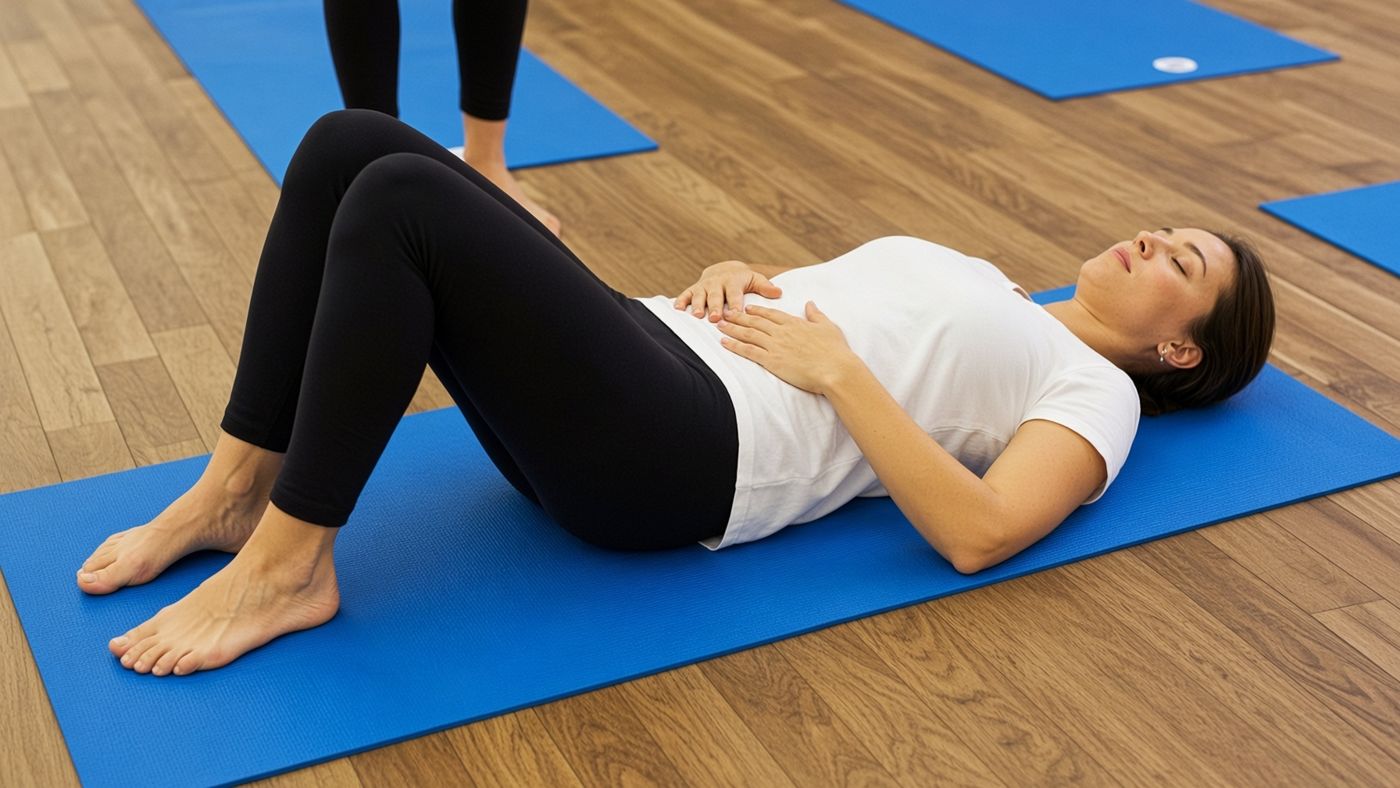
- Lying flat on the back. Raise the head and chest on a bolster, sometimes quite high.
- Deep twists or anything that squeezes the belly.
Practise at least two hours after a meal, and stop anything that brings the burn back.
A practice for heartburn
Move slowly and keep the breath easy. Use cushions and blocks freely.
- Seated with one leg bent back. Sit with one leg straight in front of you and the other bent back beside the hip (half hero pose). If your knees complain, sit higher on a cushion. Lengthen the spine and circle the arms slowly forward, up and back with the breath. Change sides.
- Strap around the foot. In the same seat, loop a strap around the foot of the straight leg. Hold it with both hands, lengthen the back and breathe fully into the chest.
- Opening to the side. Hold the strap in one hand and sweep the other arm up and back in a wide arc, letting the chest turn open five times. Finish with the back hand resting behind you and breathe into the chest and belly. The turn comes from the upper back and opens away from the belly. It should never squeeze it.
- Supported reclining. Place a bolster lengthways behind you and lie back on it, with the head well raised. Let the arms rest out to the sides, palms up, and breathe fully. Add a cushion under the head if you need more height. Then repeat steps 1–4 on the other side.
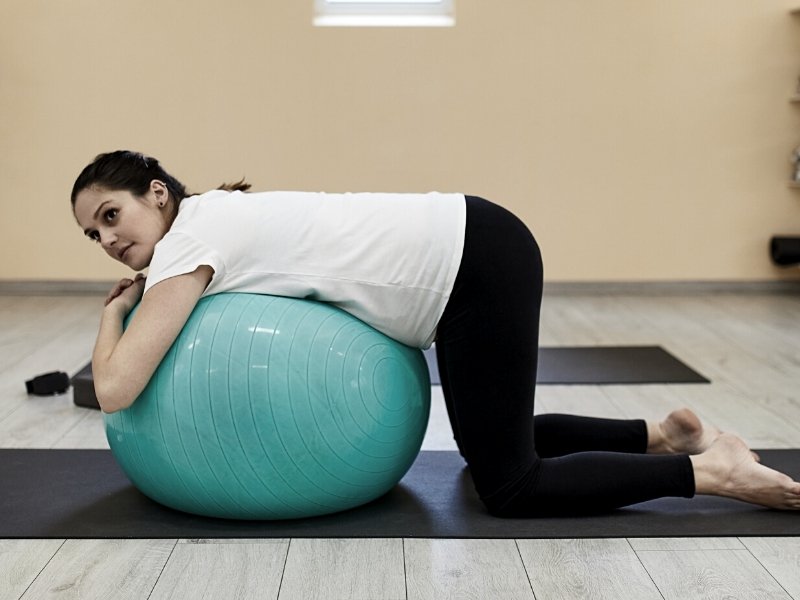
- Table on a raised support. Come onto hands and knees. To keep the head from dropping below the pelvis, put blocks under the hands, or rest the chest and arms on an exercise ball, as in the photo above. Choose a ball big enough for your chest to stay about level with your hips. Rock gently and let the legs and knees relax. If the burn rises, lift the chest higher or come up to kneeling.
- Low lunge. From the table, step one foot forward between the hands. Rock the pelvis gently forward and back with the breath to stretch the front of the back thigh. Then bring the hands onto the front knee, lift the chest and breathe. Pad the back knee. Change sides.
- Standing, arms up. Come to standing with a long back. Inhale and raise the arms. Exhale and lower them. Then stand in mountain pose with the hands clasped behind you, opening the chest, for three to five breaths. Add a gentle side bend each way.
- Half camel. Kneel upright with a cushion under the knees. Breathing in, reach one hand back to the heel, a block or a bolster behind you, and keep the other hand on the lower back for support. Lift the chest. Stay for a few breaths, then change sides. Skip it if leaning back feels strained or dizzy.
- Rest with the head raised. Finish lying back on a bolster with the head propped up on a block or cushion, or on your left side with the head on a pillow. Stay for a few minutes.
Avoid deep backbends if you have pelvic girdle pain, and do not hold any position that makes you breathless or uncomfortable.
When to see your midwife or doctor
See your midwife or doctor if heartburn is not controlled by these changes, or if you have difficulty swallowing, a hoarse voice or a cough that will not go away, weight loss, or pain or swelling in the stomach.1 Call your maternity unit straight away if you have heartburn that medicine does not help, or pain just below the ribs, especially with a severe headache, problems with vision, sudden swelling of the face, hands or feet, vomiting or feeling very unwell. These can be signs of pre-eclampsia, which needs urgent checks.4
Sources
- NHS. Indigestion and heartburn in pregnancy. Link
- Vazquez JC. Heartburn in pregnancy. BMJ Clinical Evidence. 2015;2015:1411. Link
- Phupong V, Hanprasertpong T. Interventions for heartburn in pregnancy. Cochrane Database of Systematic Reviews. 2015;(9):CD011379. Link
- NHS. Pre-eclampsia. Link
- Tommy's. Pregnant women advised to avoid the herbal remedy liquorice root. Link
Based on works from a 2022 pregnancy yoga teacher course, reviewed and updated. General information, not medical advice. Medical review: pending.