- Rib pain is very common in pregnancy, especially from about 28 weeks. A growing bump, a moving baby and a changing posture all press on the lower ribs.
- It cannot always be taken away, but posture, a supportive bra, warmth and gentle side-lengthening movement often make it easier.
- Pain under the ribs can also be a sign of pre-eclampsia, especially with headache, vision problems or sudden swelling. That needs urgent care, not stretching.
What it feels like
Rib pain can be on one or both sides. It is often felt under the breast or at the side of the chest, towards the bottom of the rib cage, and it can spread into the back. It is most common in the third trimester, from around 28 weeks.1 For most women it is a nagging ache that gets worse after sitting slumped for a while, or when the baby is active.
Why the ribs feel it
The rib cage changes shape a great deal in pregnancy. As the uterus grows, the resting position of the diaphragm (the main breathing muscle) moves up by about 5 cm. To make room, the lower rib cage widens: the angle where the lower ribs meet at the front opens from roughly 68° early in pregnancy to about 103° at term.2 That is a big change for the joints and muscles around the ribs to absorb.
Several things add to the pressure:1
- A growing bump. As the abdomen stretches, there is more pressure on the ribs from below.
- A moving baby. When the baby changes position or kicks, the pain around the ribs can flare.
- Posture. Growing breasts can draw the shoulders forward and down, which strains the back, neck and rib cage.
- Breathing. Later on, it can feel harder to breathe deeply, and some women feel referred pain in the shoulders from the nerves of the diaphragm.
- Heartburn. Pregnancy hormones relax the muscle between the stomach and the food pipe, so acid can rise more easily. Heartburn is sometimes felt as pain around the ribs.14
The good news about breathing: the diaphragm keeps working well. Its movement with each breath stays the same as after birth, or even becomes a little larger.2 Feeling short of breath is common, reported by around 70% of healthy pregnant women in daily life,2 but it does not mean the body has stopped using its main breathing muscle. What changes is the shape of the rib cage around it.
Everyday things that help
- Sit tall. Avoid slumping. A rolled-up towel behind the lower back helps you sit upright without effort.1
- A supportive bra. A well-fitting one takes some of the forward pull off the upper body.1
- Warmth or cold. A warm water bottle or a wrapped ice pack for 10 to 15 minutes can ease the ache. Always keep a layer of towel between it and your skin, and never put it directly on the bump.1
- Look after heartburn. Smaller, more frequent meals, sitting upright after eating and not eating in the three hours before bed all help. Your midwife or GP can suggest suitable medicines if it does not settle.4
- Ask for a referral. If the pain does not improve, your GP or midwife can refer you to a women's health physiotherapist.1
The course's approach
The 2022 course worked with two simple ideas: lengthen the sides of the body to make space between the pelvis and the ribs, and breathe into that space. The breathing it taught was full and wide, inviting the ribs to open to the sides and back as well as the belly to soften forward. This is a way of practising with attention, not a treatment, and it does not change the baby's position. But side stretches and resting positions that take weight off the ribs are the same kind of movement a hospital physiotherapy leaflet recommends.1
A gentle practice for sore ribs
About 15 minutes. Move slowly, stay in a pain-free range, and stop anything that hurts, makes you dizzy or leaves you breathless. Use a chair, cushions or a birth ball freely.
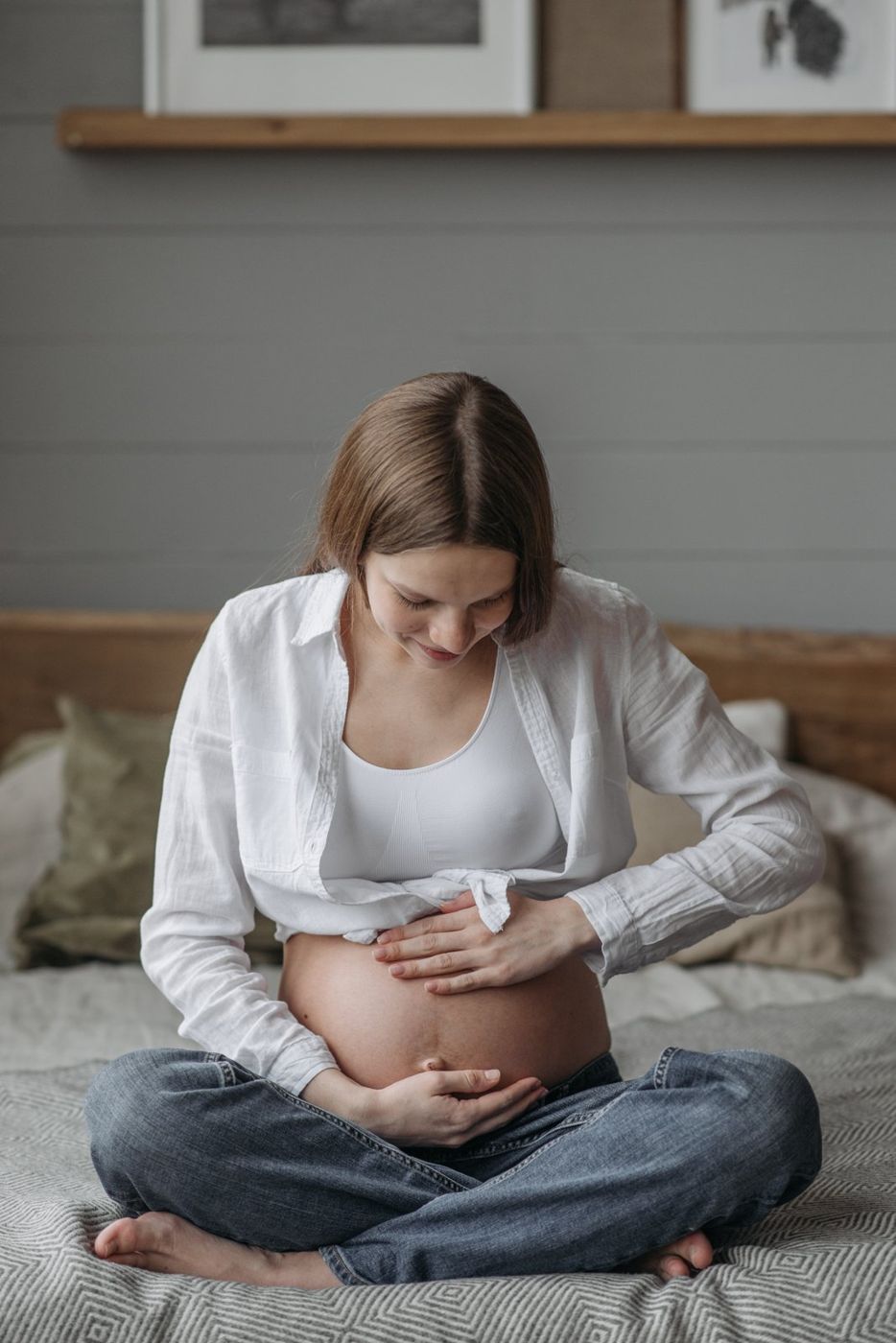
- Settle and notice. Sit cross-legged on a firm cushion, the back long and easy, shoulders soft. Rest your hands on the belly. Breathe in slowly and feel the lower ribs widen; breathe out and let everything soften.
- Hands on the ribs. Move your palms to the sides of the lower ribs. On each exhale, let the hands draw the ribs gently in; on the inhale, release the pressure and feel the ribs widen back into your hands. Eight to ten slow breaths.
- Rib cage circles. With the weight slightly forward, start slow circles of the upper body: forward as you breathe in, back as you breathe out, then from side to side. Let the pelvis, ribs and shoulders all move. Change the cross of the legs and circle the other way.
- Arm sweeps. Inhale and sweep both arms up in parallel. Exhale and float them down by your sides. Keep the shoulders low and the movement unhurried.
- Seated side stretch. Rest your right hand on the floor beside you. On an exhale, reach the left arm up and over to the right. Breathe into the left side of the ribs for a few breaths, keeping both sitting bones heavy. Come back on an inhale. Change sides. Keep it gentle; the aim is space, not depth.
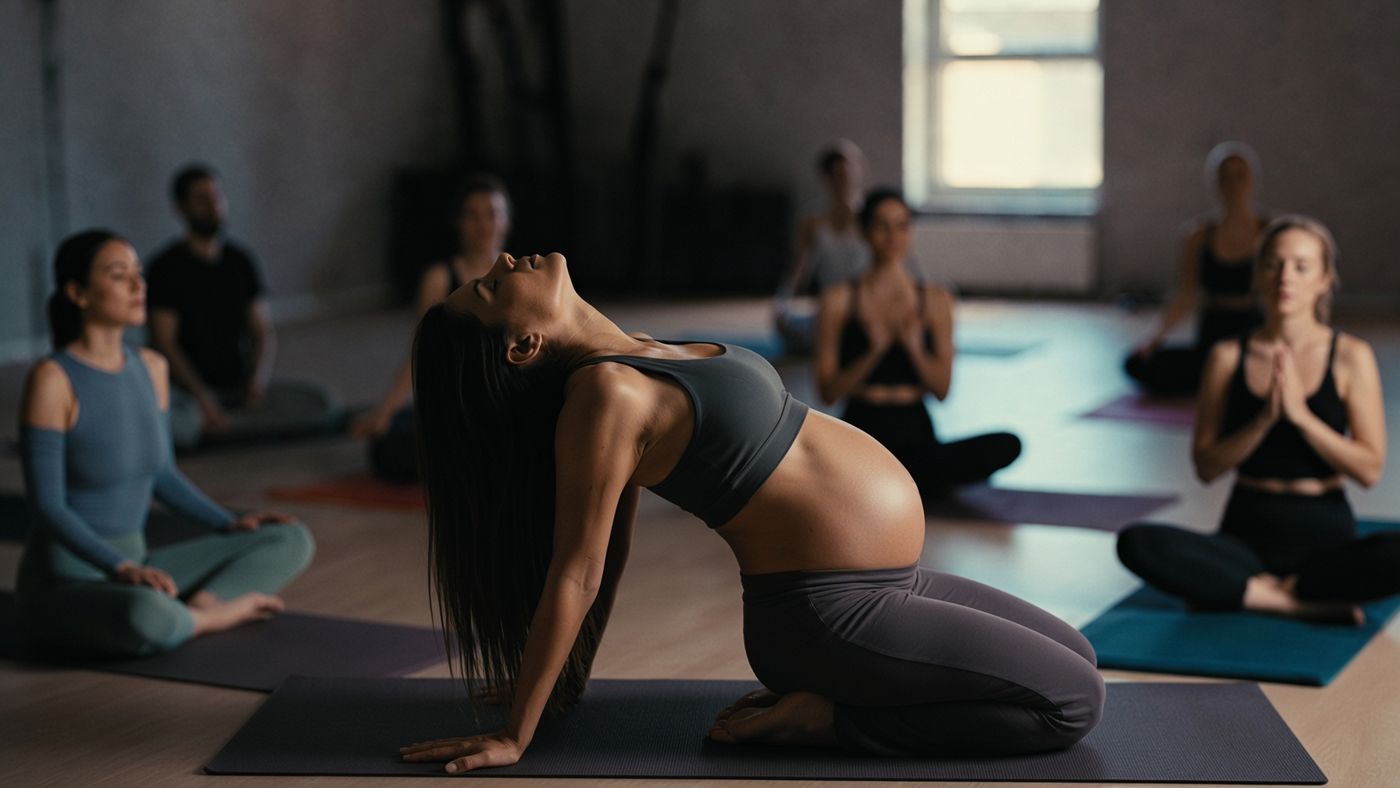
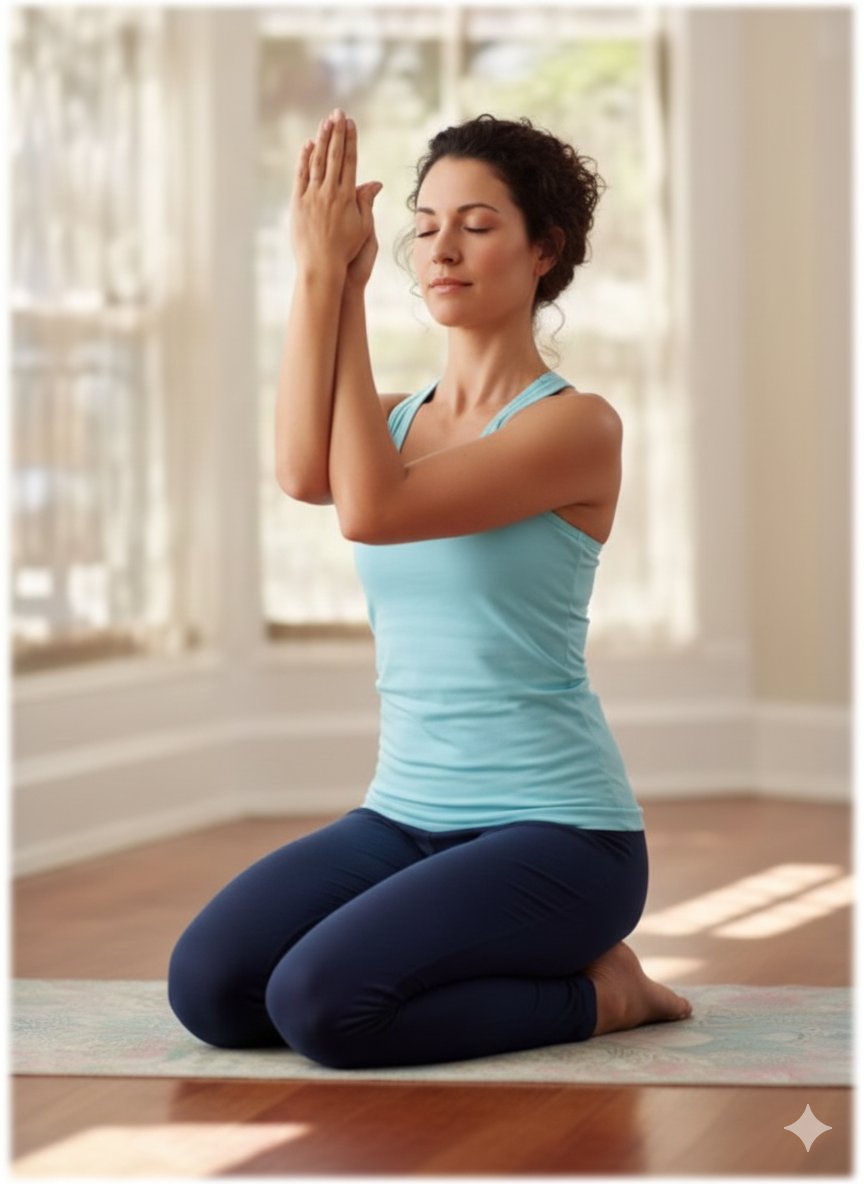
- Kneeling reach and rest. Come to kneeling, as in the photo above, with a cushion between the heels and sitting bones if that is kinder to the knees. On an inhale, lift the arms forward and up in front of you, close the eyes if you like, and feel the front and sides of the rib cage lift away from the bump. On an exhale, lower the arms. After a few rounds, bring a chair or a birth ball in front of you and rest your chest or forearms on it. This resting position takes pressure off the ribs and lower back.1 Stay for several slow breaths.
- Standing side bend. Stand with the feet hip-width or a little wider, or step into a short, steady warrior stance with a chair nearby. Place the right hand on the waist, reach the left arm up and lean gently to the right on the exhale, breathing into the space between the left ribs. Come back up on the inhale. Change sides.
- Side-lying opening. Lie on your left side, knees bent, a pillow between the knees and under the head. Stretch both arms forward at shoulder height, palms together. On an inhale, open the right arm up and back, letting the eyes follow, only as far as is comfortable. Breathe into the right side of the ribs. Return on the exhale. A few rounds, then turn to the other side.
- Side-lying lengthening. Still on your side, rest the head on the lower arm. On an inhale, reach the top arm overhead and the top leg long in the opposite direction. On the exhale, bring them back. Then rest here, breathing wide into the upper side of the ribs.
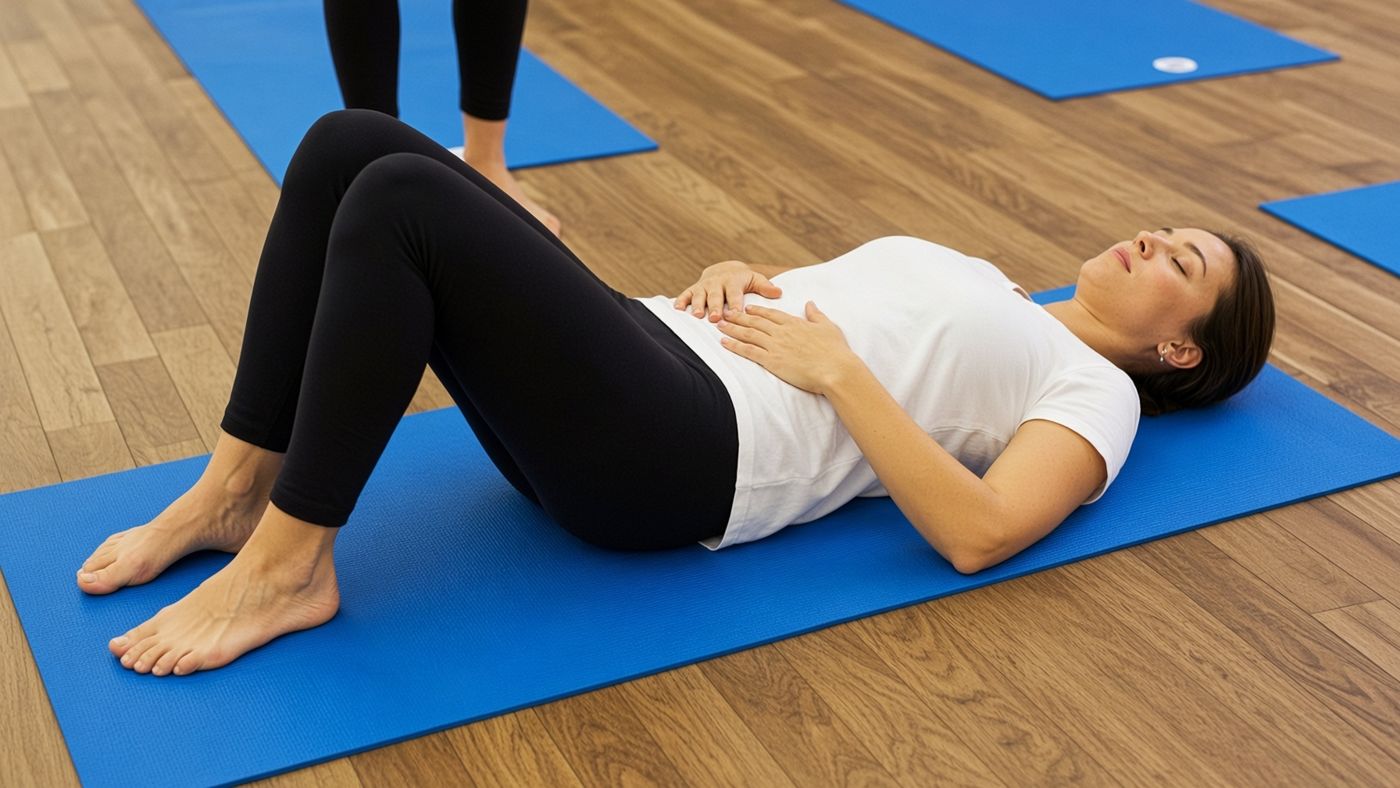
- Supported rest. Finish propped up on cushions or a bolster, half sitting, arms open to the sides. Breathe in all around the rib cage, front, sides and back, and breathe out slowly. In later pregnancy, rest on your side or well propped rather than flat on your back.
When to see your midwife or doctor
Call your maternity unit straight away if you have pain below the ribs, a severe headache that does not ease with simple painkillers, blurred vision or flashing lights, sudden swelling of the face, hands or feet, vomiting, heartburn that does not go away with medicine, or simply feel very unwell. These can be signs of pre-eclampsia, which is most likely from 20 weeks and can also start in the weeks after birth.3
Call 999 (or your local emergency number) if you have severe difficulty breathing, a chest that feels tight or heavy, or pain spreading to the arms, back, neck or jaw.5
Also speak to your midwife or GP if you are more short of breath than usual, if the rib pain is sharp, severe or getting worse, if heartburn does not settle with simple measures,4 or if the pain does not improve with the advice above.1
The bottom line
Rib pain is one of the common, uncomfortable ways the body makes room for a baby. Sitting tall, good support, warmth and slow side-lengthening movement with wide breathing can take the edge off. Pain under the ribs that comes with headache, vision changes, swelling or feeling unwell is a different matter, and needs to be checked straight away.
Sources
- Calderdale and Huddersfield NHS Foundation Trust, Physiotherapy Department. Rib pain in pregnancy. Patient leaflet csph0157, version 2. 2025. Link
- LoMauro A, Aliverti A. Respiratory physiology of pregnancy: Physiology masterclass. Breathe. 2015;11(4):297–301. Link
- NHS. Pre-eclampsia. Link
- NHS. Indigestion and heartburn in pregnancy. Link
- NHS. Shortness of breath. Link
Based on works from a 2022 pregnancy yoga teacher course, reviewed and updated. General information, not medical advice. Medical review: pending.