- Sthira sukham asanam means, roughly, "a posture should be steady and easy." In its original setting, posture practice was there to prepare the body to sit comfortably in meditation.
- In pregnancy the course read it as a balance: good support from the deep stabilizing muscles, and the freedom to soften and release, including the pelvic floor.
- Your breath is the measure. If it stays slow and unforced, the effort is right. For a healthy pregnancy, moderate activity like this is considered safe and helpful.14
Where the phrase comes from
The Yoga Sutras attributed to Patanjali say very little about physical postures. One of the few lines on the subject, verse 46 of the second chapter, reads sthira sukham asanam. Sthira means steady or firm; sukha means easy, comfortable, even happy. Some commentators translate it as "a steady and joyful posture."
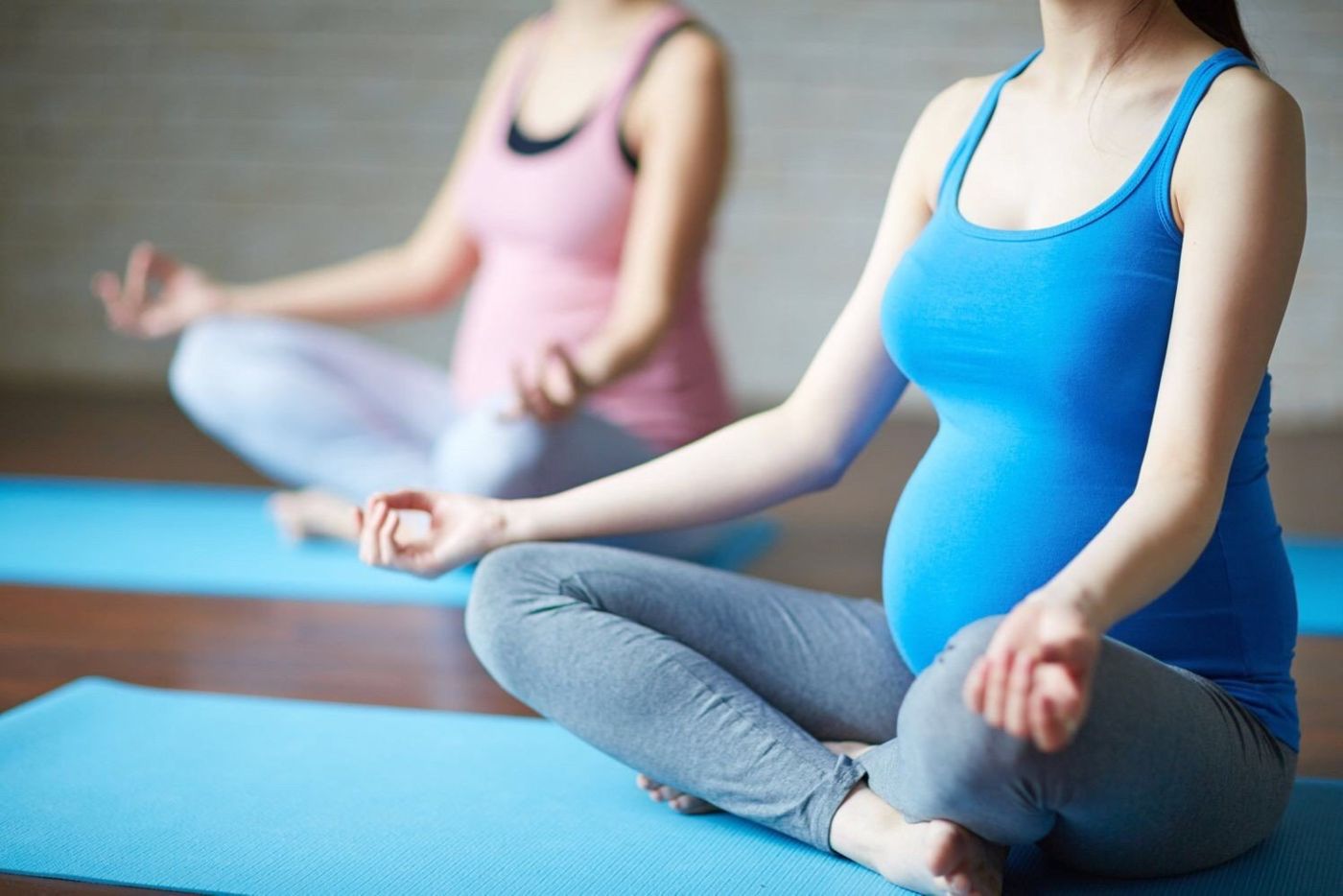
In that tradition, asana did not mean a sequence of stretches. It meant a seat. The work with the body was meant to make it ready for long, comfortable sitting in meditation, the kind of quiet seat you see in the photo above. Once the posture is complete, the next step is learning to do nothing at all.
Why it fits pregnancy
The course started from a familiar observation. Most of us live busy lives, in a culture that trains us to "make things happen." We focus on results and forget the way there. Steadiness, the course argued, is not the same as doing more. It is closer to simply being.
Pregnancy makes this concrete. The growing belly asks the deep stabilizing muscles of the trunk and the pelvic floor to work well, holding a body whose shape and balance change every few weeks. Birth asks for the opposite skill: the ability to soften, to release and to surrender. A pregnancy practice built on sthira sukha trains both, side by side.
This is the course's way of seeing, drawn from yogic tradition rather than from research. But the practical advice that grows from it matches mainstream guidance well: move regularly, keep the effort moderate, and stop if something feels wrong.1
Three tools, one signal
The course named three tools to use from the very first minute of practice:
- Correct, ongoing practice. Regular, gentle work, rather than an occasional big effort.
- Releasing what isn't needed. In any pose, look for the parts that are working for no reason. The shoulders and the face are the usual suspects.
- Focus and attention. Keep noticing what is actually happening in the body.
And one main signal: the breath. If it flows freely and calmly, the pose is steady and easy. If it catches, speeds up or stops, you are working too hard. This matches a simple rule from pregnancy exercise advice: you should be able to talk, but not sing.1
The practice
About an hour in full, adapted from the course class, which moved from arriving and breathing, through warming up and a more dynamic middle, to the floor and deep rest. Use a mat, cushions and a wall nearby. Any part can be done on its own.
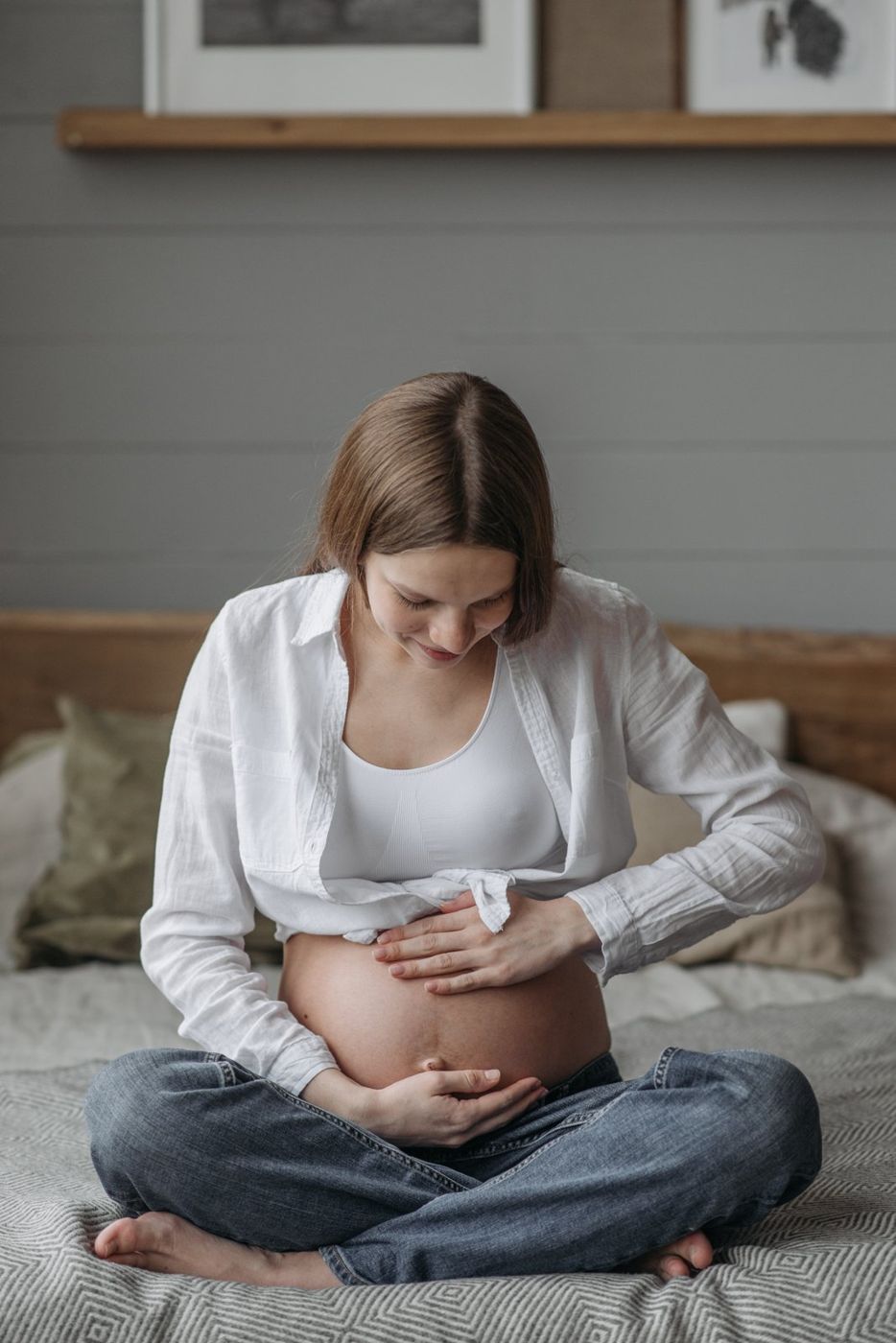
- Arrive. Sit cross-legged on a cushion, hands resting on the knees, as in the photo above. Let the sitting bones settle and the spine lengthen. Breathe naturally and notice how the breath has changed with the pregnancy.
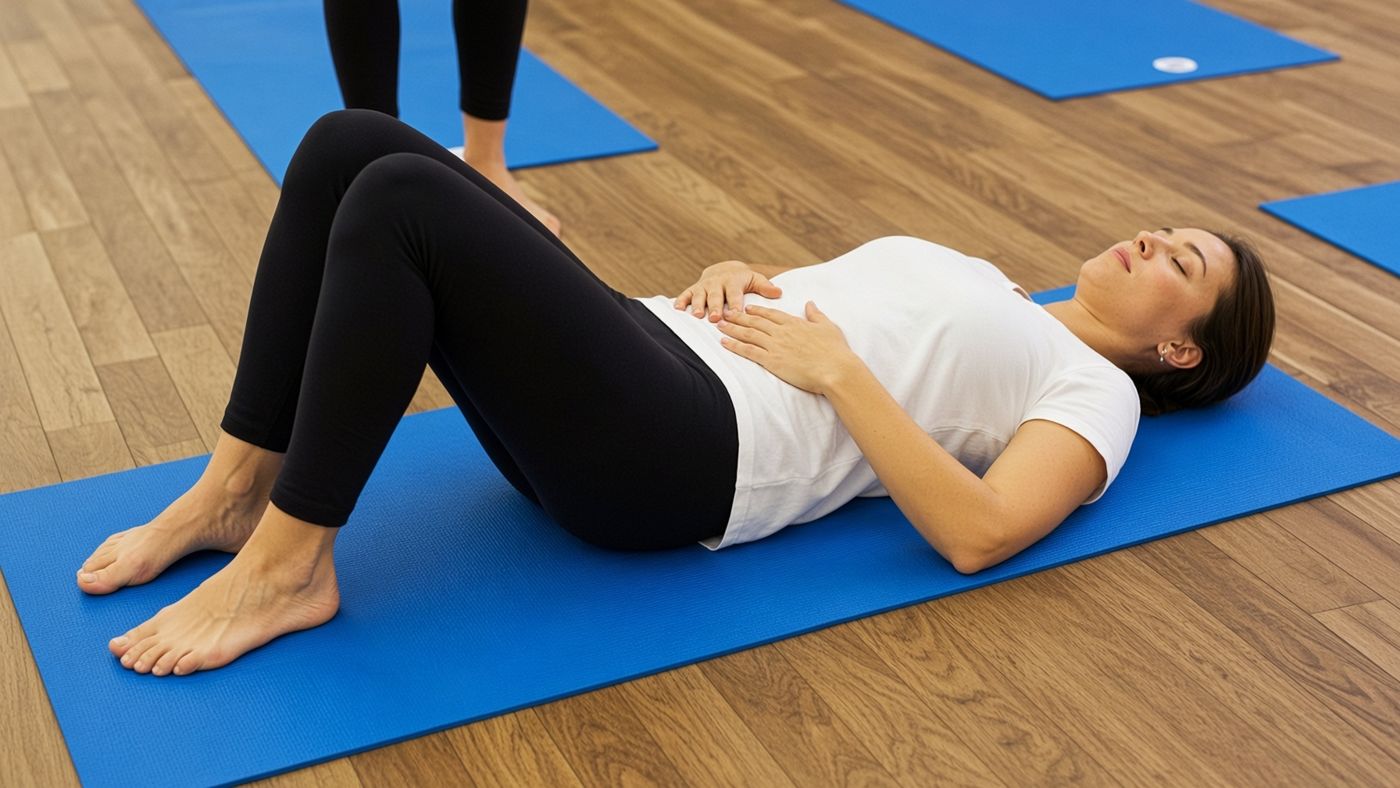
- Full breath, lying down. Lie with knees bent, propped on cushions so the head and chest are raised. Breathe in and let the belly, then the chest, fill. Breathe out and feel the soles of the feet sink into the floor while the pelvic floor gently lifts. Keep it light. In later pregnancy, avoid lying flat on your back for more than a few minutes; lie propped or on your side instead.1
- Feet, ankles and hips. Lift one knee toward you and circle the ankle, flexing and pointing the foot. Then slowly circle the hip in both directions. Change sides. Finish by holding the knees and rocking gently from side to side.
- Pelvic tilts. Still with knees bent, breathe in and let the lower back arch a little; breathe out and roll the pelvis back so the back rests on the mat. Keep the effort soft. Then take the knees slowly from side to side, turning the head the other way.
- Cat and swimming. Come onto hands and knees, knees under the hips. Breathe in to lengthen; breathe out and round the back gently, without forcing. Then, on an exhale, reach one arm forward and the opposite leg back, keeping one long line from hand to heel. Change sides. Keep the belly supported, not hanging.
- Downward dog to standing. From hands and knees, tuck the toes and lift the hips into a short downward dog, feet hip-width or wider. Stay three to five breaths, letting the head hang loose. Then walk the feet to the hands and roll up slowly, head last. If you feel dizzy or breathless, skip this step and rest in child's pose with knees wide.
- Standing steady. Stand with feet parallel, hip-width apart. Feel the pelvic floor gather lightly and the shoulders roll back and down. Breathe the arms up and down a few times. Then step into warrior two and, from there, triangle pose, with the back against a wall if balance is uncertain. Three full breaths in each, both sides.
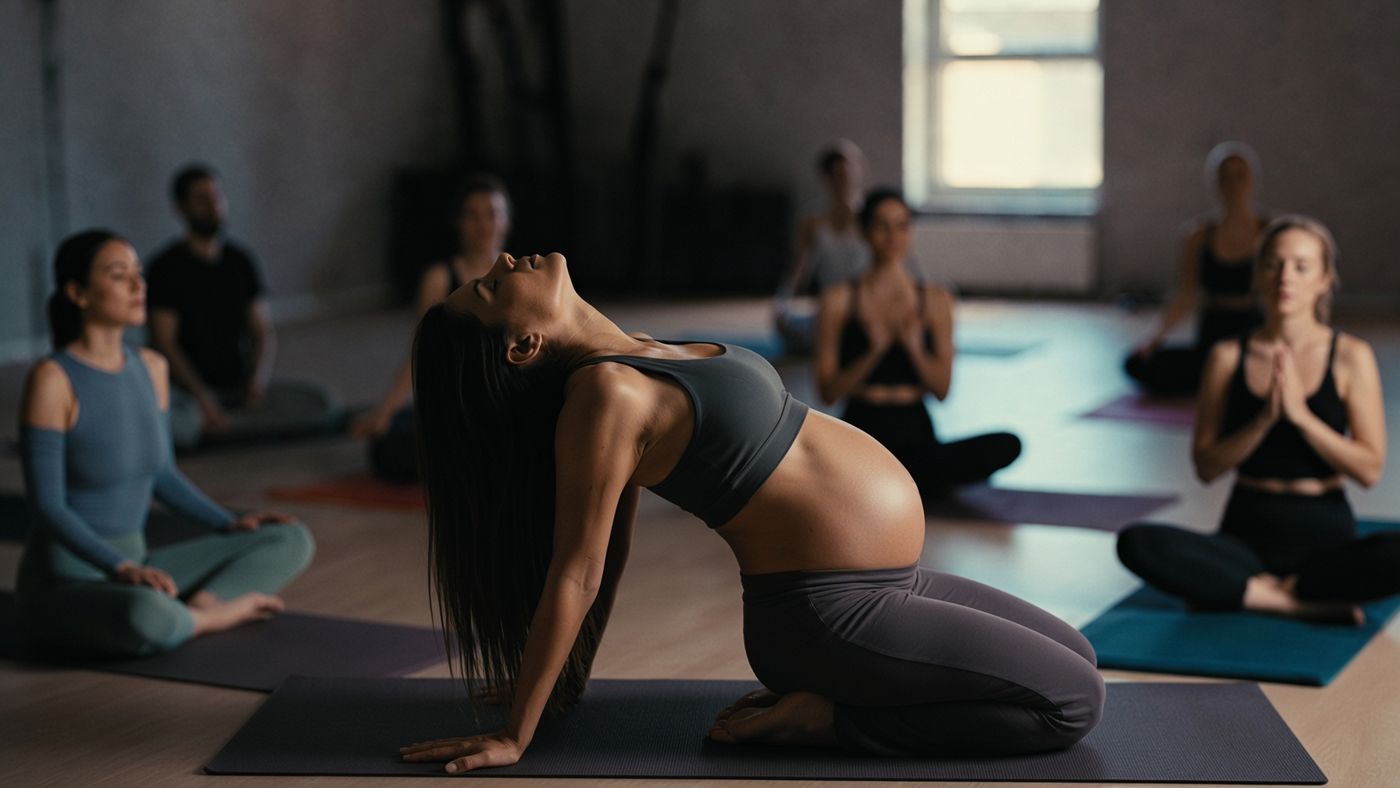
- Release. Come down to a wide child's pose, arms forward, then back by the sides. For a gentle backbend, kneel upright and place the hands on the lower back, lifting the chest only as far as is comfortable. Notice the shoulders and let them soften.
- Seated stretch and twist. Sit on a cushion with legs straight or slightly bent and lean forward from the hips, keeping the back long and the belly free. Then bend one knee and turn gently toward it, keeping the twist open and away from the belly.
- Deep rest. Lie on your side, or propped, with a cushion between or under the knees. Let go of all effort and let the breath become natural and easy. Rest for several minutes.
- Return to the seat. Roll to your side and come back to sitting cross-legged. Sit quietly for a few minutes. The course closed with a shared chant of Om; a few slow breaths in silence work just as well.
A closing thought
The course work ended with a short piece of reflective writing. It describes moments when strength seems to run out, though nothing shows from outside. It describes feelings as stones along the path, neither to be cancelled nor ignored, and a choice to let them be. "In the places of joy, pain and tension I soften," it says, "and through softening I find steadiness." That, in a sentence, is sthira sukha.
Yoga in pregnancy is not only physical. Reviews of prenatal yoga trials suggest it may help reduce anxiety, low mood and stress, though the studies vary a lot in size and quality.3
When to see your midwife or doctor
Stop and contact your midwife, doctor or maternity unit straight away if you have vaginal bleeding, leaking fluid, regular contractions, chest pain or palpitations, shortness of breath before or during exercise, dizziness or faintness, headaches, severe pain in the belly, back or pubic area, pain or swelling in the calf, or if your baby is moving less than usual.2 Ask for advice too if you have pelvic girdle pain, unusual tiredness, or a health condition such as high blood pressure, and check with your midwife before starting any new activity.12
Sources
- NHS. Exercise in pregnancy. Link
- HSE (Health Service Executive, Ireland). Safe exercise during pregnancy: when to stop. Link
- Corrigan L, Moran P, McGrath N, Eustace-Cook J, Daly D. The characteristics and effectiveness of pregnancy yoga interventions: a systematic review and meta-analysis. BMC Pregnancy and Childbirth. 2022;22:250. Link
- ACOG Committee Opinion No. 804: Physical activity and exercise during pregnancy and the postpartum period. Obstetrics & Gynecology. 2020;135(4):e178–e188. Link
Based on works from a 2022 pregnancy yoga teacher course, reviewed and updated. General information, not medical advice. Medical review: pending.