- Lower oestrogen after menopause can change the tissues of the vagina, vulva and bladder. Symptoms such as dryness, irritation and burning are common and often go untreated.
- Leaking urine is common in midlife: in a large US study, close to half of women in their mid-forties leaked at least once a month.
- Pelvic floor muscle training has good evidence behind it. Bladder training and simple lifestyle changes can help too, and vaginal oestrogen is an option to discuss with a doctor. Yoga helped in one trial, about as much as general exercise did.
What changes in menopause
The tissues of the vulva, vagina, urethra and bladder respond to oestrogen. As levels fall, these tissues can become thinner, drier and more easily irritated. The medical name for this group of changes is genitourinary syndrome of menopause, or GSM.
The Menopause Society (formerly the North American Menopause Society) estimates that GSM affects roughly 27% to 84% of postmenopausal women. The range is wide because studies define and measure it differently. The most commonly reported symptoms include irritation of the vulva, not enough lubrication, pain during sex, and burning or pain when passing urine. Their position statement adds that GSM is likely underdiagnosed and undertreated.1
In other words, if this sounds familiar, you are far from alone, and it is worth mentioning, not putting up with.
How common is leaking?
Very common. The Study of Women's Health Across the Nation (SWAN) followed a large group of women in the US through the menopause years. At the start, when their average age was about 46, 46.7% reported leaking urine at least once a month. Each year, about 11% of the women who had not been leaking started to.2
Most of the new cases in that study were mild. Weight was one of the factors linked to developing leaking, which is one reason it appears in the advice below.2
Pelvic floor muscle training Evidence: moderate to high
This is the best-studied option. A Cochrane review gathered 31 trials with 1,817 women who had stress, urgency or mixed incontinence, and compared pelvic floor muscle training with no treatment or an inactive treatment.3 The trials included women of different ages, not only women in menopause, and some were done specifically in older or postmenopausal women.
The finding for stress leaking (the kind that happens with a cough, sneeze or jump) was rated high certainty. The results for all types together were rated moderate, and the trials were small and varied. The authors concluded that pelvic floor training can be part of the first-line approach for women with incontinence.3
The NHS suggests at least 8 squeezes, at least 3 times a day, for at least 3 months.5 If you are new to it, our article on the pelvic floor explains how to find these muscles.
Bladder training and everyday habits
Bladder training means gradually stretching the time between feeling the urge to go and actually going. According to the NHS, it usually lasts at least six weeks. Your doctor may also suggest cutting down on caffeine (tea, coffee, cola), getting the amount you drink right, since both too much and too little can make things worse, and losing weight if you are overweight.5
Vaginal oestrogen and other treatments
For milder dryness and discomfort, The Menopause Society recommends non-hormonal lubricants during sex and long-acting vaginal moisturisers used regularly as a first step. For moderate to severe symptoms, prescription options include low-dose vaginal oestrogen, vaginal DHEA and a tablet called ospemifene.1
These are not suitable for everyone, and the right choice depends on your health history, for example after some cancers. This is a conversation to have with your doctor. The same statement found the evidence for vaginal laser treatment not yet strong enough to recommend it.1
What about yoga? Evidence: one trial
The largest trial so far randomised 240 women aged 45 to 90 who leaked every day. For 12 weeks, half did a pelvic floor focused yoga program, with two group classes and one home practice a week. The other half did a general stretching and strengthening program with the same amount of time.4
Both groups improved. Leaking fell by 2.3 episodes a day with yoga and by 1.9 with general exercise. The difference between them was small and not clearly meaningful, and the authors concluded that yoga was not better than the general program. The trial had no group that did nothing, so it cannot show how much of the improvement came from the exercise itself.4
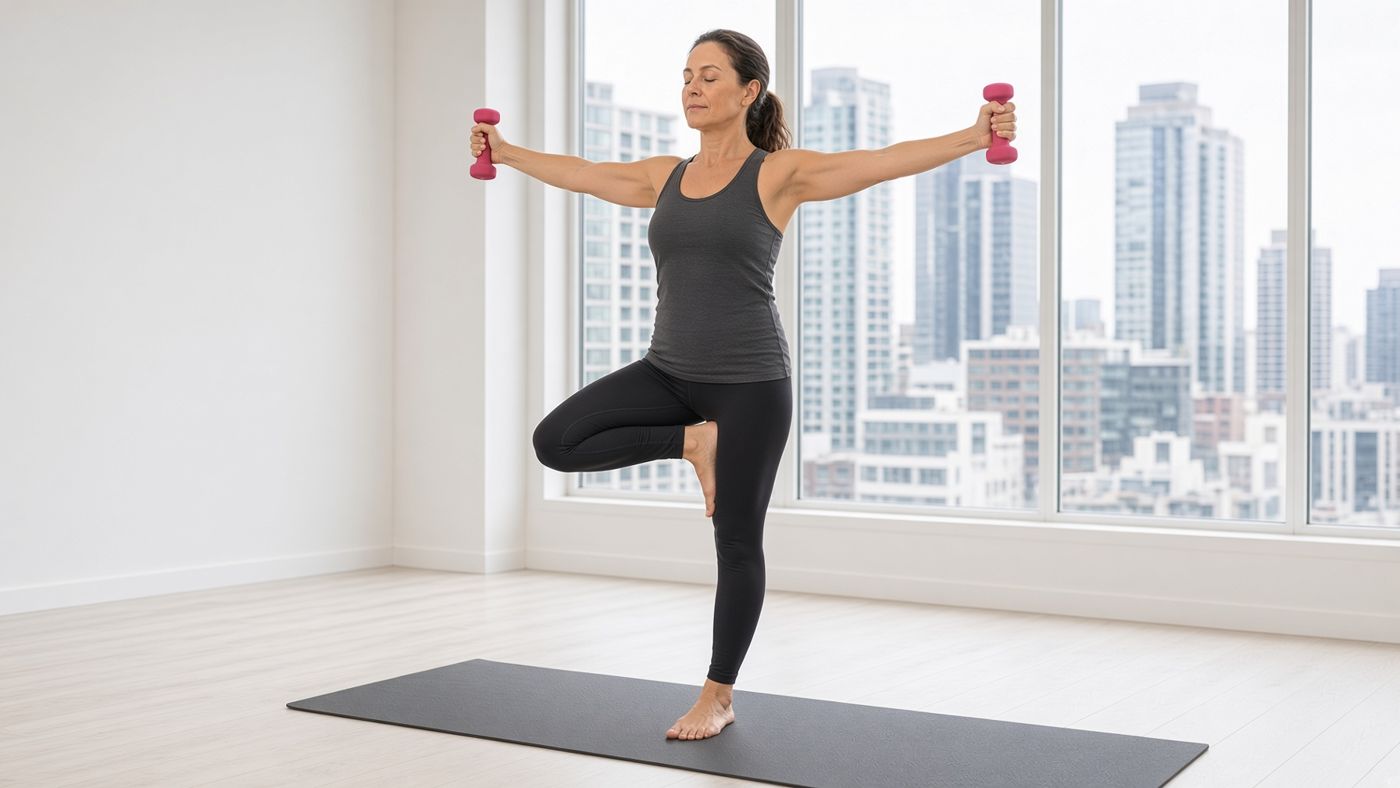
So the honest summary: yoga looks like a reasonable way to move and to practise pelvic floor awareness, but it is not a proven treatment on its own, and it has not been shown to beat other forms of exercise.
A gentle practice
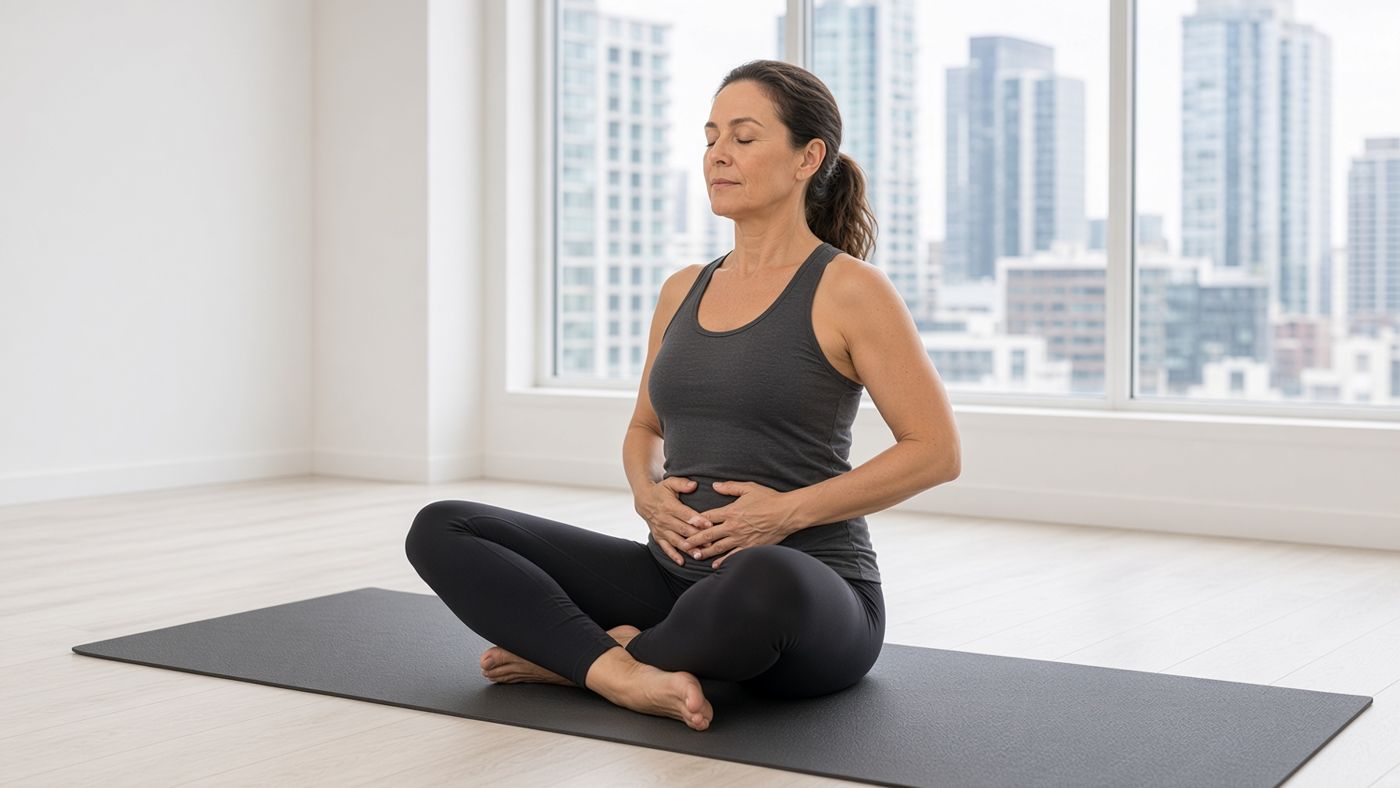
Not a treatment. A calm way to reconnect with the pelvic floor, which you can do alongside a training program.
- Settle. Lie on your back with knees bent and feet on the floor, or sit tall on a firm chair. Let the belly and buttocks soften.
- Breathe low. Inhale slowly and let the breath widen the ribs and lower belly. Notice the pelvic floor ease down slightly.
- Lift on the exhale. As you breathe out, gently squeeze and lift around the back passage and the front, as if holding in wind and stopping the flow of urine. Keep breathing; do not hold the breath or clench the buttocks.
- Let go fully. On the next inhale, release completely. Letting go matters as much as lifting.
- Repeat gently. Build towards the NHS target of at least 8 squeezes, 3 times a day.5 Stop if anything hurts.
When to see a doctor
See a doctor about any bleeding from the vagina after menopause, even a small amount or just once. It is usually not serious, but it needs checking. The same goes for any blood in your urine, which may look pink, red or dark brown: the NHS advises asking for an urgent appointment.6 It is also worth seeing a doctor or a pelvic health physiotherapist if leaking or discomfort affects your daily life or is not improving.
The bottom line
Changes to the bladder and pelvic tissues are a normal part of menopause for many women, but they do not have to be accepted in silence. Pelvic floor training is the best-supported thing you can do yourself. Bladder training and simple habits can add to it, and there are treatments for dryness to discuss with your doctor. Yoga can be a pleasant way to practise, with realistic expectations.
Sources
- The North American Menopause Society. The 2020 genitourinary syndrome of menopause position statement of The North American Menopause Society. Menopause. 2020;27(9):976–992. Link
- Waetjen LE, Liao S, Johnson WO, Sampselle CM, et al. Factors associated with prevalent and incident urinary incontinence in a cohort of midlife women: a longitudinal analysis of data. Study of Women's Health Across the Nation. American Journal of Epidemiology. 2007;165(3):309–318. Link
- Dumoulin C, Cacciari LP, Hay-Smith EJC. Pelvic floor muscle training versus no treatment, or inactive control treatments, for urinary incontinence in women. Cochrane Database of Systematic Reviews. 2018;(10):CD005654. Link
- Huang AJ, et al. Efficacy of a therapeutic pelvic yoga program versus a physical conditioning program on urinary incontinence in women: a randomized trial. Annals of Internal Medicine. 2024;177(10):1339–1349. Link
- NHS. Urinary incontinence: treatment. NHS website. Link
- NHS. Post-menopausal bleeding; Blood in urine. NHS website. Link · Link
This article is general information, not medical advice. Medical review: pending.