- Leaking urine is very common: about four in ten women in pregnancy, and about three in ten in the first year after birth.
- For women who do not leak, starting structured pelvic floor training early in pregnancy probably lowers the chance of leaking later in pregnancy and in the months after birth.
- As a treatment for leaking that has already started, the evidence is less certain. Learning the right technique matters, and a pelvic health physiotherapist can help.
What the pelvic floor is
The pelvic floor is a layer of muscles at the base of the pelvis, like a hammock between the pubic bone and the tailbone. It helps hold up the pelvic organs, the bladder, the uterus and the bowel, and it helps squeeze the urethra shut when pressure rises, for example when you cough or lift.1
Pregnancy and birth both put this system under strain. The Cochrane review on the topic notes that pregnancy and delivery both appear to be risk factors for leaking, and that training the muscles may help them cope with the extra pressure in the belly during pregnancy.1
How common is leaking?
More common than most women are told. Two large systematic reviews pooled the studies on urinary incontinence around birth:2,3
In pregnancy, the pooled figure came from 44 studies and more than 88,000 women.2 After birth, it came from 24 studies and more than 35,000 women. Leaking dipped around three months after birth and then rose again, to about 32% at one year.3 In both periods the most common type was stress incontinence: leaking with a cough, sneeze, laugh or jump. Most women described the bother as mild to moderate.2,3
What the research says Evidence: moderate to high for prevention
The key source is a Cochrane systematic review from 2020, which brought together 46 trials with 10,832 women from 21 countries.1 Its findings depend on two things: whether a woman was already leaking, and whether training was done in pregnancy or after birth.
Prevention in pregnancy. For women who were not leaking, structured training during pregnancy:
- probably lowered the risk of leaking in late pregnancy by 62% (moderate-certainty evidence);
- slightly lowered the risk of leaking three to six months after birth by 29% (high-certainty evidence);
- had too little data to say anything about six to twelve months after birth.
The authors' conclusion: early, structured training in early pregnancy for women who do not leak may prevent leaking in late pregnancy and after birth.1
Treatment of leaking. Here the picture is less clear. For women already leaking, the Cochrane review found no clear evidence that training in pregnancy reduced leaking, and for women still leaking after birth, no clear difference six to twelve months later. That evidence was rated low to very low certainty, so "unclear" is a fairer reading than "doesn't work".1
A newer review from 2025 looked at exercise in the first year after birth. Pooling seven trials with 1,930 women, it found that pelvic floor training lowered the odds of leaking by 37%, with moderate certainty.4
Routine programs for everyone after birth. The Cochrane authors concluded that offering training to all new mothers as a general program is not likely to reduce leaking.1 The World Health Organization likewise does not recommend starting routine pelvic floor training after birth, for every woman, purely to prevent incontinence, noting that the evidence is very low certainty.6 That is about routine programs for everyone. It does not mean the exercise is harmful, or that it is pointless for a woman who leaks.
Fecal incontinence has been studied much less, and the trials so far have not shown a clear effect either way.1
Finding the right muscles
Pelvic floor training means repeated, deliberate contractions of these muscles, done as a program with one or more sets a day.1 The hard part is doing the right movement. In a classic study, 47 women were taught with brief verbal instructions and then measured. Only about half (49%) did the contraction in a way that helped close the urethra. A quarter did it in a way that could actually make leaking worse, mostly by pushing down instead of lifting. The authors concluded that simple verbal or written instructions are not enough.5
The common mistakes:
- Bearing down. Pushing out, as if straining on the toilet, is the opposite of what you want. The feeling is a squeeze and a lift inwards and upwards.
- Holding your breath. Keep breathing softly throughout. Holding the breath tends to push pressure down onto the pelvic floor.
- Squeezing the buttocks, thighs or belly hard. The movement is small and deep. If your bottom lifts off the chair, too much else is working.
A simple practice
Not a treatment plan. A way to learn the movement, in pregnancy or after birth when you feel ready and your caregiver agrees.
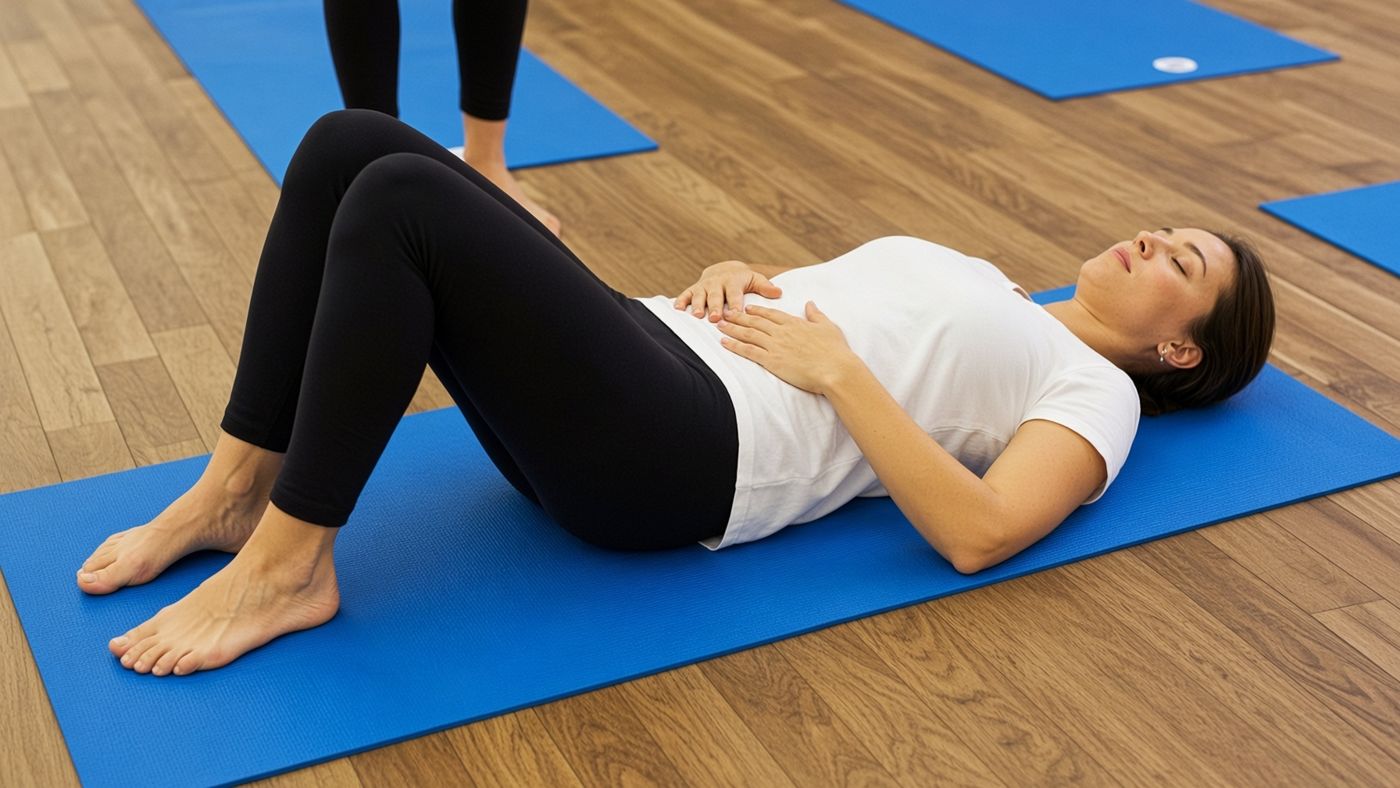
- Settle. Sit upright on a firm chair, or lie on your side with your knees bent. Let the belly and buttocks soften. Breathe normally.
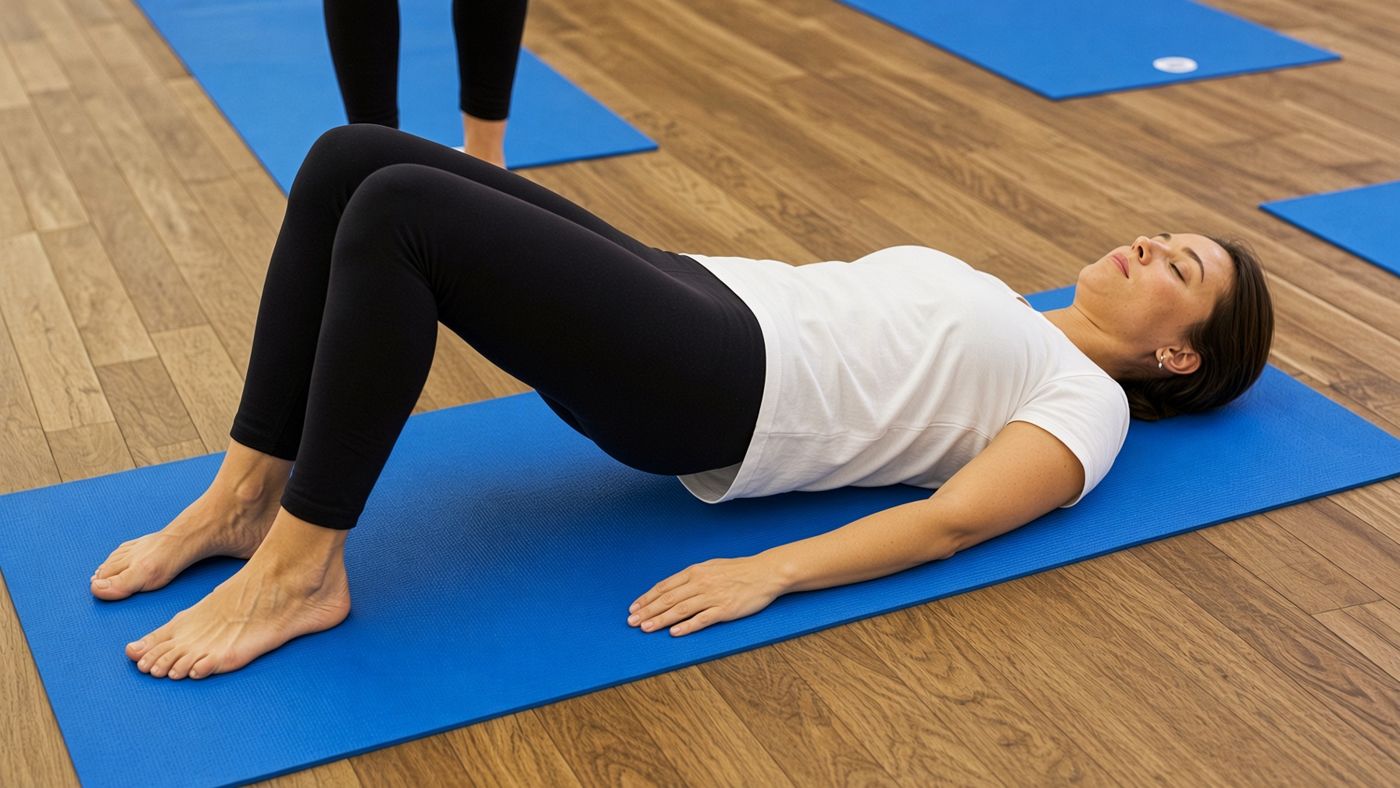
- Find it. Imagine you are stopping yourself from passing wind and holding in urine at the same time. Gently squeeze around the back passage and the front passages, and lift them up and in.
- Hold, then let go fully. Hold for a few seconds while you keep breathing, then release completely and rest. The letting go is as important as the squeeze.
- Add quick ones. Then try a few short, quick squeezes and releases. These are the ones that help when you cough or sneeze.
- Make it regular. Repeat a set at least once a day, every day. The trials that worked were structured programs, kept up over weeks and months, not a few squeezes now and then.1
If you cannot feel anything happening, or you are not sure whether you are lifting or pushing, that is common, not a failure. It is exactly what a physiotherapist can check.
Everyday habits that help the bladder
A course work in our archive on leaking in pregnancy paired the exercises with daily habits. Some of its tips hold up; one needs turning around. Here is what NHS bladder advice for pregnancy actually says.7,8
- Squeeze before you sneeze. Tighten the pelvic floor just before a cough, sneeze or lift. Physiotherapists call this "the knack", and it often stops a leak in that moment. The quick squeezes in the practice above are what train it.7
- Keep drinking. Aim for about 1.5 to 2 litres a day, mostly water, rather than cutting back to avoid leaks. If you wake more than once a night to pee, have your last drink about two hours before bed.8
- Go easy on caffeine and fizzy drinks. Coffee, tea, cola and fizzy or citrus drinks can irritate the bladder.7,8
- Don't go "just in case". It can seem sensible to empty the bladder as often as possible, and the archive work suggested exactly that. NHS advice is the opposite: avoid "just in case" visits, and take your time when you do go, sitting down rather than hovering.7,8
- Avoid straining. Constipation and repeated straining add load to the pelvic floor, so it is worth keeping your bowels comfortable.7,8
Leaking when you laugh is common, not normal
With four in ten pregnant women and three in ten new mothers affected, it is easy to shrug it off as part of having a baby.2,3 It is common. But common does not mean you have to live with it. It is a symptom worth mentioning, and something that can often be worked on.
When to see a pelvic health physiotherapist
If you leak urine or stool, or can't hold in wind. If you feel heaviness, dragging or a bulge in the vagina. If you can't feel the muscles working, or you're not sure you're doing it right. If you have pain in the pelvis or during sex. If leaking still bothers you some weeks after birth. Ask your midwife, doctor or obstetrician for a referral. A professional can check your technique, which instructions alone often cannot.5
The bottom line
Pelvic floor training is one of the few exercises in pregnancy backed by large, careful reviews. For women who don't leak, starting early in pregnancy probably helps prevent leaking later. For women who already leak, the evidence is less certain but encouraging, and good technique is everything. It takes a few minutes a day, no equipment and no special clothes. And if leaking is part of your life now, you don't have to accept it quietly.
Sources
- Woodley SJ, Lawrenson P, Boyle R, Cody JD, Mørkved S, Kernohan A, Hay-Smith EJC. Pelvic floor muscle training for preventing and treating urinary and faecal incontinence in antenatal and postnatal women. Cochrane Database of Systematic Reviews. 2020;5:CD007471. Link
- Moossdorff-Steinhauser HFA, Berghmans BCM, Spaanderman MEA, Bols EMJ. Prevalence, incidence and bothersomeness of urinary incontinence in pregnancy: a systematic review and meta-analysis. International Urogynecology Journal. 2021;32(7):1633–1652. Link
- Moossdorff-Steinhauser HFA, Berghmans BCM, Spaanderman MEA, Bols EMJ. Prevalence, incidence and bothersomeness of urinary incontinence between 6 weeks and 1 year post-partum: a systematic review and meta-analysis. International Urogynecology Journal. 2021;32(7):1675–1693. Link
- Beamish NF, Davenport MH, Ali MU, et al. Impact of postpartum exercise on pelvic floor disorders and diastasis recti abdominis: a systematic review and meta-analysis. British Journal of Sports Medicine. 2025;59(8):562–575. Link
- Bump RC, Hurt WG, Fantl JA, Wyman JF. Assessment of Kegel pelvic muscle exercise performance after brief verbal instruction. American Journal of Obstetrics & Gynecology. 1991;165(2):322–327. Link
- World Health Organization. WHO recommendations on maternal and newborn care for a positive postnatal experience. Geneva: WHO; 2022. Link
- NHS Borders. Pelvic floor exercises during pregnancy. Patient information leaflet, reviewed 2024. Link
- Leeds Teaching Hospitals NHS Trust. Pelvic floor muscle exercises and bladder advice. Patient leaflet, reviewed 2026. Link
This article is general information, not medical advice. Medical review: pending.