- Pelvic girdle pain (PGP), once called symphysis pubis dysfunction (SPD), is common. It can be very painful, but it is not harmful to your baby.
- The research on treatment is thin. Single studies suggest some benefit from acupuncture and from support belts, and the evidence is low to moderate in quality.
- Everyday changes, such as keeping your knees together when you turn, sitting to dress and taking shorter steps, are the advice patient guides agree on. Ask for help early.
What it is
The pelvis is a ring of bones joined at the back to the base of the spine and at the front by a joint called the symphysis pubis. Pelvic girdle pain is pain in the front and/or the back of the pelvis, which can also spread to the hips or thighs.3 When the pain is mainly at the front, over the pubic bone, it used to be called symphysis pubis dysfunction, or SPD. Today both are usually grouped under PGP.34
The NHS describes it as a collection of uncomfortable symptoms caused by stiffness in the pelvic joints, or by the joints moving unevenly.4 Typical moments are turning over in bed, climbing stairs and getting out of a car.4 It is not harmful to the baby, and most women with PGP can have a vaginal birth.34
How common is it?
Common, though the numbers depend on how pain is defined and measured. UK patient guidance estimates that PGP affects about one in five pregnant women, and it is more common later in pregnancy.34 A systematic review that looked at pelvic and lower back pain together found much higher figures:1
The same review notes that these figures drop by about 20% when mild complaints are left out. Among women with this pain, about a quarter have serious pain during pregnancy, and after birth problems are serious for about 7%.1 For most women, it eases after the baby is born.
What helps, according to the research Evidence: low to moderate
The main summary is a Cochrane review of 34 randomized trials with 5,121 pregnant women, covering lower back pain, pelvic pain or both.2 Only six of those trials, with 889 women, looked at pelvic pain on its own. The authors say plainly that there is less evidence on treatments for pelvic pain.2
- Exercise. For pelvic pain alone, two trials found that group exercise plus information about managing pain was no better than usual prenatal care (low-quality evidence).2 For women with both back and pelvic pain, there was moderate-quality evidence that an 8 to 12 week exercise program reduced the number of women reporting pain.2
- Acupuncture. In one trial, women given usual care reported more intense evening pelvic pain than women given acupuncture (moderate quality). In another, acupuncture was no better than sham acupuncture for evening pain, though daily function improved (low quality).2
- Pelvic support belts. Two small trials gave mixed results. In one, a non-rigid belt reduced pain more than exercise; in the other, the group given a non-rigid belt did not improve while the exercise groups did. Both were rated low quality.2
Where side effects were reported, they were minor and short-lived.2 In practice, UK guidance lists physiotherapy (advice, exercises for the tummy and pelvic floor, hands-on therapy), warm baths, heat or ice packs, water exercise, acupuncture, and a support belt or crutches as options.3
Small changes for everyday life
These tips come from NHS and RCOG patient guidance. They are practical rather than tested in trials, and they are what physiotherapists commonly advise.345
- In bed: keep your knees together when you turn over, and roll in and out of bed the same way. A pillow between your legs, and under the bump, can help.
- Dressing: sit down to get dressed and undressed.
- Standing: share your weight evenly on both legs. Avoid standing on one leg, for example when shaving your legs in the shower.
- Walking: walk slowly with shorter steps, in flat, supportive shoes.
- Stairs: go less often, one step at a time. Lead with the less painful leg going up, and with the more painful leg going down.
- The car: keep your knees together as you get in and out. A plastic bag on the seat can help you swivel.
- Sitting: avoid sitting for more than about 30 minutes at a time, and rest when you can.
Thinking about birth
PGP does not need to lead to a complicated birth.3 NHS guidance suggests noting it in your birth plan and choosing comfortable positions, and asking about a water birth, since water takes weight off the joints.4
One NHS physiotherapy leaflet suggests measuring, before labour, how far your knees can part without pain, and keeping your legs within that pain-free range during labour and birth, especially with an epidural. It suggests upright and forward-leaning positions, such as kneeling on all fours, leaning over a ball or standing, and changing position often.5 Share this with your midwife; they can help you plan.
A gentle practice
Not a treatment. A short, kind routine to try if it feels comfortable, and to stop if anything hurts. The muscle cues come from NHS physiotherapy advice.5
- Find your lower belly. Sitting or lying on your side, breathe out and gently draw in the lower tummy, as if doing up a slightly tight zip. Hold for a few seconds, keep breathing, then let go.
- Add the pelvic floor. Squeeze as if stopping wind and a wee at the same time, without clenching your buttocks. Hold, then rest fully. A few at a time is enough.
- Use it to move. Before you turn in bed, stand up from a chair or climb a step, switch on both muscles gently, then move with your knees together.
- Rest in side lying. Lie on your less painful side with a pillow between your knees and under the bump. Let your breath slow down.
Keep movements small and symmetrical. If a position sends a sharp pain into the pubic bone, make it smaller or skip it.
When to get help
Tell your midwife or doctor as soon as you notice symptoms. Ask early rather than waiting, and you should be offered a physiotherapy assessment. Get in touch especially if the pain makes it hard to move around, turn over in bed, climb stairs or get out of a car, or if it is causing you real distress. If the pain continues after birth, see your doctor.345
When the pain is at the front: a practice from the archive
In pregnancy the joint at the front of the pelvis naturally widens a little, from about 4 mm early in pregnancy to about 7 mm at term.6 A true separation of the joint, a gap of more than about 10 mm on imaging, is rare: estimates range from 1 in 330 to 1 in 30,000 pregnancies.6 For the far more common front-of-pelvis pain, a hand-drawn practice sheet in our course archive is built on one simple idea: keep every movement symmetrical, and give the inner thighs something to hug. NHS physiotherapy leaflets use the same idea when they suggest firmly squeezing a pillow between the knees as you turn in bed.7
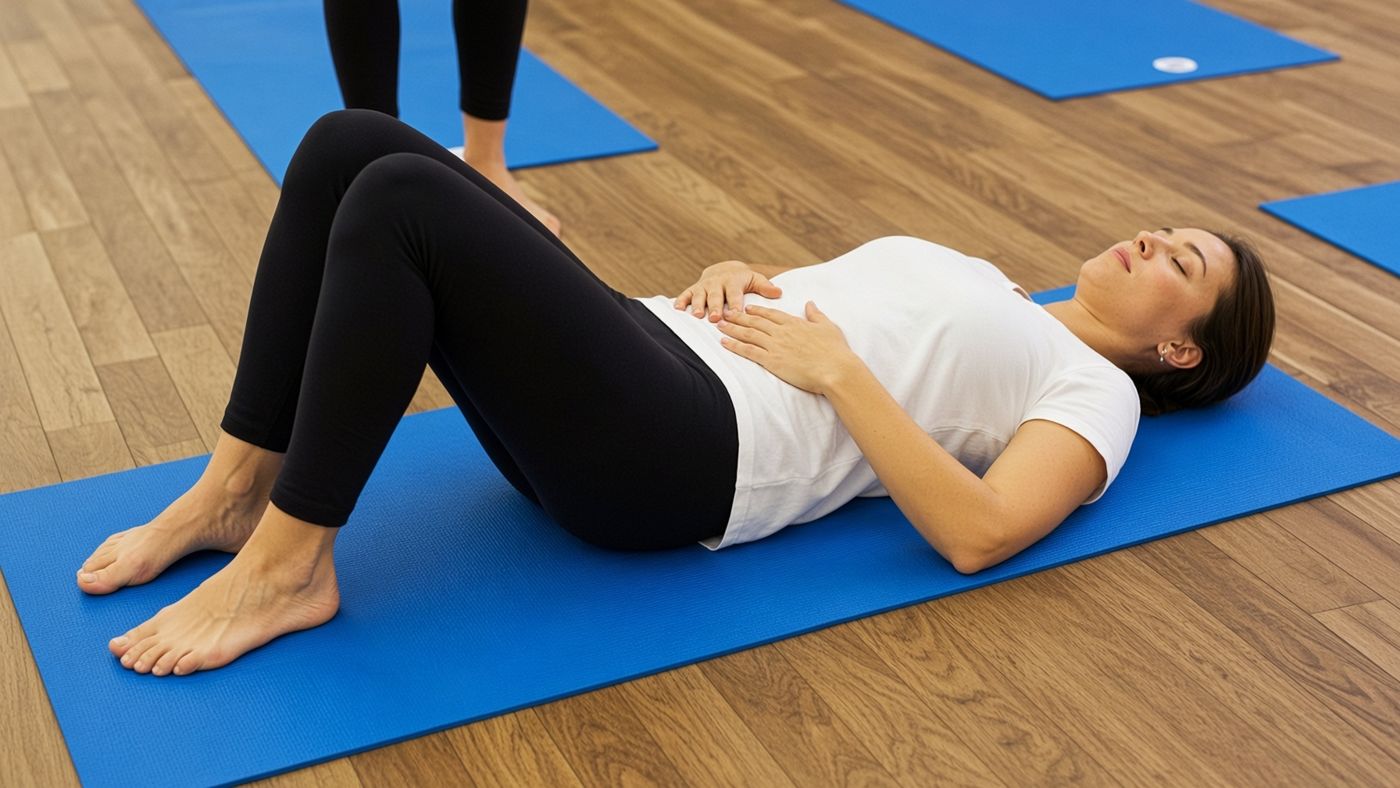
- Ball between the knees. Lie on your back, knees bent and feet flat, with a soft ball or folded cushion between the knees. Breathe in. On the exhale, gently lift the pelvic floor and press the ball for a slow count, then release fully. Repeat a few times. If lying on your back makes you feel dizzy, sick or faint, roll onto your side and do the same squeeze sitting tall on a chair.
- A small bridge. With the ball still in place, exhale, press it gently and lift the hips only a little way, keeping both sides level. Lower on the inhale.
- Kneeling. Sit back on your heels, with a cushion under the buttocks if needed and the ball between the thighs. On the exhale, press the ball and rise to kneeling upright; on the inhale, sit back down.
- Standing. Stand with the ball between the upper thighs, knees soft, holding a chair back if you like. Exhale, lift the pelvic floor and press the ball; inhale and let go.
Press gently, never into pain. If squeezing hurts the pubic bone, use a softer cushion or skip it. The sheet also kept the legs together throughout, with no wide stances or lunges, and one NHS leaflet adds avoiding the frog kick of breaststroke.7
The bottom line
Pelvic girdle pain is common, real and not harmful to the baby. The research on treatment is limited, with small signals for acupuncture and support belts and no clear benefit from group exercise for pelvic pain alone. What is clear is that small changes in how you move, early support from a physiotherapist and a birth plan that names your pain-free range can make the months ahead lighter.
Sources
- Wu WH, Meijer OG, Uegaki K, Mens JMA, van Dieën JH, Wuisman PIJM, Östgaard HC. Pregnancy-related pelvic girdle pain (PPP), I: Terminology, clinical presentation, and prevalence. European Spine Journal. 2004;13(7):575–589. Link
- Liddle SD, Pennick V. Interventions for preventing and treating low-back and pelvic pain during pregnancy. Cochrane Database of Systematic Reviews. 2015;(9):CD001139. Link
- Royal College of Obstetricians and Gynaecologists. Pelvic girdle pain and pregnancy (patient information). 2015. Link
- NHS. Pelvic pain in pregnancy. nhs.uk. Link
- South Tees Hospitals NHS Foundation Trust. Pelvic girdle pain (PGP) in pregnancy. Patient leaflet STW0155, updated 2023. Link
- Wozniak S, Piatek A, Kurc-Darak B, Domagala Z, Paulsen F, Florjanski J. Sonographic evaluations of the pubic symphysis at different stages of pregnancy. Journal of Clinical Medicine. 2025;14(11):3898. Link
- Whittington Health NHS Trust. Pelvic girdle pain (PGP) and low back (lumbar) pain in pregnancy. Patient leaflet, 2026. Link
This article is general information, not medical advice. Medical review: pending.