- The World Health Organization recommends that babies who are not yet crawling spend at least 30 minutes on their tummy, spread through the day, while awake.
- Research links tummy time with better gross motor development, such as rolling and crawling. Most of the studies are observational, so the evidence is promising but not strong.
- Back to sleep, tummy to play. You can start from the very first days, on your chest, in short sessions, and build up gently.
What the guidelines say
In 2019 the World Health Organization published its first guidelines on physical activity, sedentary behaviour and sleep for children under five.1 For babies under one year, they recommend:
- For babies who are not yet mobile, at least 30 minutes in the prone position (tummy time), spread throughout the day while awake.
- Not being restrained for more than one hour at a time, for example in a pram, stroller, high chair or carrier on an adult's body.
- No screen time at all at this age.
Thirty minutes can sound like a lot for a newborn who protests after one. It does not need to happen at once. Several short moments across the day all count.
What the research shows Evidence: low to moderate
A 2020 systematic review in Pediatrics gathered 16 studies with 4,237 babies from eight countries, all healthy infants up to 12 months old.2 It found:
- Positive links between tummy time and gross motor development, overall development, and the ability to move on the tummy and back, roll and crawl. It was also linked with a lower BMI score and with preventing brachycephaly, a flattening across the back of the head.
- Unclear links with social and cognitive development, with plagiocephaly (a flat spot on one side of the head), and with sitting, standing and walking.
- No link with fine motor skills or communication.
The authors are open about the limits: most studies were observational rather than randomized trials, and many had a high risk of bias. In practice, this means tummy time goes along with stronger early movement skills, but we cannot be certain how much of the effect is caused by tummy time itself. It is low-risk, free and recommended, which is reason enough to do it.
Back to sleep, tummy to play
These two rules fit together. The American Academy of Pediatrics says healthy babies are safest sleeping on their backs, both at night and for naps, and that tummy time is for babies who are awake and closely supervised.3 The NHS gives the same advice: always put your baby on their back to sleep, with their feet at the foot of the cot, and do not sleep with your baby on a sofa or in an armchair.5
Sleeping on the back means babies spend many hours facing up. Tummy time is the awake counterweight: a chance to push, lift and look around from a different position.
Starting from the first days
You don't need to wait. The AAP says you can start the day your baby comes home from hospital, two to three times a day for three to five minutes, building up to 15 to 30 minutes a day by around seven weeks.3 The NHS suggests starting from birth on your chest, and increasing the time gradually, day by day.4
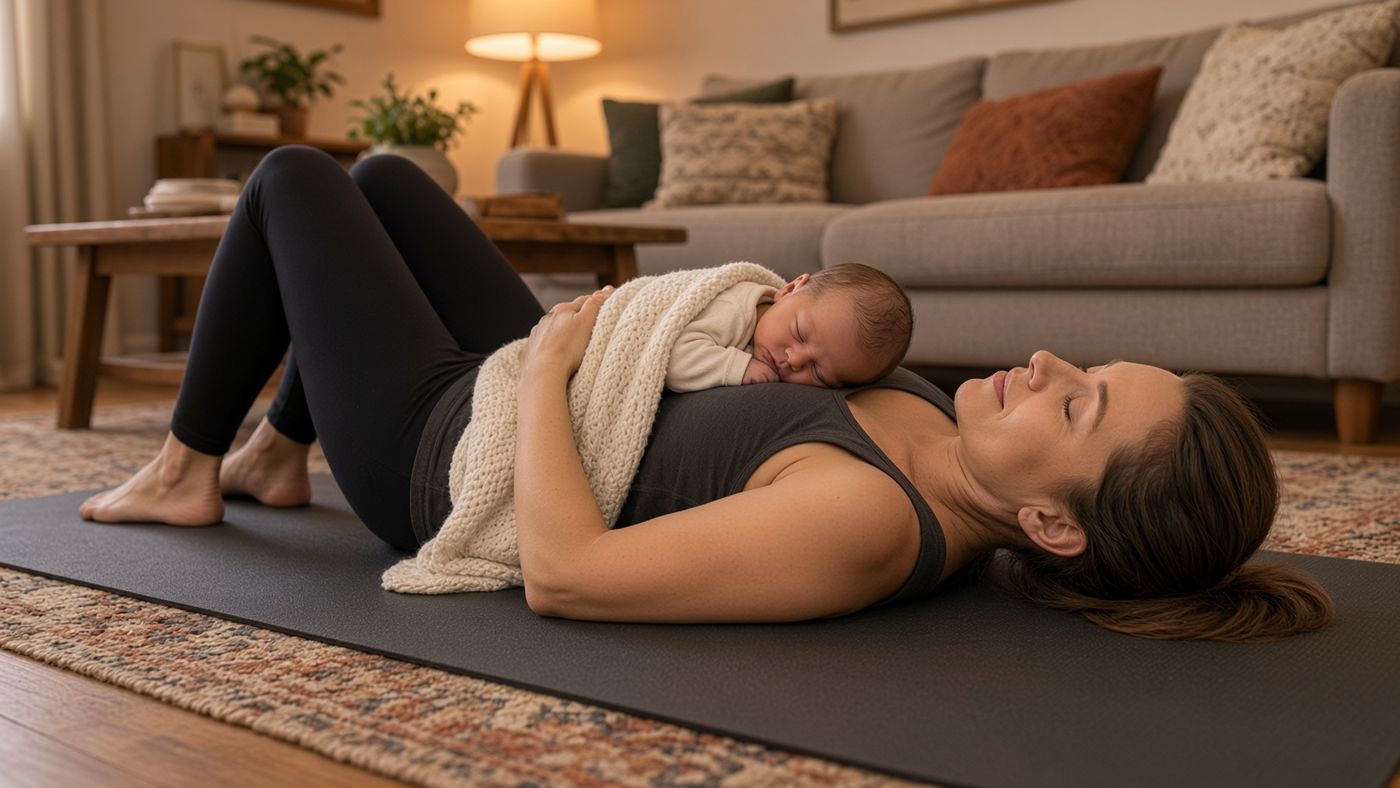
- On your chest. Lie back, semi-reclined, with your baby tummy-down on you. They will try to lift their head to see your face. Only do this when you are wide awake and unlikely to fall asleep.4
- Across your lap. If floor time is met with tears, your chest or lap is a gentler start.4
- On the floor. When your baby is ready, move to a mat. A small rolled-up towel under the arms can help, and so can a toy within reach, or your voice.4
Short and often works better than long and tearful. Pick a moment when your baby is awake and content.
Moving together: play-practice ideas
These are play ideas, not proven therapies. No study has tested them as a program. They are ways to make floor time shared and enjoyable, built on the official advice above. Stop any idea your baby clearly dislikes, and always keep sleep on the back.
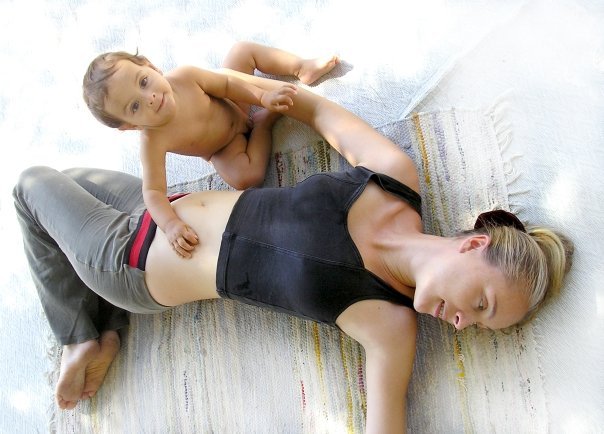
- Chest breathing. Recline on cushions with your baby tummy-down on your chest. Breathe slowly into your belly and ribs. Your baby rides the gentle rise and fall while lifting their head toward your face. Wide awake only.
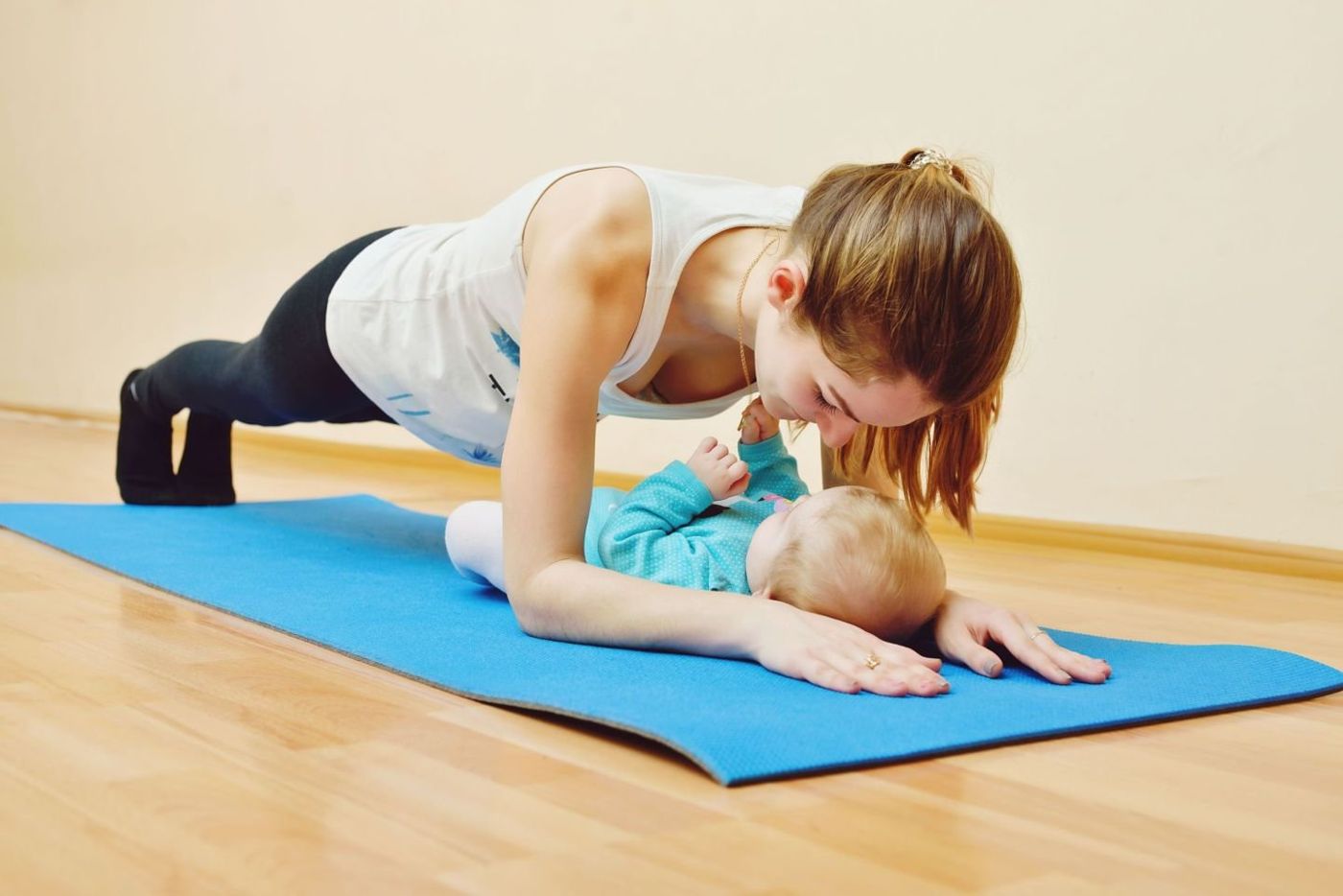
- Face to face on the mat. Lie on your tummy, facing your baby on theirs, eyes at their level. Talk, sing, make faces. You become the reason to lift the head.
- Side-lying play. Lie on your side facing your baby, also on their side, perhaps with a rolled towel behind their back. Offer a toy between you to reach for. It is a gentle in-between position for babies who find the tummy hard.
- Rolling games. With your baby on their back, move a toy slowly from one side across their gaze, so they turn to follow it. Over time they may roll toward it. CDC lists rolling from tummy to back as something most babies do by six months.6
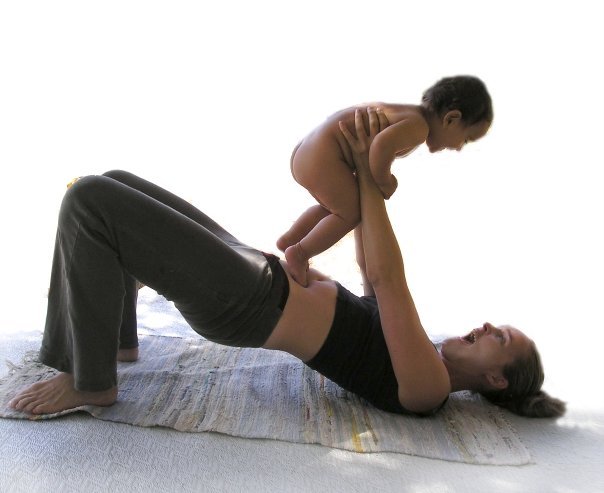
- Supported sitting rocks. Once your baby has good head control, sit them between your legs or on your lap, with your hands at their trunk. Rock gently side to side and forward and back while you sing.
- Bicycle legs and arm crosses. With your baby on their back, softly move their legs in slow cycling circles, then open their arms wide and cross them over the chest. Light touch, follow the baby, never force a joint.
If you enjoy this, you may like yoga with your baby and baby massage, which share the same spirit of touch, eye contact and play.
When to talk to a health visitor or doctor
Babies develop at their own pace, but trust your instincts. The CDC's six-month milestones include rolling from tummy to back, pushing up with straight arms on the tummy, and leaning on the hands to support themselves when sitting.6 If your baby is not reaching milestones, has lost skills they had, or anything else worries you, raise it early with your health visitor or doctor and ask about a referral if the concern remains. The NHS also advises asking a health visitor if there are no signs of crawling or moving by 12 months.4
The bottom line
Tummy time is not a test your baby has to pass. It is a daily invitation to move, little and often, from the first days. The evidence that it supports early movement skills is encouraging, though not yet strong. Keep sleep on the back, keep play on the tummy, and let it be something you do together.
Sources
- World Health Organization. Guidelines on physical activity, sedentary behaviour and sleep for children under 5 years of age. Geneva: WHO; 2019. Link
- Hewitt L, Kerr E, Stanley RM, Okely AD. Tummy time and infant health outcomes: a systematic review. Pediatrics. 2020;145(6):e20192168. Link
- American Academy of Pediatrics. Back to sleep, tummy to play. HealthyChildren.org. Updated 2026. Link
- NHS. Baby moves. Best Start in Life. Link
- NHS. Reduce the risk of sudden infant death syndrome (SIDS). Link
- Centers for Disease Control and Prevention. Milestones by 6 months. Learn the Signs. Act Early. Reviewed May 2026. Link
This article is general information, not medical advice. Medical review: pending.