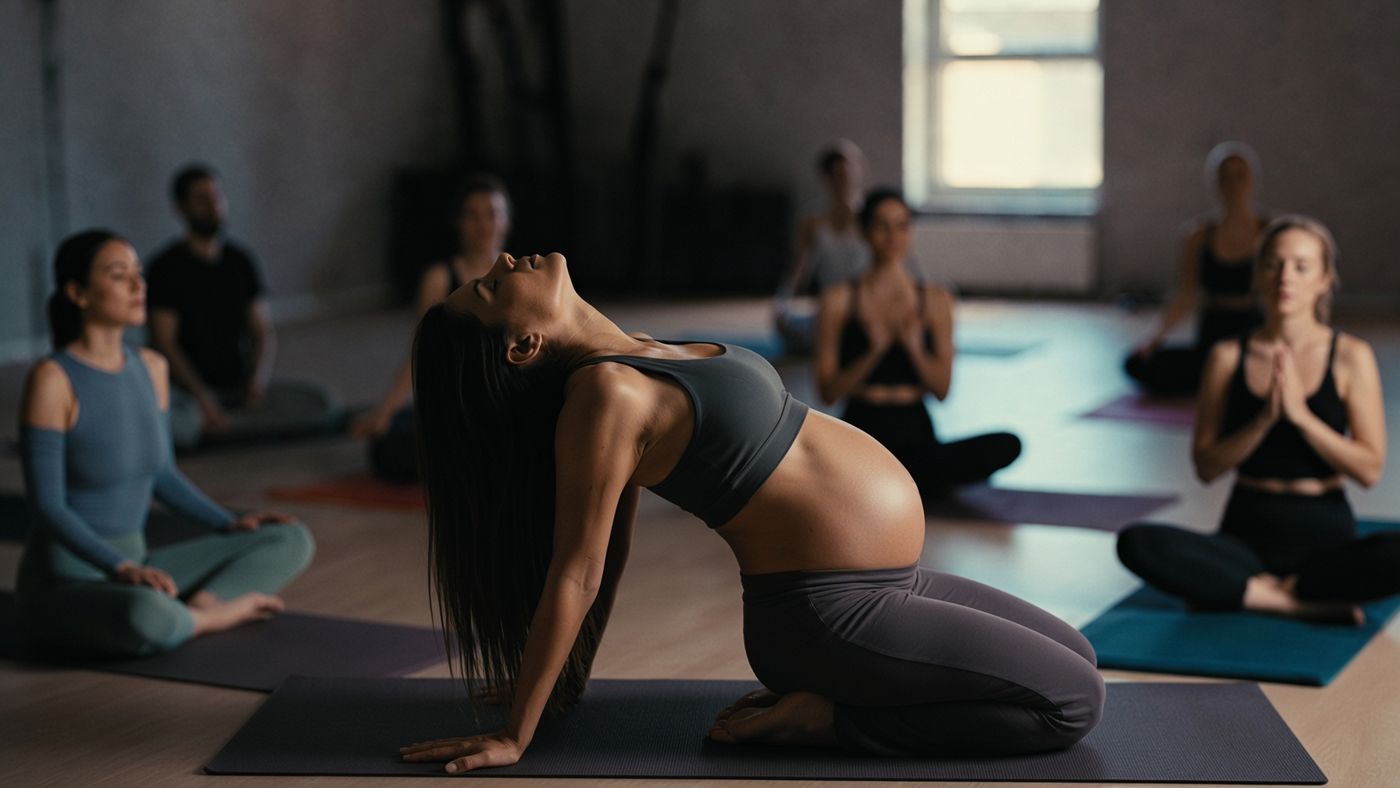
- The class moves slowly from one position to the next with the breath, then pauses to rest and notice. Slow enough for the joints and the nervous system to follow every movement.
- The breath leads: slow and full, never held. If it becomes short or strained, you rest in child's pose until it settles.
- For a healthy pregnancy, moderate activity like this is considered safe. Keep cool, keep breathing, and leave out anything that hurts.
Why "flow"?
The word has several meanings. A river flows along its course. Psychologists use it for the state of being completely absorbed in what you are doing. The course added a Sanskrit word, pravaha, which can mean a stream and also the way events unfold, one into the next.
Pregnancy, the course argued, is all of these at once. The body changes constantly, sometimes so quickly that there is no time to take the change in. A woman can respond by bracing against it, or turning all her attention outward, to tasks, tests and plans. Or she can learn, at least sometimes, to swim with the current: to turn inward, listen, and move in the direction the body is already going.
That is a way of seeing, not a medical claim. But it gives a clear shape to a practice. Instead of holding long, effortful poses, you keep moving gently, guided by the breath, and you stop often enough to feel what the movement has done.
Four principles from the course
Breath first. The breath is slow, full and continuous, and the body "dances" with it. The course used ujjayi, a soft breath through the nose with a slight narrowing at the back of the throat, but an ordinary slow, full breath works just as well. There are no long breath holds at any point in the class.
Slow, linked movement. Each movement is done slowly, a few times, before you hold any position. In yoga this is called vinyasa. The course's reasoning was that slowness gives the muscles, joints and nervous system time to "understand" the movement.
Rest between rounds. After each sequence, pause. This is physical rest, and also a moment to turn the senses inward, which yoga calls pratyahara.
A light gathering at the base. Many movements are paired with a gentle lift of the pelvic floor on the exhale, the yogic mula bandha. Keep it light, about a quarter of your effort, and always let it go fully afterwards. You can read more in our article on pelvic floor training.
The practice
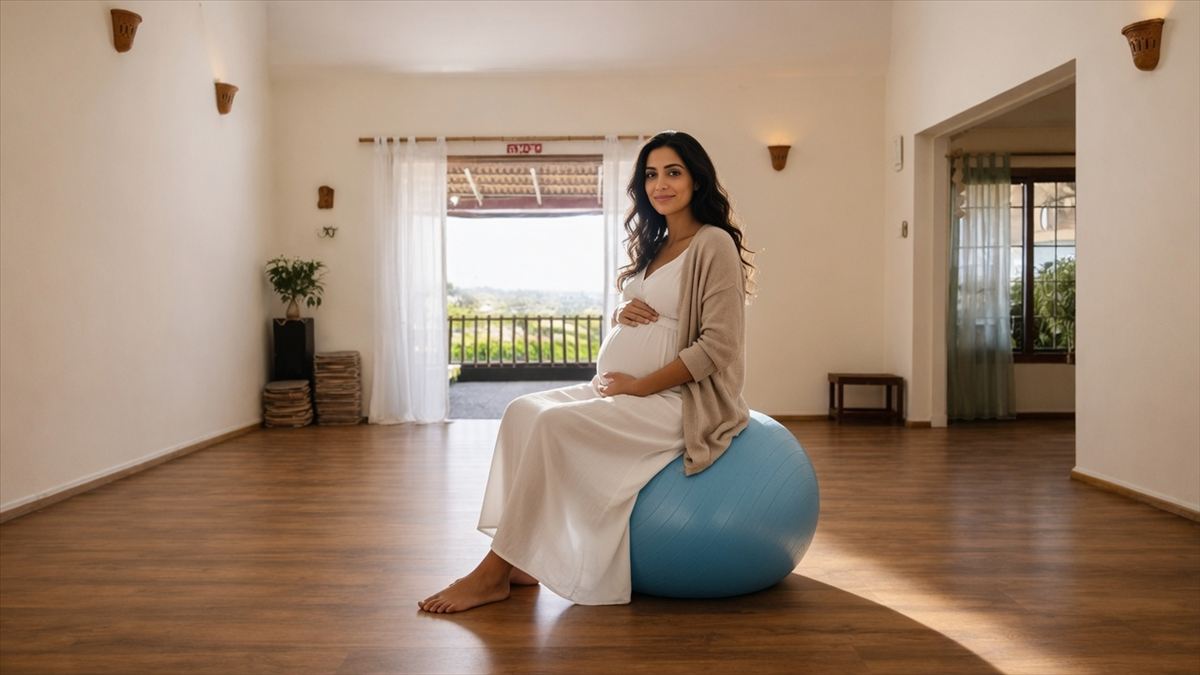
About an hour in full; you can do any one part on its own. Use a mat, cushions and a chair or wall nearby.
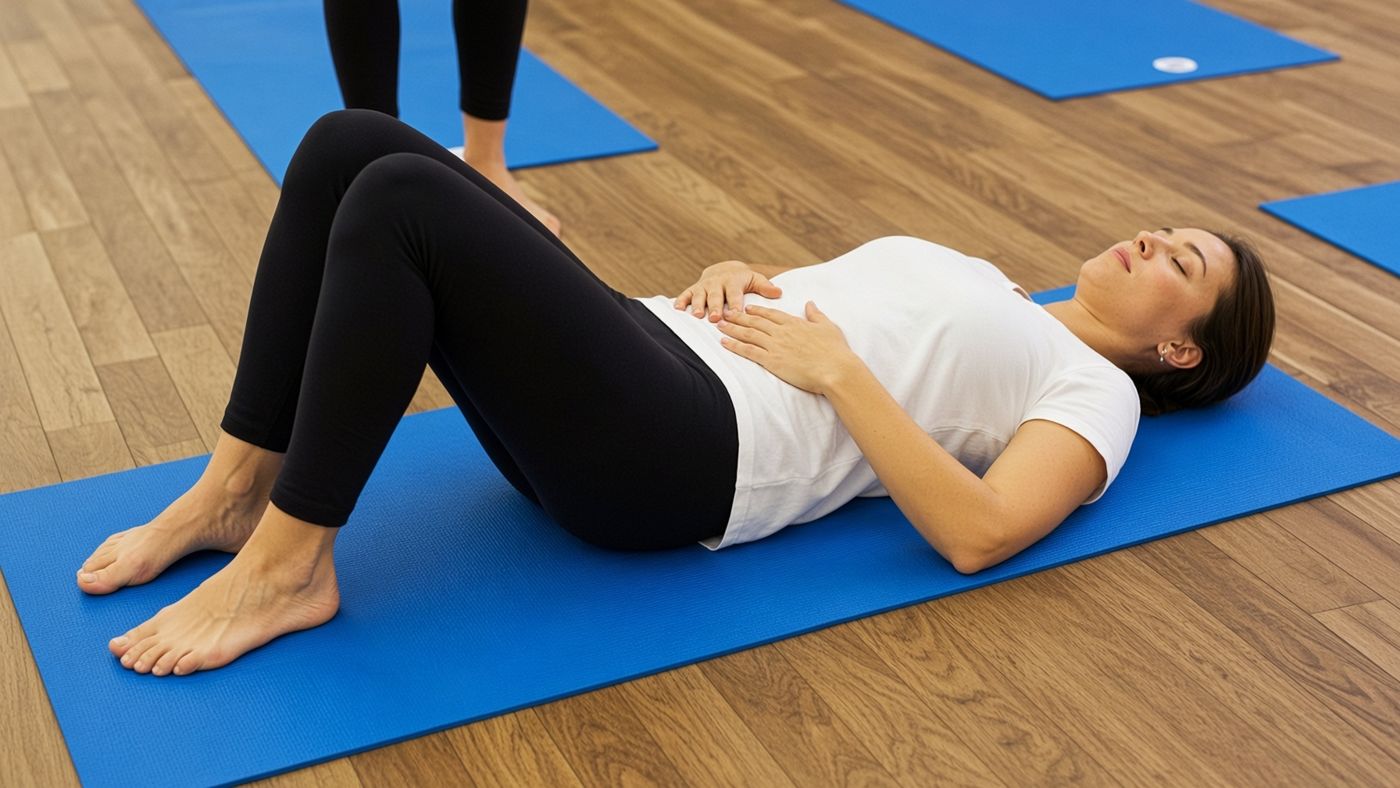
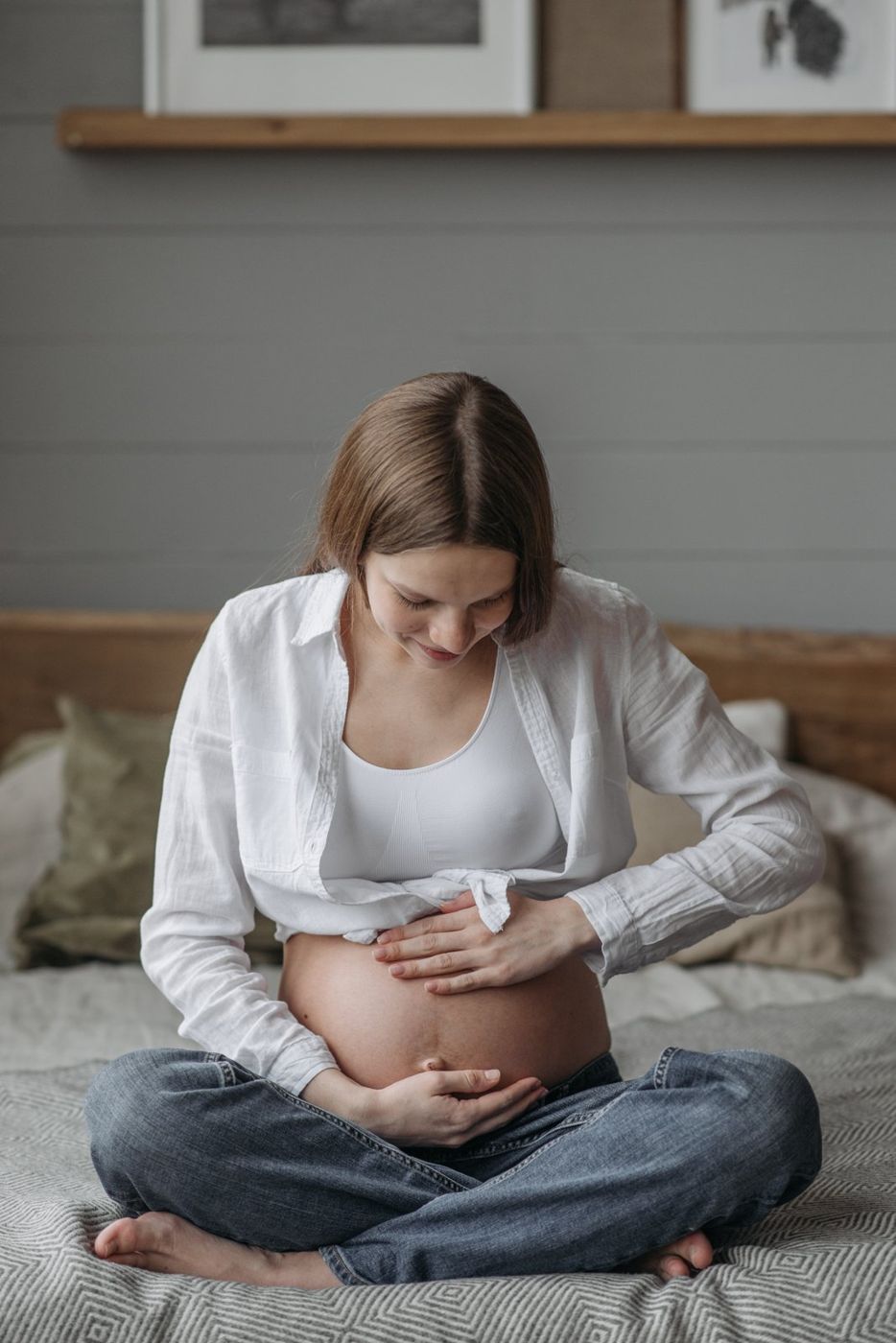
- Connect. Lie propped on cushions or on your side, hands on the belly. On an inhale, take the arms overhead; on an exhale, bring them back down and gently gather the pelvic floor. Repeat slowly a few times.
- Pelvic lifts. With knees bent and feet flat, lift the hips a little on an exhale, breathe in at the top, and lower on the next exhale. Then hold the knees and rock them gently away from and toward the chest to ease the lower back.
- Butterfly. Bring the soles of the feet together, knees resting on cushions. Breathe here, and if you like, lift the hips slightly on the exhale as before. Then circle each hip slowly to warm the joint.
- Knees side to side. With knees bent, let them sway to one side and back, four times each way, then rest for five breaths on each side. Keep the twist open and easy.
- Feet and legs. Lying on your side or propped, circle the ankles five times each way. Many women find this helps tired, swollen feet.
- Shoulders. Kneel or sit on a cushion between the heels. Interlace the fingers and stretch the arms overhead. Then work toward cow-face arms (gomukhasana) with a strap if the hands do not meet.
- Cat and pelvic circles. On all fours, arch the back on the inhale and round it on the exhale. Then circle the pelvis six times each way with a deep "ahh", and draw figure-eights with the hips. Try it with one leg stretched out to the side.
- The flowing round. From child's pose with knees wide (yoga mudra), inhale to all fours, exhale to downward dog, inhale back to all fours, exhale back to child's pose. Six slow rounds. In downward dog, you can "walk" the legs by bending one knee then the other. Rest in child's pose whenever you are tired.
- Standing. Triangle pose for four breaths each side, warrior II for up to eight, then reverse warrior for five. Finish with a wide-legged forward fold, first moving in and out with bent knees and hands on the thighs, then resting in the fold for a few breaths with the head above the heart if you feel any dizziness.
- Rising and lowering. From mountain pose, inhale up onto the toes with arms overhead, then exhale and lower into a gentle squat with the hands together, using a wall or chair. Inhale back up.
- Seated. Sit with legs apart to make room for the belly. Fold gently over one leg at a time with a long back, then forward between the legs.
- Rest. Recline over a bolster to open the chest, then settle on your side, well supported, for a long, easy rest.
Keeping it safe
If you have a healthy pregnancy, regular moderate activity is considered safe and beneficial; check with your midwife or doctor first if you have any medical or pregnancy complications.2 In later pregnancy, avoid lying flat on your back for more than a few minutes, which can make you dizzy.1 Keep the room cool, drink water, and do not practise in heated rooms. Stop if you feel unwell, too hot, short of breath or in pain.1 Skip downward dog if it causes dizziness or heartburn, and wide stances or one-leg work if they cause pain at the front or back of the pelvis.
What we left out
The original class rested on the idea that a mother who flows with her pregnancy will have a calm, happy baby. That is a lovely hope, but it is not something we can promise, and no woman should feel that her baby's temperament depends on how relaxed she managed to be. We also left out a full sequence of straight-leg raises lying on the back, which is long for late pregnancy.
The bottom line
A slow, flowing class is a kind way to move through pregnancy: the breath sets the pace, rest is part of the work, and every position can change as the body changes. The image of swimming with the current belongs to yoga, not to medicine. What the guidance does support is that gentle, regular activity is good for most pregnant women, as long as you keep cool, keep breathing and listen to your body.
Sources
- NHS. Exercise in pregnancy. nhs.uk. Link
- American College of Obstetricians and Gynecologists. Physical activity and exercise during pregnancy and the postpartum period. ACOG Committee Opinion No. 804. Obstetrics & Gynecology. 2020;135(4):e178–e188. Link
Based on works from a 2009 pregnancy yoga teacher course, reviewed and updated. General information, not medical advice. Medical review: pending.