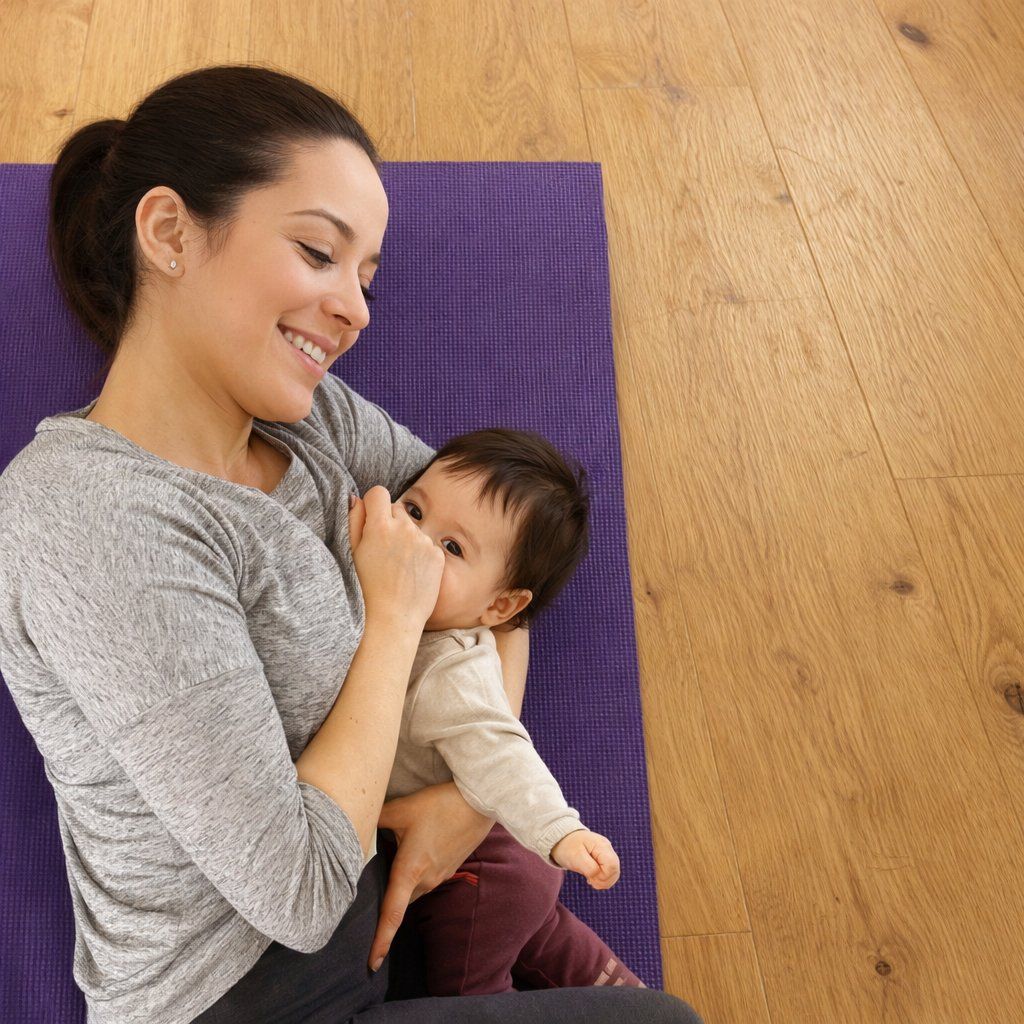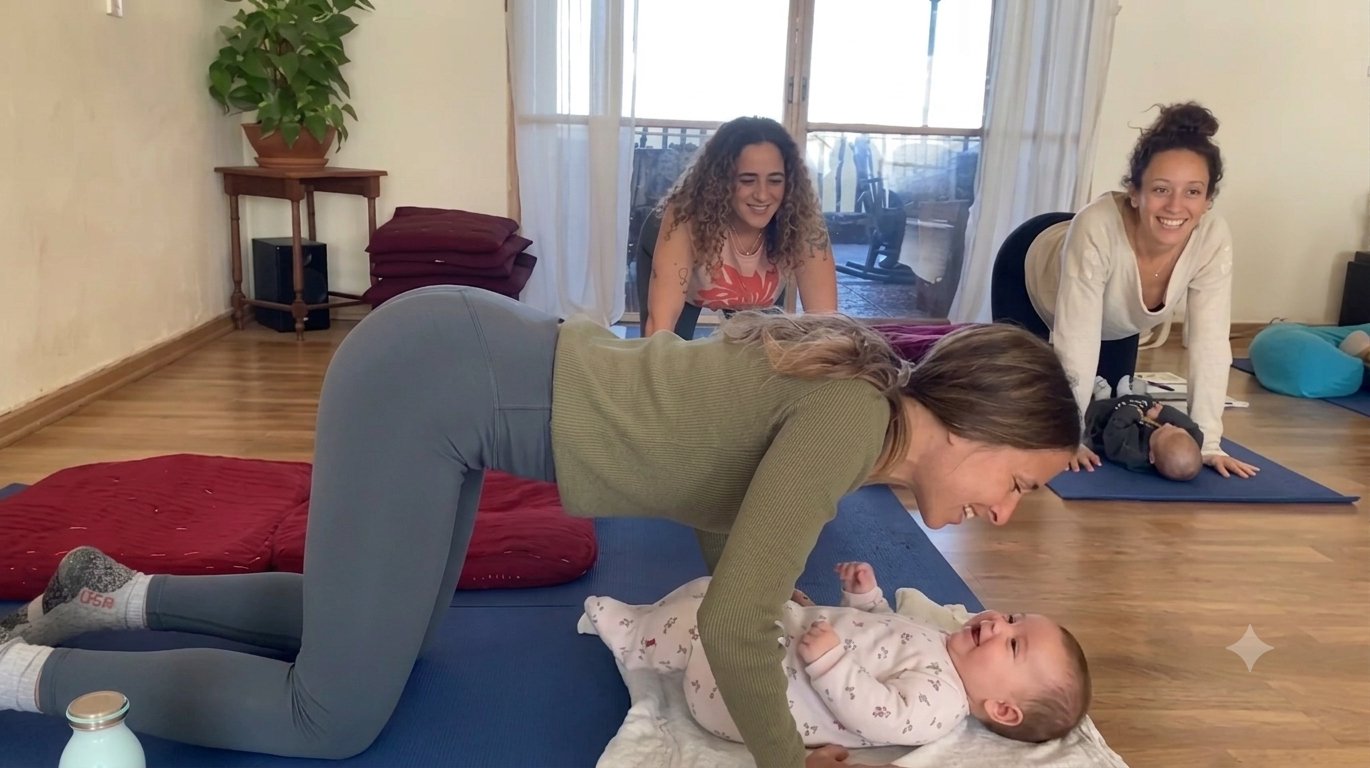
- After a straightforward birth, gentle movement such as walking, stretching and pelvic floor exercises can start as soon as you feel up to it. After a caesarean or a more complicated birth, recovery takes longer.
- The 6-week postnatal check is a good moment to ask about high-impact exercise. It is not a finish line, and it is not a reason to wait before walking.
- A UK guideline for running suggests not before 3 months, and only when you can move without leaking, heaviness or pain. That advice is based on expert opinion, not trials.
What the guidelines say Evidence: moderate, mixed
The World Health Organization's 2020 guidelines include specific recommendations for women after birth. They advise regular physical activity throughout pregnancy and the postpartum period, building towards at least 150 minutes of moderate activity a week, with a mix of aerobic and muscle-strengthening activity, and some gentle stretching. They also suggest limiting time spent sitting. Women who were used to vigorous exercise before pregnancy can generally continue it after birth.1
The American College of Obstetricians and Gynecologists (ACOG) takes the same encouraging view. In its 2020 committee opinion, it notes that observational studies link exercise with a shorter postpartum recovery time, and describes physical activity as an important factor in preventing depression after birth.2
What these guidelines do not give is a timetable. "150 minutes a week" is a direction to grow towards, not a target for the first month.
The "6-week check": what it means, and what it doesn't
In the UK, the NHS says that after a straightforward birth you can start gentle exercise as soon as you feel up to it, such as walking, gentle stretches and pelvic floor exercises. It suggests getting advice at your 6-week postnatal check before starting any high-impact exercise, and talking to your midwife, health visitor or GP before anything strenuous.3
So the check is a useful moment to ask questions. It is not a green light for everything, and it is not a reason to stay still until then. The authors of the UK running guideline point out that 6 weeks is too long to wait before starting low-intensity activity like walking and pelvic floor and abdominal exercises.5 They also note that body tissues are still healing well after 6 weeks: one study they cite found that, six weeks after a caesarean, the abdominal fascia had regained only about half of its original strength.5
After a caesarean
A caesarean is major surgery, and the NHS is clear that recovery takes longer.3 In the first days and weeks, it recommends staying mobile with gentle activities such as a daily walk, which also lowers the risk of blood clots, while not overdoing it. Carrying anything heavier than your baby, and exercise, may need to wait. The NHS suggests restarting activities only when they no longer feel uncomfortable, which "may not be for 6 weeks or so", and asking your midwife or GP if you are unsure.4
The UK running guideline lists a caesarean, or perineal scarring, among the factors that call for extra care when returning to high-impact exercise.5 Recovery after a tear or stitches deserves the same patience.
Running and high-impact exercise
The most detailed guidance comes from a 2019 UK guideline by physiotherapists Tom Goom, Gráinne Donnelly and Emma Brockwell.5 It recommends a low-impact timeline for the first 3 months, followed by a return to running between 3 and 6 months after birth, at the earliest. It suggests that every woman, however she gave birth, be offered an assessment with a pelvic health physiotherapist from 6 weeks.
Before running, it suggests being able to do the following without pain, heaviness, dragging or leaking: walk for 30 minutes, balance on one leg for 10 seconds, do 10 single-leg squats on each side, jog on the spot for 1 minute, do 10 forward bounds and hop 10 times on each leg.
It is honest about its own limits. The authors rate the 3-month advice as expert opinion, the lowest level of evidence, and note that no studies have tested readiness to return to exercise in postnatal women.5 It is careful, reasonable guidance, not a proven rule.
Does it help how you feel?
Probably, yes. A 2017 meta-analysis pooled 16 randomized trials with 1,327 women after birth. Exercise had a small overall effect on depressive symptoms, and a moderate effect in women who already had symptoms. The authors concluded that light-to-moderate aerobic exercise improves mild-to-moderate depressive symptoms, while noting the trials were small and some had weaknesses.6 Exercise can support mood. It does not replace care if you are struggling: talk to your midwife or doctor.
A gentle progression
The running guideline offers an example of the early months. It is an example, not a prescription, and it assumes a recovery without complications.5
- Weeks 0–2. Pelvic floor exercises, simple core work such as pelvic tilts, and walking.
- Weeks 2–4. Build on walking and core work. Consider squats, lunges and bridges, in line with what daily life with a baby asks of you.
- Weeks 4–6. Low-impact exercise such as a static bike or cross-trainer, if sitting on a saddle is comfortable.
- Weeks 6–8. Brisk walking, longer or slightly harder low-impact sessions, and light strength work.
- Weeks 8–12. Swimming once bleeding has stopped and any wound has healed. The NHS says to wait until 7 days after postnatal bleeding has stopped.3
Pelvic floor training and abdominal separation each have their own article: see the pelvic floor and diastasis recti.
A practice for the first weeks
Not a workout. A way to start moving again, comfortably, if your midwife or doctor agrees.
- Walk a little every day. Start with a few minutes and add a little each week. Stop while you still feel good.
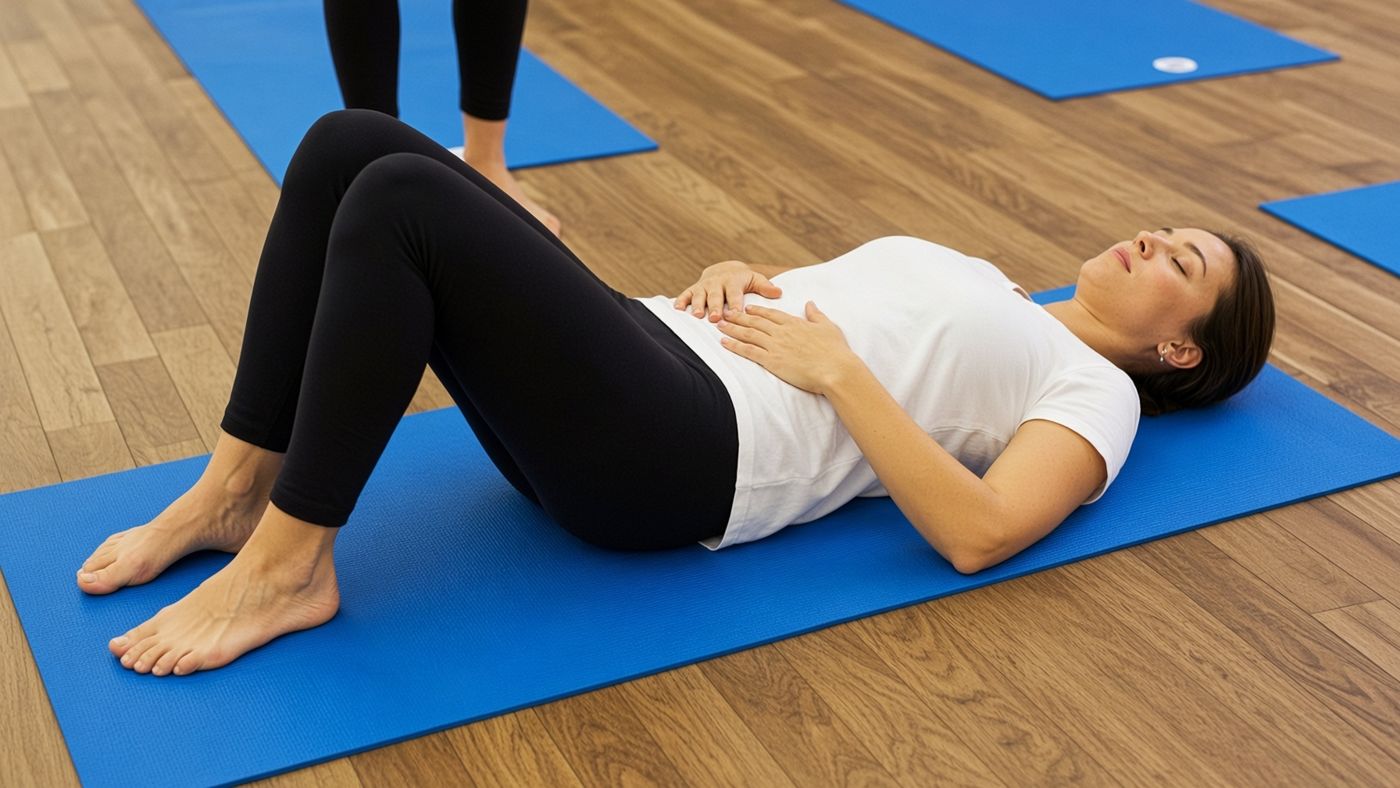
- Breathe into the ribs. Lying on your side or back, inhale wide into the sides of the ribs. On a long exhale, let the pelvic floor and lower belly lift gently.
- Pelvic tilts. On your back with knees bent, gently roll the pelvis to flatten and soften the lower back. Slow and small.
- Stand up kindly. After a caesarean especially, roll onto your side and push up with your arms to get out of bed.
- Listen the next day. If you feel more heaviness, pain or bleeding after a session, do less next time.
Signs you may be doing too much
The running guideline suggests seeing a pelvic health physiotherapist if you notice heaviness or dragging in the pelvis, leaking urine or difficulty controlling your bowels, a noticeable gap along the middle of your belly, pelvic or lower back pain, or bleeding beyond 8 weeks that is not your period, as well as bleeding that starts or increases with exercise.5 After a caesarean, the NHS advises contacting your midwife or GP straight away for heavy vaginal bleeding, leaking urine, or swelling or pain in your lower leg.4
The bottom line
Gentle movement can start early. Harder exercise comes back gradually, over months rather than weeks, and more slowly after a caesarean or a difficult birth. The guidelines agree that activity after birth is good for body and mood. The exact timing is based more on experience than on trials, so your own body's signals matter as much as the calendar.
Sources
- Bull FC, Al-Ansari SS, Biddle S, et al. World Health Organization 2020 guidelines on physical activity and sedentary behaviour. British Journal of Sports Medicine. 2020;54(24):1451–1462. Link
- American College of Obstetricians and Gynecologists. Physical activity and exercise during pregnancy and the postpartum period: ACOG Committee Opinion No. 804. Obstetrics & Gynecology. 2020;135(4):e178–e188. Link
- NHS. Keeping fit and healthy with a baby. NHS website, last reviewed April 2026. Link
- NHS. Caesarean section: Recovery. NHS website, last reviewed January 2023. Link
- Goom T, Donnelly G, Brockwell E. Returning to running postnatal: guidelines for medical, health and fitness professionals managing this population. March 2019. Link
- McCurdy AP, Boulé NG, Sivak A, Davenport MH. Effects of exercise on mild-to-moderate depressive symptoms in the postpartum period: a meta-analysis. Obstetrics & Gynecology. 2017;129(6):1087–1097. Link
This article is general information, not medical advice. Medical review: pending.